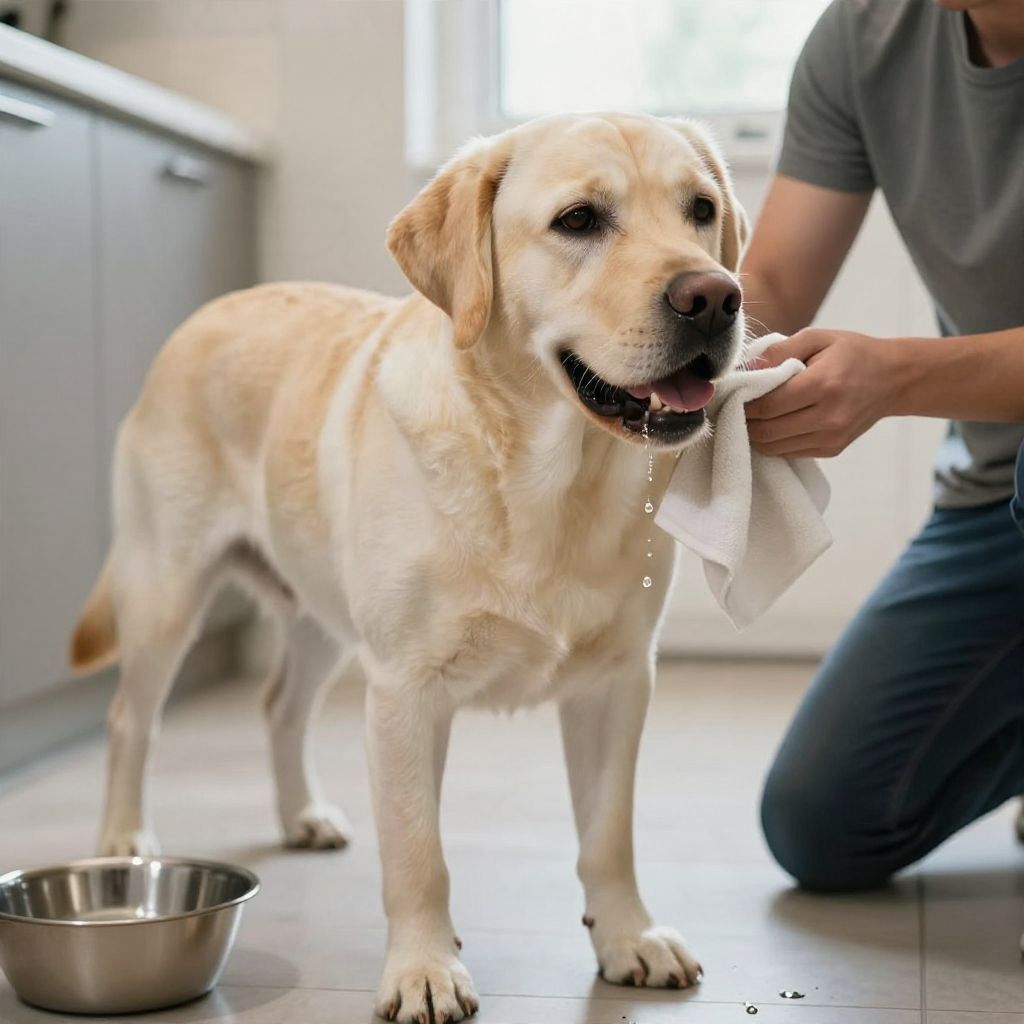
Why is my dog drooling? Some drool is normal, especially around food, excitement, or after exercise, but sudden or heavy drooling can signal a problem. The cause may be harmless, like anticipating a meal, or serious, like nausea, mouth pain, heat stress, or toxin exposure.
The key is to notice what changed, whether your dog seems otherwise normal, and whether drooling is paired with other symptoms. If the drooling is new, excessive, or comes with distress, treat it as a health concern and call your veterinarian.
Why is my dog drooling?
Dogs drool when saliva production increases or when they cannot swallow normally. Common reasons include excitement, food smells, dental disease, mouth injury, nausea, heat, anxiety, motion sickness, or something stuck in the mouth. Sudden heavy drooling, especially with vomiting, weakness, or trouble breathing, needs prompt veterinary attention.
What is normal drooling in dogs?
Some dogs naturally drool more than others. Breed, lip shape, age, and individual anatomy all matter, so a dog with loose lips may drool more than a dog with a tighter mouth.
Normal drooling is usually predictable and mild. You might see it:
- Before meals or when food is being prepared
- During car rides or stressful situations
- After drinking water or exercising
- In hot weather, if your dog is panting
If your dog’s drooling is a long-standing habit and they are otherwise comfortable, it may simply be part of their normal pattern. What matters most is a sudden change from their usual baseline.
Common causes of drooling in dogs
Excitement or food anticipation
Many dogs drool when they smell food or expect a treat. This is usually harmless and stops once the trigger is gone.
Dental disease or mouth pain
Inflamed gums, broken teeth, oral infections, and mouth ulcers can all cause drooling. You may also notice bad breath, pawing at the mouth, reluctance to eat, or chewing on one side.
Something stuck in the mouth
Sticks, bones, grass awns, string, or other debris can irritate the mouth and lead to drooling. Never pull on string or anything wrapped around the tongue or teeth unless a veterinarian tells you to.
Nausea or stomach upset
Dogs often drool before vomiting or when they feel nauseated. If your dog is also licking lips, swallowing repeatedly, or refusing food, an upset stomach may be involved.
Heat stress
Drooling can increase when a dog is overheated. This is especially concerning if your dog is panting heavily, weak, restless, or has bright red gums.
Anxiety, fear, or motion sickness
Stress can trigger drooling in some dogs. Car rides, vet visits, thunderstorms, and unfamiliar environments are common triggers.
Toxins or irritating substances
Certain plants, chemicals, human foods, medications, and household products can cause drooling. If you suspect your dog licked or swallowed something unsafe, contact a veterinarian or pet poison resource right away.
Neurologic or swallowing problems
Less commonly, drooling may happen because a dog cannot swallow normally. This can occur with nerve problems, jaw issues, or other medical conditions that need veterinary evaluation.
When drooling is an emergency
Seek urgent veterinary care if drooling happens with any of the following:
- Difficulty breathing or severe panting
- Collapse, extreme weakness, or unresponsiveness
- Repeated vomiting or retching
- Swollen face, tongue, or throat
- Bleeding from the mouth
- Known or suspected toxin exposure
- Inability to close the mouth or swallow
- Signs of heatstroke, such as staggering, confusion, or very hot skin
Do not wait if your dog is drooling heavily and seems unwell. Rapid treatment can make a major difference in emergencies.
What you can check at home safely
If your dog is calm and breathing normally, you can do a quick check before calling your vet.
- Look for visible objects, cuts, swelling, or broken teeth in the mouth.
- Check whether the drooling is clear, foamy, bloody, or mixed with vomit.
- Notice whether your dog is eating, drinking, and acting normally.
- Think about recent changes: new food, garbage access, car ride, heat, or possible toxin exposure.
- Monitor whether the drooling is improving, staying the same, or getting worse.
If your dog resists mouth handling, do not force it. A painful mouth can lead to snapping, and you may miss the real problem if you keep poking around.
What to do if your dog is drooling
Your next step depends on how your dog is acting overall. Mild, short-lived drooling with a clear trigger may only need observation, while persistent or unexplained drooling deserves a vet call.
- Offer fresh water if your dog is alert and able to drink normally.
- Move your dog to a cool, quiet place if heat may be involved.
- Remove access to garbage, chemicals, plants, bones, and other hazards.
- Keep your dog calm if stress or motion sickness seems likely.
- Contact your veterinarian if the drooling is new, persistent, or paired with other symptoms.
Do not give human medications unless your veterinarian specifically instructs you to do so. Some common products can be dangerous for dogs.
How veterinarians may investigate drooling
If the cause is not obvious, your veterinarian may examine your dog’s mouth, teeth, throat, and abdomen, and ask about recent exposures or behavior changes. Depending on the signs, they may recommend dental care, imaging, bloodwork, or other tests.
Bring useful details if you can:
- When the drooling started
- Whether it is constant or comes and goes
- Any vomiting, diarrhea, coughing, or trouble swallowing
- Possible access to toxins, trash, toys, bones, or string
- Photos or a short video of the drooling episode
How to reduce drooling when it is not an emergency
Management depends on the cause. If your dog drools from excitement, you may be able to reduce it by limiting food teasing and keeping mealtimes predictable. If motion sickness is the trigger, your vet may suggest travel strategies or treatment.
Helpful prevention habits
- Keep garbage, compost, and food scraps secured
- Use safe chew toys and discard damaged ones
- Brush your dog’s teeth if your veterinarian recommends it
- Provide shade, water, and rest during warm weather
- Use gradual, reward-based training to reduce fear around handling or travel
If your dog drools because of dental pain, anxiety, or nausea, the real solution is treating the underlying cause, not just wiping the saliva away.
Common mistakes to avoid
- Assuming all drooling is normal because your dog has drooled before
- Waiting too long when drooling is sudden or severe
- Trying to pull unknown objects from the mouth
- Using punishment for stress-related drooling
- Giving human medications without veterinary guidance
When to call your veterinarian
Call your vet if drooling lasts more than a short time without an obvious cause, keeps returning, or comes with bad breath, mouth pain, appetite loss, vomiting, or behavior changes. Even if it turns out to be minor, your vet can help you rule out dental disease, nausea, or exposure to something harmful.
If you are also noticing vomiting or repeated gagging, it may help to read why dogs throw up. If your dog seems to be breathing harder than usual along with drooling, see why dogs breathe heavy for related warning signs.
In short, the answer to why is my dog drooling ranges from normal excitement to urgent illness. Watch for changes, check for red flags, and contact your veterinarian promptly when the drooling is sudden, heavy, or paired with other symptoms.