
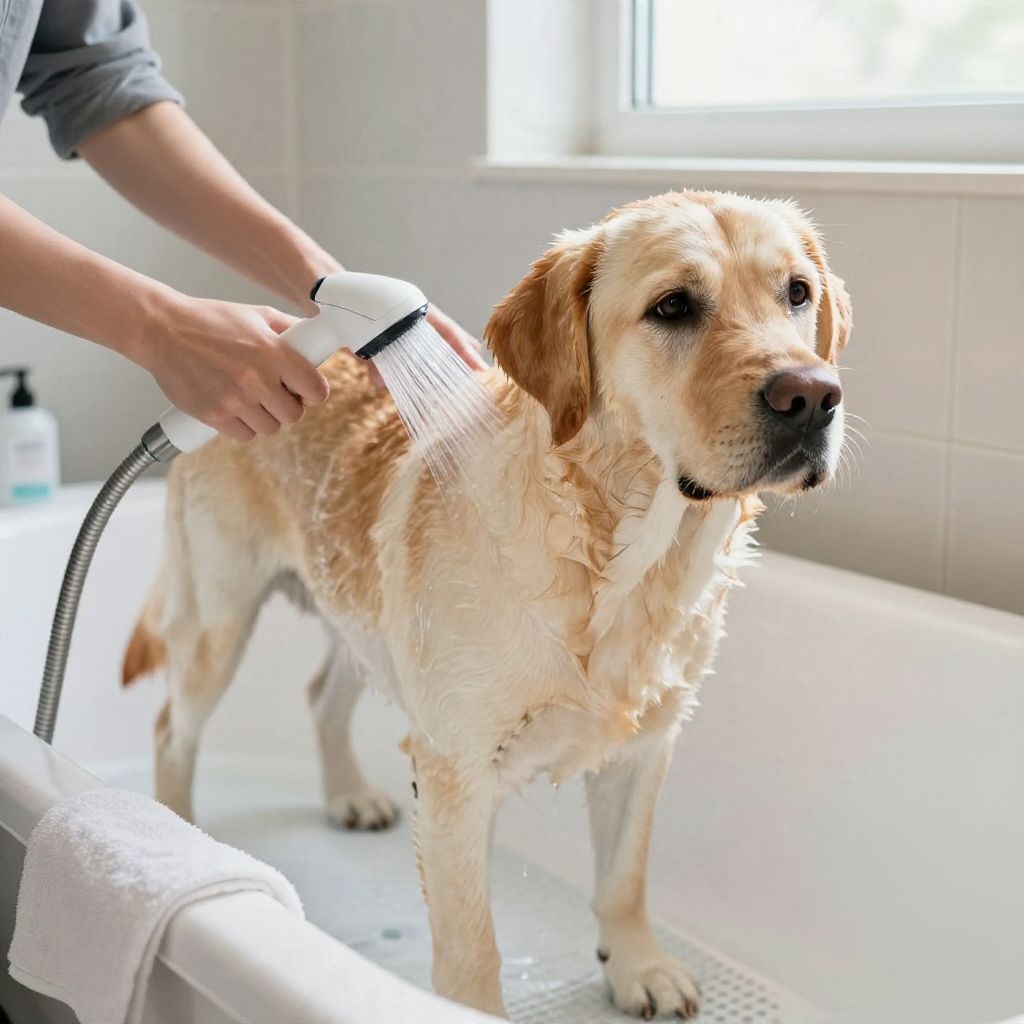
How do you give a dog a bath without turning it into a struggle? The key is preparation, calm handling, and using dog-safe products. A good bath should clean your dog’s coat and skin while keeping them comfortable, safe, and as relaxed as possible.
Most dogs do best with a simple routine: brush first, use lukewarm water, apply dog shampoo, rinse thoroughly, and dry well. The exact approach depends on your dog’s coat, size, age, health, and temperament, so adjust the process to fit your dog’s needs.
How To Give A Dog A Bath?
Start by brushing out tangles, then place your dog on a non-slip surface and wet the coat with lukewarm water. Massage in dog shampoo, avoid the eyes and ears, rinse completely, and dry your dog with towels or a dryer on a low, cool setting if they tolerate it.
What You Need Before You Start
Gather everything first so you do not leave a wet dog unattended. Having supplies within reach makes the bath shorter and less stressful for both of you.
- Dog-safe shampoo
- Several towels
- Cup, handheld sprayer, or gentle shower attachment
- Brush or comb
- Non-slip mat or towel for the tub or sink
- Cotton balls if your veterinarian has recommended ear protection
- Treats for calm cooperation
Use shampoo made for dogs, not people shampoo. Human products can irritate a dog’s skin because their skin has different needs and pH balance.
Step-by-Step Bathing Guide
1. Brush your dog first
Brushing removes loose hair, dirt, and tangles before water makes them tighter. This is especially helpful for long-haired, double-coated, or curly-coated dogs, but it can benefit most dogs.
If your dog has mats, do not pull hard on them in the bath. Work them out gently before bathing, or ask a groomer for help if the coat is badly tangled.
2. Choose the right bathing spot
A tub, walk-in shower, utility sink, or outdoor setup can work depending on your dog’s size and comfort. The surface should be secure so your dog does not slip.
Small dogs may do well in a sink or shallow tub, while large dogs often need a bathtub or shower stall. If your dog is nervous, a smaller, quieter space may feel safer.
3. Use lukewarm water
Test the water before wetting your dog. It should feel comfortably warm, not hot or cold.
Start wetting the body slowly, and avoid spraying directly into the face. Some dogs are startled by strong water pressure, so a cup or gentle sprayer can be easier than a forceful nozzle.
4. Apply shampoo carefully
Work the shampoo into the coat from neck to tail, following the product directions. Focus on areas that get dirty easily, such as the chest, belly, paws, and legs.
Avoid the eyes, inside the ears, nose, and mouth. If your dog has sensitive skin or a known skin condition, ask your veterinarian which shampoo is appropriate.
5. Rinse thoroughly
Rinsing is one of the most important steps. Leftover shampoo can cause itching, dryness, and irritation.
Keep rinsing until the water runs clear and the coat no longer feels slippery. Check under the legs, around the neck, and near the belly where soap often hides.
6. Dry your dog well
Use towels first and press gently rather than rubbing aggressively. Rubbing can tangle fur and annoy sensitive dogs.
If your dog tolerates it, you can use a pet dryer or human dryer on a low, cool setting and keep it moving. Never use high heat, and stop if your dog seems frightened or overheated.
How To Make Bath Time Easier for a Nervous Dog
Many dogs dislike baths because of slippery surfaces, loud water, or past negative experiences. A calmer routine can make a big difference over time.
- Keep sessions short.
- Use treats before, during, and after.
- Speak calmly and avoid rushing.
- Let your dog sniff the tub or supplies first.
- Use a non-slip mat to reduce fear of falling.
- Pause if your dog becomes overwhelmed.
If your dog panics, freezes, or tries to bite during bathing, do not force the process. A certified force-free groomer or qualified trainer can help you build a safer plan.
Bathing Puppies, Senior Dogs, and Dogs With Health Issues
Puppies
Puppies can usually be bathed, but they need extra warmth and gentle handling. Keep the bath brief and make sure they dry thoroughly so they do not get chilled.
If a puppy is very young, very small, or not fully vaccinated, ask your veterinarian how to bathe safely and how often to do it.
Senior dogs
Older dogs may have arthritis, balance problems, or skin that is more delicate. Use a non-slip surface, support their body as needed, and keep the session efficient.
If your senior dog seems painful when lifted, standing, or turning, talk to your veterinarian before regular bathing. They may need a different setup or grooming approach.
Dogs with skin problems
Dogs with itching, redness, odor, dandruff, hair loss, or recurrent ear issues may need a veterinary exam rather than a routine bath alone. Bathing can help some skin conditions, but the wrong shampoo or frequency can make others worse.
Do not guess at the cause of skin irritation. A veterinarian can help determine whether your dog needs medicated shampoo, allergy management, parasite control, or another treatment.
Common Mistakes to Avoid
Even a simple bath can go wrong if you rush or use the wrong products. Avoid these common problems:
- Using human shampoo, dish soap, or harsh cleaners
- Getting water or soap in the eyes and ears
- Skipping the rinse
- Using hot water
- Bathing too often without a reason
- Forcing a frightened dog into the tub
- Leaving a wet dog in a cold draft
Bathing too often can strip natural oils and dry out the skin, especially in dogs with short coats or sensitive skin. The right frequency depends on breed, lifestyle, coat type, and any medical needs.
How Often Should You Bathe a Dog?
There is no single schedule that fits every dog. Some dogs need baths only occasionally, while others need more regular cleaning because of coat type, skin issues, outdoor activity, or odor.
Dogs that swim, roll in dirt, or have oily coats may need baths more often. Dogs with dry skin or a short, low-odor coat may need fewer baths. If you are unsure, ask your veterinarian or groomer what is appropriate for your dog.
When Bathing Is Not Enough
Sometimes a bath is not the real solution. Persistent odor, greasy fur, excessive scratching, flaky skin, or repeated ear infections can signal a medical problem.
Call your veterinarian if you notice:
- Severe itching or red, inflamed skin
- Open sores, bleeding, or oozing
- Strong odor that returns quickly after bathing
- Hair loss or patchy coat changes
- Pain, swelling, or sensitivity when touched
- Ear discharge, head shaking, or head tilting
Seek urgent veterinary care if your dog has trouble breathing, collapses, seems weak, has facial swelling, or develops sudden severe skin reactions after bathing or exposure to a product.
Quick Bath Checklist
If you want a simple routine, follow this order:
- Brush the coat.
- Set up towels, shampoo, and a non-slip surface.
- Use lukewarm water to wet the body.
- Massage in dog shampoo.
- Rinse thoroughly.
- Towel-dry and finish with gentle drying if needed.
- Reward calm behavior.
A calm, well-prepared bath is usually faster and easier than trying to clean up a stressed dog afterward. Keep the process gentle, safe, and tailored to your dog’s comfort level.
If you want more practical grooming guidance, you may also find how often you should give your dog a bath and how often you should wash your dog helpful for planning a healthy routine.