
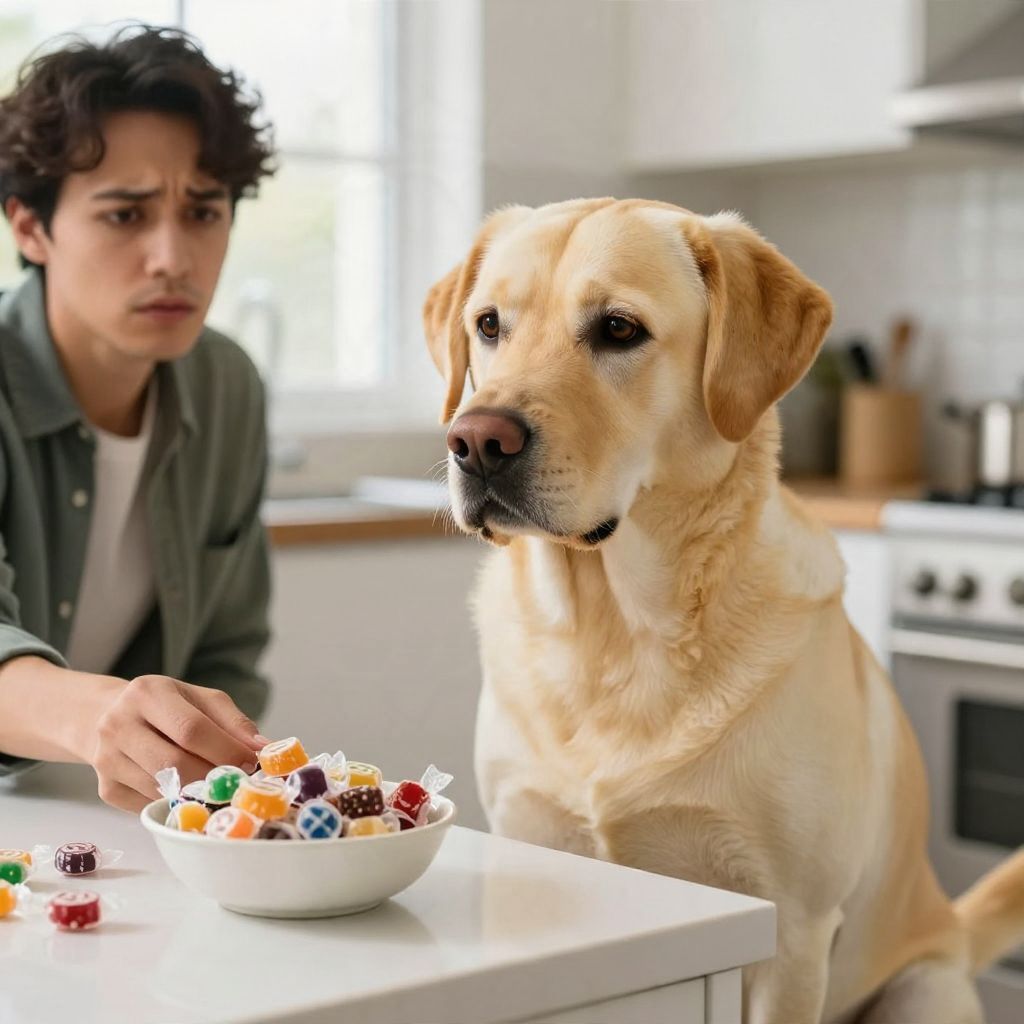
Can dogs eat candy? In general, no—most candy is unsafe for dogs because it can contain sugar, chocolate, xylitol, raisins, or other ingredients that may cause illness. Even “plain” candy can upset your dog’s stomach and contribute to long-term health problems.
If your dog ate candy, the right response depends on the type, amount, and your dog’s size and health. Some candy exposures are minor, but others are urgent, so it helps to know what is dangerous and when to call a veterinarian right away.
Can dogs eat candy?
Most candy is not safe for dogs. Chocolate, xylitol, raisins, macadamia nuts, caffeine, alcohol-filled sweets, and sugar-free products can be dangerous, while sticky or hard candy can also cause choking, vomiting, or intestinal blockage. If your dog ate candy, check the ingredients and contact your veterinarian promptly if any toxic ingredient is involved.
Why candy is risky for dogs
Candy is usually made for people, not dogs. It often contains large amounts of sugar, fat, artificial sweeteners, or toxic add-ins that can make dogs sick even when the candy looks harmless.
Common candy dangers
- Chocolate: Can cause poisoning, especially in darker forms and in smaller dogs.
- Xylitol: A sugar substitute that can be life-threatening to dogs.
- Raisins or currants: Sometimes found in trail mix candy or baked sweets and can be very dangerous.
- Hard candy: Choking risk and possible tooth damage.
- Chewy candy or caramel: Can stick in the mouth or throat and may trigger stomach upset.
- Nut-filled candy: Some nuts are unsafe, and high fat can trigger digestive problems.
- Alcohol-filled candy: Alcohol is toxic to dogs.
What “safe” really means
Even candy that is not immediately toxic is still a poor choice. A small amount may only cause mild stomach upset in one dog, while another dog may react more strongly because of size, age, medical conditions, or sensitivity.
What to do if your dog ate candy
Act quickly, but stay calm. The best next step depends on the candy type and whether your dog is showing symptoms. Do not wait for signs if the candy may contain xylitol, chocolate, raisins, or another toxic ingredient.
- Take the wrapper or package and read the ingredient list.
- Estimate how much your dog ate and when it happened.
- Check your dog for vomiting, drooling, tremors, restlessness, weakness, or unusual behavior.
- Call your veterinarian, an urgent care clinic, or a pet poison helpline if the ingredients are concerning.
- Follow professional instructions closely and do not give home treatments unless a veterinarian tells you to.
When candy exposure is an emergency
Seek urgent veterinary care right away if your dog has eaten candy containing xylitol, chocolate, raisins, alcohol, or an unknown sugar-free ingredient. Emergency signs include collapse, seizures, trouble walking, repeated vomiting, severe lethargy, pale gums, rapid breathing, or a swollen abdomen.
Which candy ingredients are most dangerous?
Chocolate
Chocolate is one of the most common candy hazards for dogs. The risk depends on the type of chocolate, the amount eaten, and your dog’s body size, but any chocolate candy deserves attention.
Watch for vomiting, diarrhea, agitation, rapid heart rate, panting, tremors, or seizures. If your dog ate chocolate candy, contact a veterinarian promptly, especially if the amount is unknown.
Xylitol
Xylitol is a major concern because it can cause a dangerous drop in blood sugar and, in some cases, liver injury. It may appear in sugar-free gum, mints, hard candies, and some “low-sugar” sweets.
Because xylitol can act quickly, do not wait for symptoms. Call a veterinarian immediately if you suspect your dog ate anything sugar-free that may contain it.
Raisins and currants
Some candies, chocolate bars, and holiday treats contain raisins or currants. These ingredients can be harmful to dogs, and the reaction is not always predictable from one dog to another.
If your dog ate a raisin-containing candy, contact your veterinarian right away even if your dog seems fine at first.
Hard candies, lollipops, and gummies
These may not always be toxic by ingredient, but they can still cause problems. Dogs can choke on them, crack teeth, or swallow wrappers and sticks that may irritate or block the digestive tract.
What symptoms should you watch for?
Mild candy-related stomach upset can show up as vomiting, soft stool, drooling, or reduced appetite. More serious symptoms depend on the ingredient and may develop quickly or over several hours.
- Vomiting or repeated retching
- Diarrhea
- Excessive drooling
- Restlessness or agitation
- Weakness or wobbliness
- Tremors or shaking
- Fast breathing or fast heart rate
- Seizures
- Collapse
If your dog shows any of the red-flag signs above, treat it as urgent. If the candy contained xylitol, chocolate, raisins, alcohol, or an unknown ingredient, contact a veterinarian even if symptoms have not started yet.
Does your dog’s size, age, or health matter?
Yes. A small dog may be affected by a much smaller amount of candy than a large dog. Puppies, senior dogs, and dogs with diabetes, pancreatitis history, obesity, heart disease, or other health issues may also be more vulnerable to complications.
Temperament and breed do not determine whether candy is safe, but individual habits do matter. Some dogs gulp food quickly, raid counters, or swallow wrappers, which increases the risk of choking or obstruction. Others are more selective and may only lick or nibble, but even that can be enough with toxic ingredients.
Can dogs have any candy at all?
It is best not to offer candy as a treat. Dogs do better with treats made for them or with vet-approved whole-food snacks that are simple and safe. Candy adds sugar and risk without any nutritional benefit.
Better treat options
- Small pieces of plain cooked meat
- Dog treats made for your dog’s size and diet
- Small amounts of dog-safe vegetables, if your dog tolerates them
- Commercial dental chews approved for dogs
Keep treats to a small part of your dog’s daily calories, especially if your dog is overweight or has a medical condition. If you are unsure what fits your dog’s diet, ask your veterinarian.
Common mistakes to avoid
- Assuming sugar-free means safe: Sugar-free candy may contain xylitol.
- Waiting for symptoms: Some toxic ingredients act before signs appear.
- Guessing the amount: Bring the package or ingredient list if you call for help.
- Giving home remedies: Do not induce vomiting unless a veterinarian instructs you to do so.
- Ignoring wrappers: Packaging can become a choking or blockage hazard.
How to prevent candy accidents
Prevention is usually easier than treatment. Dogs are often quick to grab dropped sweets, open purses, or raid low tables, so good management matters.
- Store candy in closed containers and out of reach.
- Keep handbags, backpacks, and trick-or-treat bags secured.
- Teach a reliable “leave it” cue using reward-based training.
- Pick up wrappers immediately after parties or holidays.
- Remind children and guests not to share candy with your dog.
When to call the veterinarian
Call your veterinarian if your dog ate candy and you are unsure about the ingredients, the amount, or whether the candy was sugar-free. Also call if your dog has vomiting, diarrhea, lethargy, or any unusual behavior after eating sweets.
For suspected xylitol, chocolate, raisin, alcohol, or wrapper ingestion, do not delay. Fast advice can make a major difference, especially for smaller dogs or dogs with underlying health problems.
Bottom line
Can dogs eat candy? The safest answer is no. Most candy is unhealthy at best and dangerous at worst, so keep it out of your dog’s reach and choose dog-safe treats instead. If your dog has already eaten candy, check the ingredients and contact a veterinarian promptly when toxic ingredients or warning signs are involved.
If you want more guidance on specific sweets, you may also find these helpful: can dogs eat cheesecake and what happens when dogs eat chocolate.