
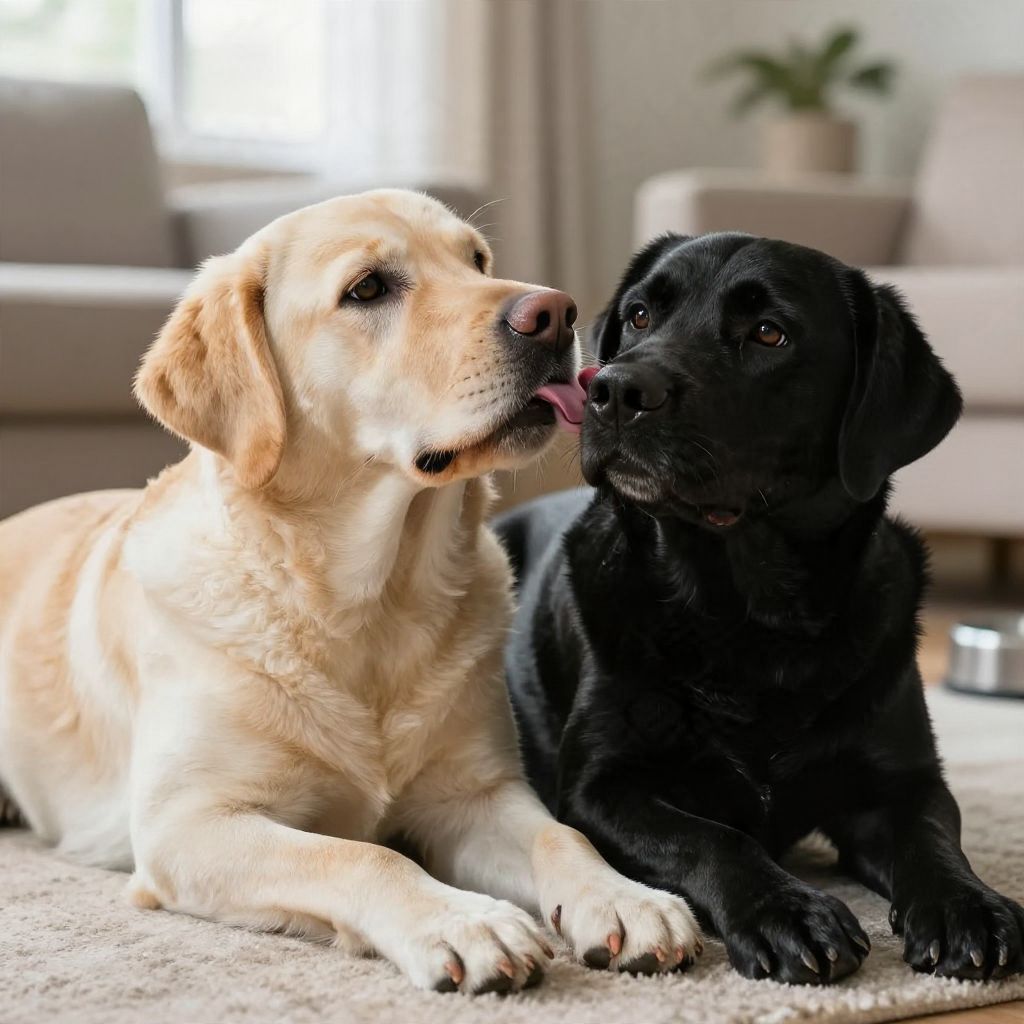
Dogs often lick each other’s ears during social interactions, grooming, or play. In many cases, it’s normal and harmless, but frequent ear licking can also point to irritation, infection, or stress.
The key is to watch the context, the dogs’ body language, and whether one dog seems bothered. Occasional licking is usually fine; persistent licking, redness, odor, discharge, or head shaking deserves a veterinary check.
Why do dogs lick each others ears?
Dogs lick each other’s ears mainly as a social grooming behavior, a way to show interest or affection, or because an ear smells appealing. Sometimes it happens during play or when one dog is trying to soothe another. If the licking is intense or focused on one ear, it may signal irritation or a health problem.
Common reasons dogs lick each other’s ears
Social grooming and bonding
Many dogs lick areas they can reach easily on another dog, including the ears. This can be part of normal social grooming, especially in dogs that live together, sleep near each other, or have a relaxed relationship.
When it stays brief and both dogs remain calm, this behavior is usually harmless.
Affection and attention-seeking
Some dogs lick ears because they enjoy interaction. They may be seeking contact, trying to start play, or responding to a dog they already know well.
Individual temperament matters here. Some dogs are naturally more tactile, while others prefer more space.
Play behavior
Ear licking can happen during rough-and-tumble play or after a chase. It may be a quick social signal rather than a serious grooming session.
Healthy play should look balanced. Both dogs should be able to disengage, switch roles, and show loose, relaxed body language.
Curiosity about scent
Dogs explore the world through smell and taste. Ears can carry food odors, outdoor scents, earwax, or skin secretions that attract another dog’s attention.
This is more likely after a walk, grooming session, meal, or time outdoors.
Comforting or appeasement behavior
In some situations, licking may be a calming gesture. A dog that feels uncertain may lick another dog’s ears to reduce tension or avoid conflict.
That said, not every lick is “submissive,” and you should avoid reading too much into one behavior alone. Look at the full picture, including posture, tail position, and whether either dog is trying to move away.
When ear licking is normal versus a problem
Brief, mutual ear licking is usually normal if both dogs are relaxed and neither dog seems annoyed. It becomes a concern when it is constant, one-sided, or hard to interrupt.
- Usually normal: short licking, loose bodies, play bows, relaxed faces, and easy separation.
- Potential problem: repeated licking of one ear, the other dog pulling away, whining, snapping, or trying to hide.
- Health concern: redness, odor, discharge, head shaking, scratching, swelling, or pain.
Health reasons a dog may target another dog’s ears
If one dog keeps licking another dog’s ears, the ear itself may be itchy or uncomfortable. Ear problems are common in dogs and can be caused by allergies, moisture, wax buildup, parasites, foreign material, or infection.
Signs to watch for
- Frequent head shaking
- Scratching at the ears
- Redness or swelling
- Bad smell from the ear
- Dark, yellow, or bloody discharge
- Tenderness when the ear is touched
- Head tilt or loss of balance
If you notice these signs, the licking may be a response to an underlying problem rather than simple social grooming. A veterinarian should examine the ear rather than assuming it is just a habit.
Why one dog may focus on one ear
A dog may repeatedly lick one ear if that ear smells different, feels irritated, or has more wax or discharge. A small wound, insect bite, or retained debris can also draw attention.
Because ear issues can worsen quickly, especially if a dog scratches and damages the skin, it’s best to address the cause early.
How to tell if the licking is too much
Ask yourself whether the interaction is mutual, brief, and easy to stop. If you have to interrupt it repeatedly, the licking is likely excessive.
- Watch both dogs’ body language.
- Check whether the recipient moves away or stiffens.
- See if the licking stops when you redirect them.
- Look for ear irritation or other symptoms.
- Consider whether the behavior happens only in certain settings, such as after walks or meals.
Persistent licking can also become a nuisance or create sore skin if the ear flap gets wet and irritated over time.
What to do if dogs keep licking each other’s ears
If the behavior is mild and both dogs are comfortable, you may not need to do anything. If it becomes repetitive or bothers one of the dogs, use calm management and redirection.
Helpful steps
- Interrupt gently and redirect both dogs to another activity.
- Offer a chew, sniffing game, or short training session.
- Separate the dogs briefly if one dog cannot relax.
- Keep the ear area clean and dry if your veterinarian has advised routine care.
- Monitor for redness, odor, discharge, or scratching.
Reward-based training works best. You can teach a cue such as “leave it” or “come” and reward the dogs for disengaging. Avoid punishment, which can increase stress and make social behavior less predictable.
When to separate the dogs
Give them space if the recipient dog is clearly uncomfortable, if the licking is relentless, or if tension is building. Separation is especially important if one dog is guarding resources, seems anxious, or has a history of conflict.
Management is not failure. It is a practical way to protect both dogs while you figure out what is driving the behavior.
Special considerations for puppies, seniors, and multi-dog homes
Puppies
Puppies often lick more than adult dogs because they are exploring, learning social skills, and seeking interaction. Gentle, supervised exposure to calm adult dogs can be helpful, but puppies also need breaks.
If a puppy pesters an older dog’s ears too much, step in early and redirect before the older dog becomes irritated.
Senior dogs
Older dogs may be less tolerant of repeated licking, especially if they have sore joints, hearing changes, or skin problems. They may also have more ear issues that make licking more likely.
Watch for signs that a senior dog wants more personal space.
Multi-dog households
In homes with several dogs, ear licking may become a habit that one dog starts and others copy. This is more likely when dogs are bored, under-exercised, or waiting for attention.
Structured routines, enrichment, and separate resting spaces can help reduce repetitive social behaviors.
Common mistakes to avoid
- Assuming all ear licking is dominance or “pack” behavior.
- Ignoring one-sided licking that seems obsessive.
- Waiting too long when there is odor, discharge, or head shaking.
- Forcing dogs to “work it out” if one dog is uncomfortable.
- Using punishment instead of redirection and management.
When to call the veterinarian
Contact your veterinarian if the licking is paired with ear symptoms, if it starts suddenly and persists, or if one dog seems painful or distressed. Ear problems are easier to treat when caught early.
Seek urgent veterinary care if your dog has severe swelling, bleeding, a head tilt, loss of balance, intense pain, a rapidly worsening ear odor or discharge, or if the dog seems lethargic or unwell.
The bottom line
Dogs lick each other’s ears for normal social reasons, but repeated or one-sided licking can also point to irritation or illness. Watch the dogs’ body language, check for ear symptoms, and redirect calmly when needed. If anything looks painful, smelly, or persistent, have a veterinarian examine the ear.
If you want to better understand related dog licking behaviors, you may also find why dogs lick people so much and why dogs lick their privates helpful.