
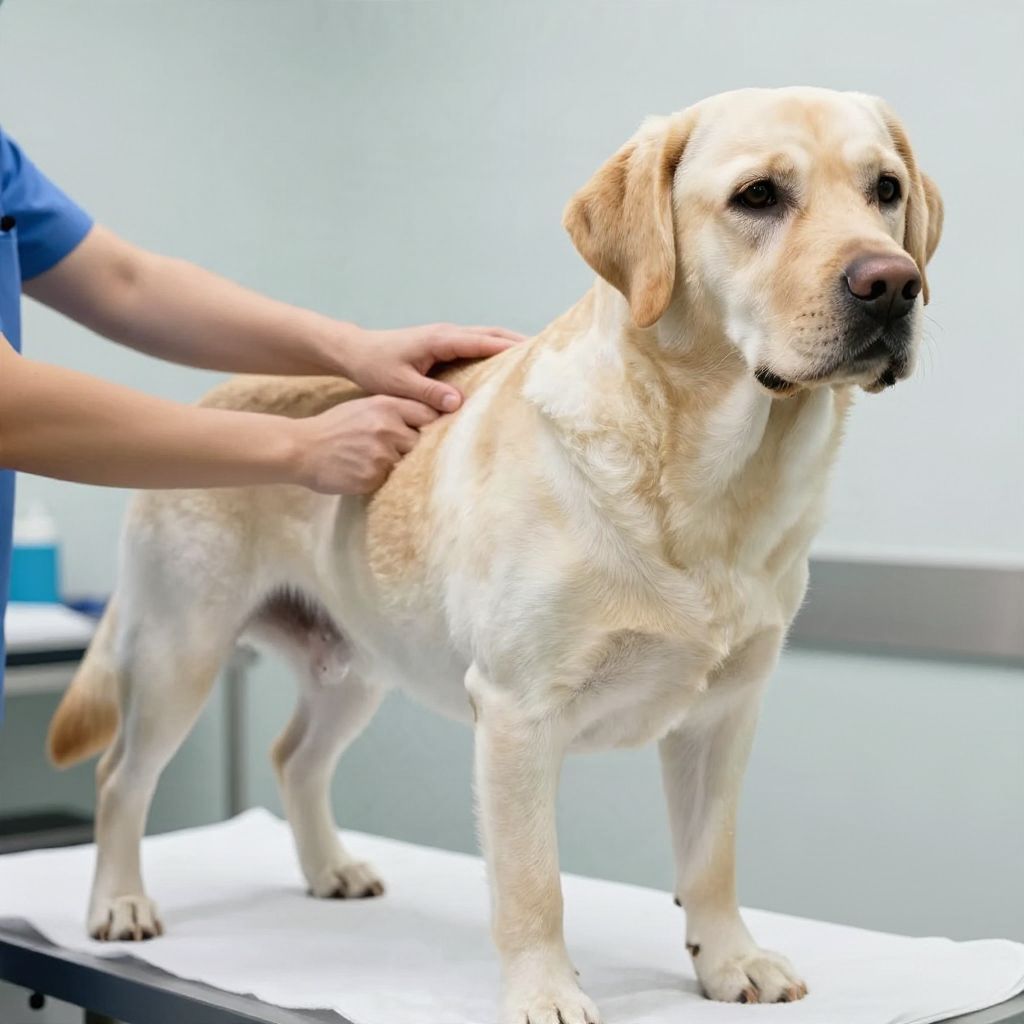
If you’re wondering, “Can you feel a microchip in a dog?” the short answer is sometimes, but usually only as a tiny firm bump under the skin. Most microchips are small enough that you cannot see them, and many dogs never seem bothered by them.
The chip should stay in place and not cause pain. If you notice swelling, heat, redness, a moving lump, or your dog seems uncomfortable, a veterinarian should check it.
Can you feel a microchip in a dog?
Yes, you may be able to feel a microchip in a dog as a small rice-sized bump under the skin, usually between the shoulder blades. In many dogs, it is subtle or impossible to find by touch. A microchip should not be painful, but any new lump or irritation needs a vet exam.
What a microchip feels like under your dog’s skin
A microchip is a tiny electronic device placed just under the skin, not in a muscle or organ. In a thin dog, you may feel a small, firm, movable bead-like bump. In a larger or fluffier dog, it may be hard to detect at all.
What you feel can vary based on:
- your dog’s body condition and coat thickness
- how recently the chip was implanted
- whether scar tissue formed around it
- the exact placement of the chip
Right after implantation, the area may be mildly tender for a short time. After healing, the chip itself should not be obvious or uncomfortable.
What is normal after microchipping?
Most dogs recover quickly after microchipping. A little soreness, a tiny scab, or brief sensitivity at the injection site can be normal for a day or two. The skin should gradually look and feel normal as the area heals.
Normal signs often include:
- a small pinprick or scab where the chip was inserted
- mild tenderness when touched soon after placement
- no major swelling or discharge
- your dog acting normally overall
If the lump stays small and does not seem painful, it may simply be the chip or a little scar tissue around it.
When a lump around the chip is not normal
Not every lump near a microchip is the chip itself. A swelling that is new, growing, warm, red, or painful deserves attention. The same is true if your dog keeps licking the area or seems bothered when you touch it.
Contact your veterinarian if you notice:
- increasing swelling
- redness or heat
- discharge or bleeding
- a lump that seems larger over time
- pain, sensitivity, or repeated scratching
- the chip seeming to move far from the original site
Urgent care is needed if your dog has significant swelling, severe pain, pus, fever, or seems unwell. Those signs can point to infection or another problem that should not wait.
Can a microchip move in a dog?
Microchips can sometimes migrate slightly under the skin, especially soon after implantation. Small movement is not usually dangerous, but a chip that seems to have shifted a lot should be checked. Migration can make it harder to find the chip during scanning or by touch.
If you think the chip has moved, your vet can scan the area and confirm its location. In most cases, the main concern is making sure the chip still works and can be read properly.
Why you should not rely on touch alone
Feeling a microchip does not confirm that it is functioning. A chip may be present but not readable if it has failed, migrated, or was never registered correctly. That is why scanning matters more than trying to locate it by hand.
To protect your dog’s identification, make sure you:
- keep your contact information updated with the registry
- ask your vet to scan the chip during routine visits
- confirm the chip number matches your records
- keep a copy of the registration details in a safe place
How to check your dog safely at home
If you want to feel for the chip, do it gently. You do not need to press hard, and you should stop if your dog seems uncomfortable. The chip is usually placed between the shoulder blades, though exact placement can vary.
Simple steps to try
- Have your dog relaxed and standing or lying comfortably.
- Use flat fingers to gently feel the area between the shoulder blades.
- Look for a tiny firm bump rather than a large lump.
- Do not squeeze, pinch, or repeatedly probe the area.
- If you are unsure, ask your veterinarian to scan it.
If your dog is nervous, wiggly, or painful, skip home checking and let a professional handle it.
Can puppies and senior dogs feel the chip differently?
Yes. Puppies often have less body fat, so a microchip may be easier to feel after implantation. Senior dogs may also have changes in skin, muscle, or fat that make the chip more noticeable. But age alone does not determine whether the chip should be felt or whether it is a problem.
What matters most is how the site looks and feels over time. A chip that is simply detectable is usually not concerning. A chip area that changes, swells, or causes discomfort should be examined.
What if your dog keeps scratching or licking the area?
Persistent licking or scratching is not typical after the site has healed. It may mean the skin is irritated, itchy, infected, or that another skin issue is present nearby. Dogs can also rub at a spot for reasons unrelated to the chip, such as allergies or a flea bite.
To reduce irritation, avoid repeated touching and keep the area clean and dry unless your vet gives different instructions. If the behavior continues, schedule a veterinary visit rather than assuming it is harmless.
Microchip myths that can confuse dog owners
There are a few common misunderstandings about microchips. Knowing what they do and do not do can help you respond appropriately if you feel a lump.
- Myth: A microchip is a tracking GPS device.
- Fact: Most pet microchips do not track location; they store an ID number that a scanner can read.
- Myth: If you can’t feel it, it must be missing.
- Fact: Many healthy chips are too small or too deep to feel easily.
- Myth: A chip should never be felt at all.
- Fact: Some dogs have a tiny palpable bump, especially if they are lean.
When to call the vet about a felt microchip
It is reasonable to call your veterinarian if you can feel the chip and want confirmation that what you’re feeling is normal. You should also call if the area changes or if you are unsure whether the chip is in the right place.
Make an appointment sooner if your dog has:
- a lump that is enlarging
- pain when touched
- skin discoloration
- drainage, odor, or bleeding
- fever, lethargy, or reduced appetite
Your vet can scan the chip, examine the site, and decide whether any follow-up is needed.
How to keep microchip information useful
A microchip only helps if the registration is current and the chip can be scanned. If your dog is lost, outdated contact details can delay reunification even when the chip is present and working.
Good habits include:
- updating your phone number and address promptly
- keeping the registry company and chip number recorded
- asking your vet to scan the chip during annual visits
- using a collar tag as a visible backup ID
Bottom line
Yes, you can sometimes feel a microchip in a dog, but only as a small, subtle bump in some dogs. It should not be painful or cause ongoing swelling. If the area becomes red, hot, enlarged, or tender, have your veterinarian check it promptly.
If you want more practical dog-care guidance, you may also find it helpful to read about what to do if your dog is constipated and what you can give your dog for a gurgling stomach.