
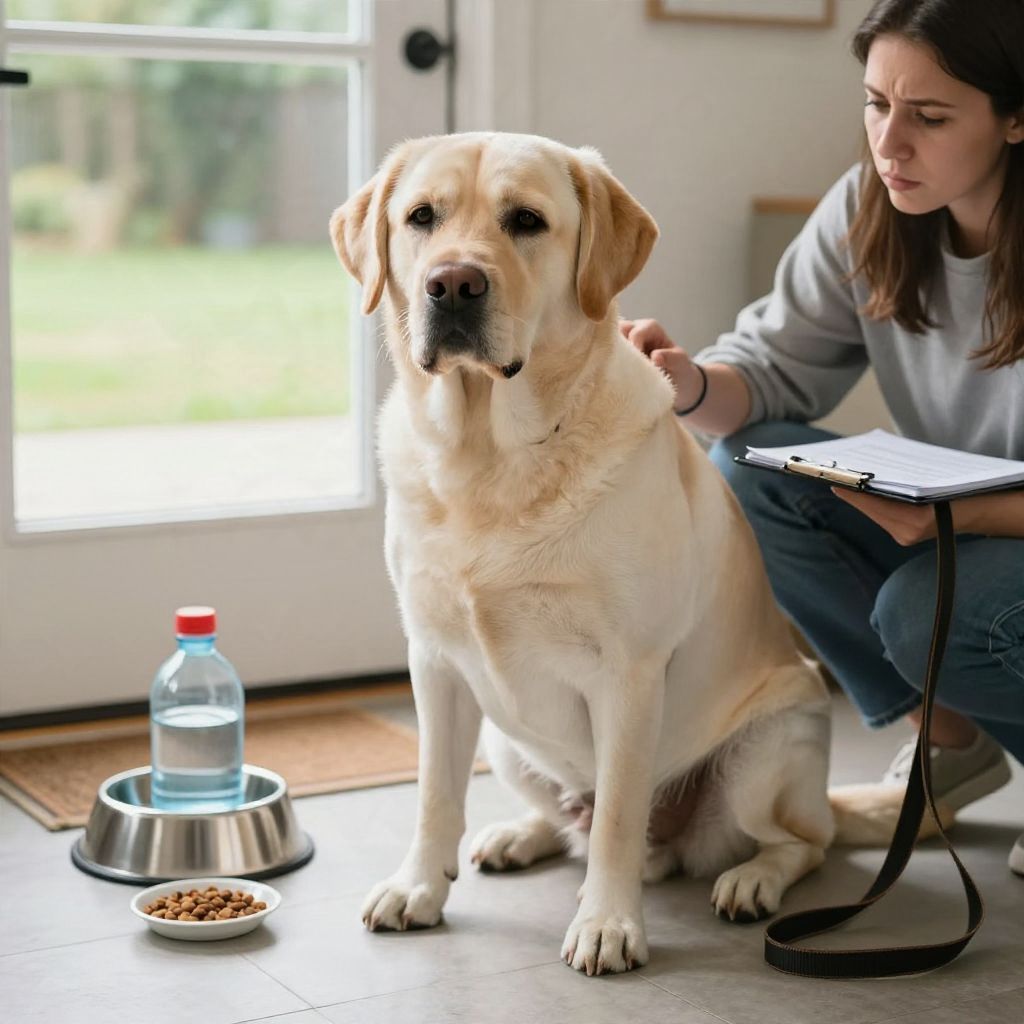
If your dog is constipated, the first step is to stay calm and watch for warning signs. Mild constipation can sometimes improve with simple care, but straining, pain, vomiting, or a swollen belly can mean a more serious problem.
Most dogs need veterinary help if constipation lasts more than a day or two, keeps returning, or comes with other symptoms. The safest approach is to support hydration, movement, and normal bathroom habits while avoiding unsafe home remedies.
What To Do If Your Dog Is Constipated?
Start by checking whether your dog is truly constipated, then encourage water intake, gentle exercise, and regular potty breaks. Do not give human laxatives, enemas, or pain medicines unless your veterinarian specifically instructs you to. Seek veterinary care quickly if your dog is straining, in pain, or unable to pass stool.
How to tell if your dog is constipated
Constipation means your dog is having trouble passing stool, passing small hard stools, or going less often than usual. Some dogs may squat repeatedly, seem uncomfortable, or produce only a little dry stool.
Common signs include:
- Straining to poop
- Small, dry, hard stools
- Less frequent bowel movements
- Whining, pacing, or restlessness before or during potty time
- Licking the rear end more than usual
- Loss of appetite or mild nausea in some dogs
Not every dog shows the same signs. Older dogs, dogs with arthritis, and dogs with long coats or anal-area discomfort may show subtle changes rather than obvious straining.
Common reasons dogs get constipated
Constipation can happen for many reasons, and the cause matters. A short-term issue may be mild, while ongoing constipation can point to a medical problem that needs treatment.
Everyday causes
- Not drinking enough water
- Too little exercise
- Sudden diet changes
- Eating too much bone, hair, or indigestible material
- Stress or changes in routine
Health-related causes
- Pain that makes it hard to squat
- Anal gland discomfort
- Intestinal blockage from a foreign object
- Enlarged prostate in intact male dogs
- Neurologic or spinal problems
- Dehydration or certain medical conditions
Because the cause can range from simple to urgent, repeated constipation should not be treated as a minor nuisance.
Safe first steps you can try at home
If your dog seems otherwise well and is only mildly constipated, you can try supportive care for a short time. Keep things gentle and monitor closely.
- Offer fresh water often. Make sure clean water is easy to reach. Some dogs drink more from a different bowl, a pet fountain, or by adding water to meals.
- Encourage gentle movement. Short walks can help stimulate normal bowel activity.
- Feed normal meals unless your vet says otherwise. Sudden fasting or frequent food switching can make things worse.
- Watch the litter box or potty area closely. Note whether your dog is passing any stool at all and whether it looks dry, small, or painful to pass.
- Keep stress low. A calm routine and regular potty breaks can help some dogs relax enough to go.
These steps are supportive, not a cure. If your dog still cannot poop normally, veterinary guidance is the next step.
What not to do when your dog is constipated
Some common internet suggestions can be unsafe. Avoid guessing at treatment, especially if you do not know the cause.
- Do not give human laxatives, stool softeners, or enemas unless your veterinarian tells you to.
- Do not give pain relievers made for people. Many are dangerous for dogs.
- Do not force-feed large amounts of fiber or oil. Too much can cause diarrhea, vomiting, or make certain problems worse.
- Do not wait if your dog is painful or bloated. Those can be emergency signs.
If you are unsure whether a product is safe, call your veterinarian before using it.
When constipation is an emergency
Some symptoms mean your dog needs urgent veterinary care, not home treatment. These signs can suggest a blockage, severe pain, or another serious condition.
- Repeated straining with no stool coming out
- Vomiting
- Swollen or hard abdomen
- Marked pain, crying, or a hunched posture
- Lethargy or weakness
- Refusing food and water
- Blood in the stool or around the rear end
- Signs of distress after swallowing a toy, bone, sock, or other object
If your dog has these symptoms, contact a veterinarian right away or go to an emergency clinic.
When to call your veterinarian even if it seems mild
Even mild constipation deserves a call if it lasts more than 24 to 48 hours, keeps happening, or is new in an older dog. Your veterinarian may want to examine your dog, review diet and medications, and check for pain, dehydration, or obstruction.
You should also call sooner if your dog:
- Has a history of digestive disease
- Has recently eaten bones, fabric, toys, or other non-food items
- Is recovering from surgery or injury
- Has trouble squatting because of arthritis or back pain
- Is a puppy, senior dog, or medically fragile dog
Age and health status matter. Puppies can become dehydrated quickly, while senior dogs may have underlying conditions that make constipation more serious.
How veterinarians may treat constipation
Treatment depends on the cause and how severe the problem is. Your veterinarian may recommend an exam, X-rays, fluids, stool softeners, or other therapies based on what they find.
Possible veterinary approaches include:
- Checking for dehydration, pain, or abdominal blockage
- Removing impacted stool if needed
- Treating nausea, pain, or another underlying condition
- Adjusting diet under veterinary guidance
- Recommending a bowel-support plan for recurring cases
Do not assume constipation is purely dietary. A physical obstruction or painful condition needs proper diagnosis.
How to help prevent constipation in the future
Prevention is often about consistency. Many dogs do best with steady routines, enough water, and a diet that matches their individual needs.
Helpful habits
- Keep your dog on a regular feeding schedule
- Provide fresh water throughout the day
- Make daily exercise part of the routine
- Limit access to bones, toys, fabric, and trash that could be swallowed
- Transition foods gradually when changing diets
- Monitor stool quality so you notice changes early
Some dogs may need a veterinarian-approved diet adjustment, especially if they have recurring constipation, sensitive digestion, or another chronic health issue. What works for one dog may not suit another.
Special considerations for puppies, seniors, and dogs with health issues
Young, older, or medically complex dogs deserve extra caution. Their constipation may worsen quickly or reflect a bigger problem.
Puppies
Puppies can get constipated from dehydration, diet changes, or swallowing inappropriate items. Because they are small and can decline quickly, do not delay if a puppy is straining or acting unwell.
Senior dogs
Older dogs may have lower activity levels, arthritis, or chronic disease that affects bowel movements. If your senior dog seems constipated, a veterinary exam is wise sooner rather than later.
Dogs with chronic illness
Dogs with kidney disease, neurologic disease, back pain, or a history of digestive problems may need a tailored plan. Never assume the same home approach is safe for every dog.
Practical takeaway
If your dog is constipated, start with water, gentle exercise, and close observation, but do not rely on home treatment for long. Call your veterinarian if the problem lasts, returns, or comes with pain, vomiting, or a swollen belly. When in doubt, get professional help early.
If you want more related guidance, you may also find what you can give a dog for constipation and what to give a dog for an upset stomach helpful for next steps.