
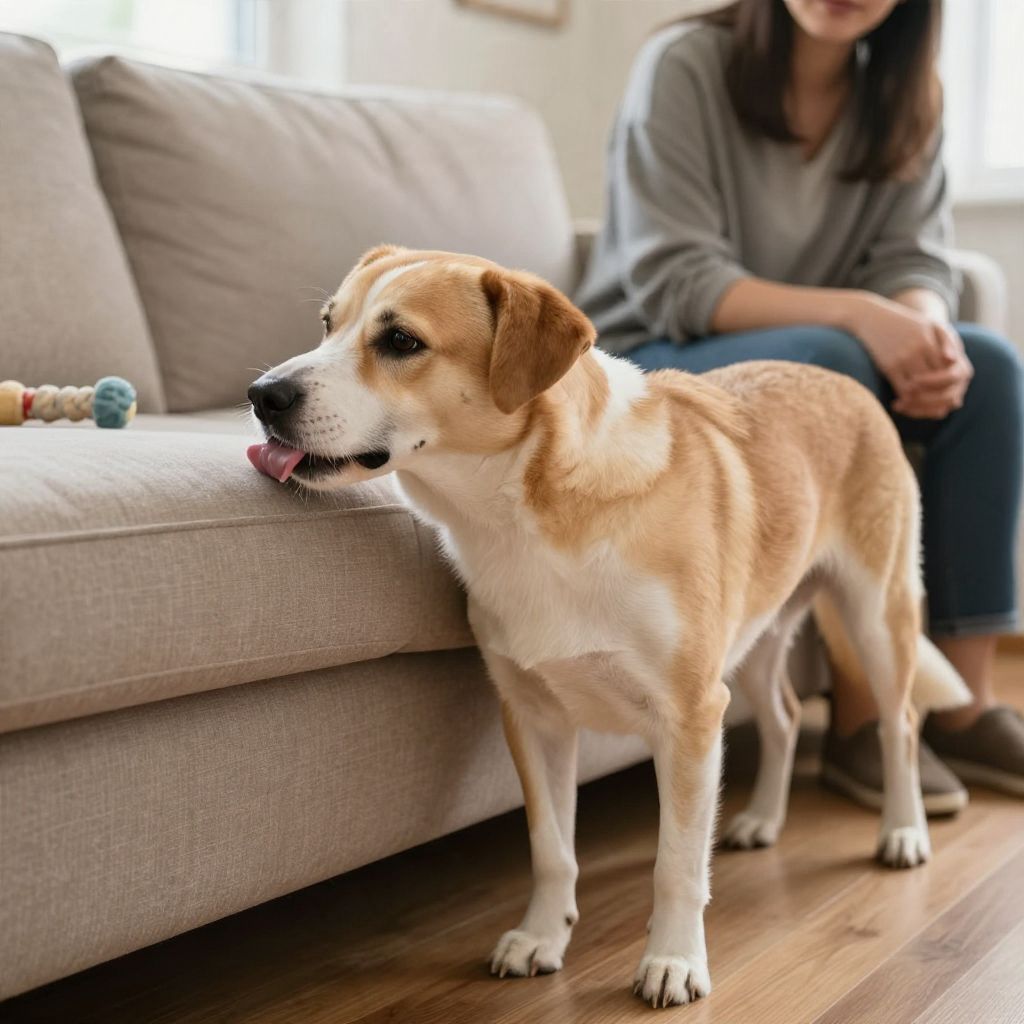
Why does my dog lick the couch? In many cases, dogs lick furniture because they smell food, taste residue, feel bored, or are seeking comfort. It can also happen with anxiety, habit, or an underlying medical issue that changes appetite, nausea, or behavior.
If the licking is new, intense, or paired with other symptoms, it’s worth paying attention. The cause is often manageable, but persistent licking can signal stress or a health problem that needs a veterinarian’s input.
Why Does My Dog Lick The Couch?
Your dog may lick the couch because something on it tastes or smells interesting, because licking is soothing, or because they have learned the behavior through repetition. Sometimes it’s normal curiosity; other times it can point to boredom, stress, nausea, pain, or another medical issue that should be checked by a vet.
Common reasons dogs lick the couch
Food crumbs, scents, and residue
Couches collect tiny traces of food, body oils, lotions, and cleaning products. Dogs have an excellent sense of smell, so even a surface that looks clean may be appealing to them.
If licking happens mostly after meals, snack time, or when guests have been over, scent and residue are likely factors.
Boredom or lack of enrichment
Some dogs lick furniture when they do not have enough mental or physical activity. Licking can become a self-directed way to pass time, especially in dogs left alone for long periods.
This is more likely if your dog also paces, whines, chews objects, or seeks constant attention.
Stress, anxiety, or self-soothing
Repeated licking can be a calming habit for some dogs. Changes in routine, loud noises, separation, or conflict in the home can all contribute.
If the licking increases during stressful moments, it may be part of a broader anxiety pattern rather than simple curiosity.
Learned habit
Dogs repeat behaviors that have been rewarding in the past. If licking the couch once led to attention, a dropped crumb, or a soothing routine, your dog may keep doing it.
Even if the original trigger is gone, the habit can continue because it has become self-reinforcing.
Nausea or other medical discomfort
Some dogs lick surfaces when they feel sick to their stomach or generally unwell. Nausea, dental pain, reflux, and other discomforts can sometimes show up as unusual licking behavior.
If the licking is sudden or comes with vomiting, drooling, loss of appetite, lethargy, or abdominal pain, contact your veterinarian.
Compulsive behavior
In some dogs, licking becomes excessive and difficult to interrupt. This may be a compulsive behavior, especially if it happens for long periods and seems disconnected from the environment.
Compulsive behaviors can be influenced by anxiety, frustration, genetics, or medical issues, so they should not be ignored if they persist.
What to watch for alongside couch licking
One behavior alone does not tell the whole story. Look for patterns and other symptoms that help narrow down the cause.
- Does your dog lick the couch at specific times, such as after meals or when alone?
- Is the licking brief, or does it continue for long stretches?
- Are there signs of nausea, drooling, grass eating, or vomiting?
- Does your dog seem restless, anxious, or unable to settle?
- Are there changes in appetite, thirst, stool, or energy level?
- Is your dog also licking paws, walls, floors, or their own body?
When licking appears in several places, or is paired with other changes, the cause is more likely to be medical, behavioral, or both.
When couch licking is normal versus concerning
Usually less concerning
- Brief licking after food has been on the couch
- Occasional licking during a boring moment
- Short-lived curiosity in a puppy
- Rare licking that stops easily when redirected
More concerning
- New or sudden obsessive licking
- Licking that lasts many minutes or repeats throughout the day
- Licking plus vomiting, diarrhea, drooling, or appetite loss
- Licking with pacing, panting, trembling, or inability to settle
- Licking that seems compulsive or hard to interrupt
Seek urgent veterinary care if your dog is vomiting repeatedly, has a swollen abdomen, seems painful, collapses, has trouble breathing, or may have eaten something toxic or dangerous.
What you can do at home
Start with simple, humane steps that reduce the reward for licking and give your dog better outlets.
- Clean the couch thoroughly. Remove food residue, pet-safe stains, and lingering scents that may be attracting your dog.
- Block access when you can’t supervise. Use baby gates, closed doors, or a washable cover to limit opportunities to practice the behavior.
- Increase enrichment. Add sniff walks, training games, puzzle feeders, chew toys, and interactive play.
- Redirect calmly. If your dog starts licking, interrupt gently and offer an approved alternative such as a toy or mat.
- Reward the behavior you want. Praise and treat your dog for resting quietly away from the couch.
- Keep a simple log. Note when licking happens, what was going on before it started, and whether anything changed that day.
Training tips that actually help
Training works best when you teach an alternative behavior instead of just trying to stop the licking. Reward-based methods are safer and more effective than punishment, which can increase stress and make the behavior worse.
Teach an incompatible behavior
Ask your dog to go to a bed, mat, or crate area they already like, then reward them for staying there calmly. This gives them a clear alternative to couch licking.
Use management before practice becomes a habit
The more your dog rehearses the licking, the stronger the habit can become. Preventing access while you retrain is often the fastest way to improve the problem.
Keep sessions short and positive
Reward your dog for small successes. If they are anxious or overstimulated, long training sessions may not help right away.
How age, breed, and personality can matter
Any dog can lick the couch, but the reason may vary with age, temperament, and life stage. Puppies often explore surfaces with their mouths, while adult dogs may lick from habit, boredom, or stress.
Some dogs are naturally more persistent, sensitive, or food-motivated than others. Breed tendencies can influence energy level, trainability, or prey drive, but they do not determine behavior on their own. Your individual dog’s history matters more than a label.
When to call the vet
Contact your veterinarian if the licking is frequent, new, or seems out of character, especially if you also notice physical symptoms. A vet can check for nausea, dental disease, pain, allergies, gastrointestinal upset, or other medical causes.
It’s especially important to get help if your dog:
- Has vomiting, diarrhea, drooling, or decreased appetite
- Seems restless, anxious, or unable to relax
- Licks surfaces compulsively for long periods
- Also licks paws, floors, walls, or their own body excessively
- Has a history of gastrointestinal or behavioral issues
If your vet rules out medical concerns, they may recommend behavior support, environmental changes, or referral to a certified trainer or veterinary behaviorist.
Common mistakes to avoid
- Ignoring the behavior when it is new or escalating
- Using punishment, yelling, or startling methods
- Assuming it is “just a quirk” when symptoms are changing
- Leaving food residue on the couch and expecting the licking to stop
- Relying only on deterrents without giving your dog an alternative outlet
The bottom line
Why does my dog lick the couch? Most often it’s due to scent, boredom, stress, or a learned habit, but medical causes are also possible. Clean the area, increase enrichment, redirect calmly, and watch for warning signs. If the behavior is sudden, excessive, or paired with illness, schedule a veterinary visit.
If you want to compare this with other licking behaviors, you may also find why dogs lick people so much and why dogs lick excessively helpful for understanding the bigger picture.