
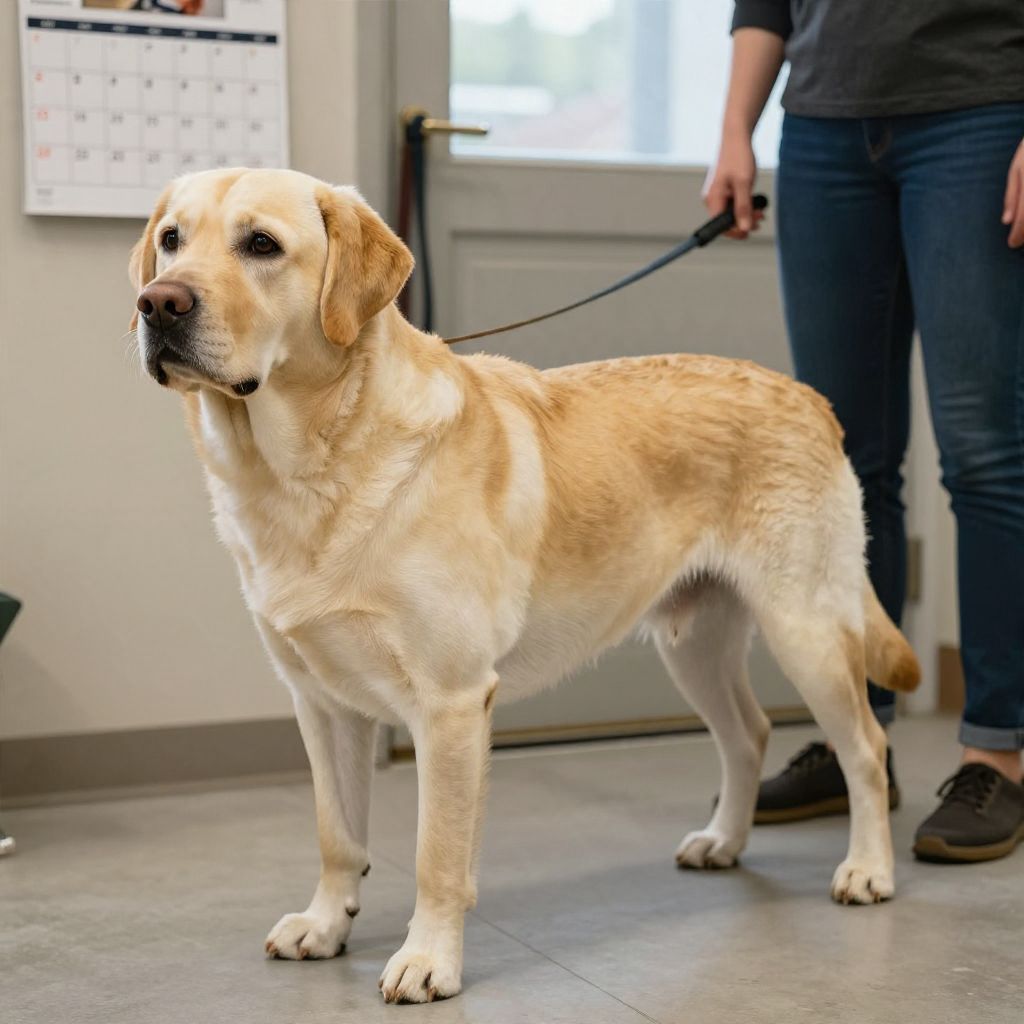
How long are female dogs in heat? Most dogs stay in heat for about 2 to 4 weeks, though the exact timing can vary. The heat cycle includes several stages, and visible bleeding is only part of it.
You can usually expect behavioral changes, a swollen vulva, and attraction from male dogs during this time. If bleeding is very heavy, lasts unusually long, or your dog seems unwell, contact your veterinarian.
How long are female dogs in heat?
Female dogs are typically in heat for about 2 to 4 weeks, with many averaging around 3 weeks. The cycle has stages, so signs may start before bleeding and continue after it slows. Exact timing varies by age, breed, and individual health.
What happens during the heat cycle?
A dog’s heat cycle is not just one phase. It usually includes four stages, and the visible signs change as the cycle progresses.
1. Proestrus: the start of heat
This is often when you first notice swelling of the vulva and bloody vaginal discharge. Male dogs may show interest, but most females are not yet ready to mate.
2. Estrus: fertile period
This is the stage when a female dog is usually receptive to mating. Discharge may lighten in color or become less noticeable, but she can still attract males strongly.
3. Diestrus: after fertility
Signs of heat fade, and the body shifts out of the fertile period. Discharge usually stops, and behavior gradually returns to normal.
4. Anestrus: resting phase
This is the quiet time between cycles. Your dog has no obvious heat signs during this stage.
What signs should you expect?
Not every dog shows the same signs, and some are subtle while others are obvious. Common signs include:
- Swollen vulva
- Bloody or pinkish discharge
- More frequent urination
- Increased interest from male dogs
- Restlessness or clinginess
- Changes in appetite
- Tail positioning changes or flirtatious behavior
Some dogs become more affectionate, while others seem irritable or distracted. These changes can vary with temperament, age, and previous experiences.
How long does the bleeding last?
Bleeding often lasts about 7 to 10 days, but it can be shorter or longer in some dogs. It may start out darker and heavier, then become lighter or less obvious as the cycle moves forward. Bleeding is not the same as the full heat cycle length.
If you want a deeper look at discharge timing, see how long a dog bleeds when in heat.
How often do dogs go into heat?
Most female dogs go into heat about every 6 months, but this can vary. Smaller dogs may cycle more often, while larger breeds may cycle less frequently. Young dogs may also be irregular at first, and older dogs can become less predictable.
For more on cycle frequency, you may also find how often female dogs go into heat helpful.
What affects how long heat lasts?
The length of heat can differ from dog to dog. Common factors include:
- Age: first and second cycles may be irregular
- Breed and size: timing can vary across dogs
- Overall health: illness or hormonal issues can affect cycles
- Individual variation: some dogs simply have shorter or longer cycles
- Spaying status: an intact female will cycle; a spayed dog should not
If your dog’s pattern changes suddenly, that is worth a veterinary check. A change in cycle length can sometimes signal a reproductive or hormonal problem.
How to care for a dog in heat
Heat management is mostly about safety, cleanliness, and preventing unwanted mating. A dog in heat can attract males from a surprising distance, so careful supervision matters.
- Keep her indoors or closely supervised. Do not leave her outside alone, even in a fenced yard.
- Use leash walks only. Avoid dog parks and off-leash areas.
- Block access to male dogs. Separate her from intact males in the home.
- Use dog diapers if helpful. They can reduce mess, but they do not prevent mating.
- Provide calm enrichment. Food puzzles, sniffing games, and quiet chew options can help with restlessness.
- Keep routines steady. Predictable feeding, walks, and rest can reduce stress.
Can a female dog get pregnant the entire time she is in heat?
Not necessarily. Fertility is usually highest during the estrus stage, not the entire heat cycle. Because timing can be hard to judge at home, assume your dog could become pregnant anytime she has active heat signs and protect her accordingly.
If preventing pregnancy is important, talk with your veterinarian about spaying and the best timing for your dog. Spaying also eliminates future heat cycles, though the right decision depends on your dog’s age, health, and lifestyle.
When should you call the vet?
Most heat cycles are normal, but some signs need professional attention. Contact your veterinarian if you notice:
- Bleeding that is very heavy or lasts much longer than expected
- Foul-smelling discharge
- Marked lethargy, fever, vomiting, or loss of appetite
- Extreme thirst or increased urination
- Obvious pain, straining, or distress
- A cycle that seems unusually frequent, absent, or irregular
Seek urgent veterinary care if your dog collapses, has pale gums, has a swollen painful abdomen, or seems severely ill. These are not normal heat signs.
Common mistakes to avoid
Heat can be stressful, and it is easy to make avoidable mistakes. The most common ones are:
- Assuming a fenced yard is enough protection
- Letting her off leash “just for a minute”
- Waiting until discharge stops before being cautious
- Using punishment for messy behavior or restlessness
- Ignoring a sudden change in cycle pattern
Reward-based management works best. Keep your dog safe, limit opportunities for mating, and give her calm outlets for energy.
What to expect after heat ends
Once the cycle is over, swelling and discharge should gradually stop, and behavior usually settles. Some dogs bounce back quickly, while others take a little longer to feel fully normal. If signs continue well beyond the expected cycle, ask your vet to check for a medical cause.
Conclusion
Female dogs are usually in heat for about 2 to 4 weeks, but the exact timeline varies. Watch for discharge, swelling, and behavior changes, and keep your dog safely away from intact males until the cycle is clearly over. If anything seems unusual, your veterinarian can help you sort out what is normal.
If you want more help understanding your dog’s reproductive cycle, the related guides on heat frequency and bleeding length can give you a fuller picture.