
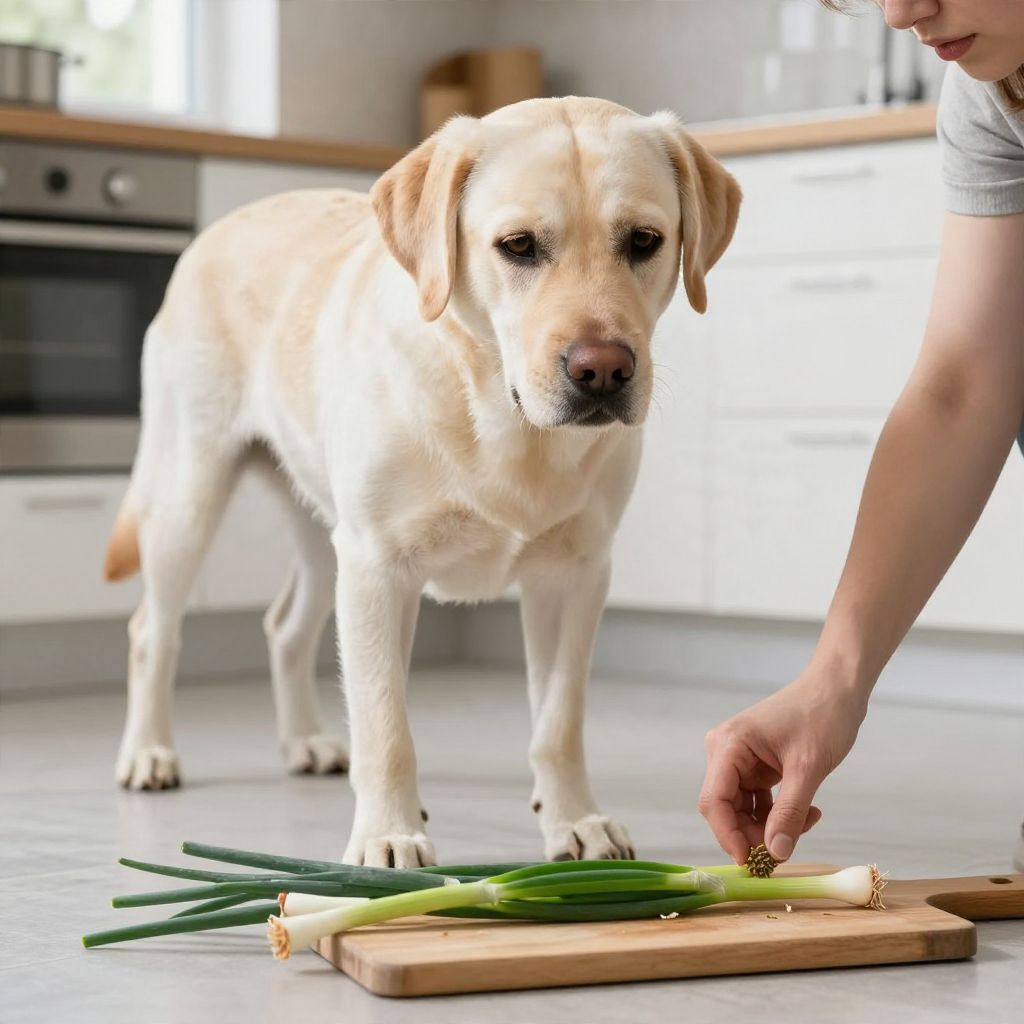
Can dogs eat green onions? No—green onions are part of the onion family and can be toxic to dogs. Even small amounts may cause problems, especially if your dog eats them repeatedly or in a large serving.
If your dog has eaten green onions, watch closely and contact your veterinarian for advice. Signs may not appear right away, so it’s important to take the exposure seriously even if your dog seems fine at first.
Can Dogs Eat Green Onions?
No. Green onions are not safe for dogs because they contain compounds that can damage red blood cells and lead to anemia. This risk applies to raw, cooked, dried, powdered, and seasoned forms, and the danger can be higher if the onions are concentrated in soups, sauces, or table scraps.
Why Green Onions Are Dangerous for Dogs
Green onions belong to the Allium family, which also includes onions, garlic, leeks, and chives. These plants can irritate the digestive system and, more importantly, harm red blood cells, reducing the blood’s ability to carry oxygen.
Forms that can still be harmful
- Raw green onions
- Cooked green onions
- Dehydrated or dried green onions
- Green onion powder or seasoning blends
- Foods cooked with green onions, such as stir-fries, soups, omelets, or rice dishes
Cooking does not make green onions safe. Powdered seasoning can be especially risky because it is easy for a dog to consume a concentrated amount without you realizing it.
What Happens If a Dog Eats Green Onions?
Some dogs develop stomach upset first, while others may show signs of anemia later. The severity can vary based on your dog’s size, how much was eaten, how often exposure happened, and whether your dog has any underlying health issues.
Common warning signs
- Vomiting
- Diarrhea
- Drooling
- Loss of appetite
- Lethargy or weakness
- Pale gums
- Rapid breathing
- Dark urine
- Collapse in severe cases
Some signs may take time to appear, so a dog that seems normal right after eating green onions can still become ill later.
What You Should Do If Your Dog Ate Green Onions
If your dog ate green onions, contact your veterinarian, an emergency clinic, or a pet poison helpline right away for specific guidance. Do not wait for symptoms if you know your dog consumed them, especially if the amount is uncertain or the food was heavily seasoned.
- Remove any remaining green onions or contaminated food.
- Note what was eaten, how much, and when it happened.
- Call your veterinarian for next steps.
- Follow professional advice about monitoring or examination.
Do not try to make your dog vomit unless a veterinarian specifically tells you to do so. Home treatment can be unsafe, especially if your dog is already weak, vomiting, or having trouble breathing.
When Green Onion Exposure Becomes an Emergency
Seek urgent veterinary care if your dog has eaten a large amount, ate green onions with other toxic ingredients, or is showing concerning symptoms. Rapid treatment can matter if anemia or severe gastrointestinal upset develops.
Go to an emergency vet now if you notice
- Collapse or inability to stand
- Severe weakness
- Difficulty breathing
- Very pale, white, or blue-tinged gums
- Repeated vomiting
- Bloated abdomen or extreme distress
- Seizures
These are not symptoms to monitor at home. They need immediate veterinary attention.
Does the Risk Depend on Your Dog’s Size, Age, or Health?
Yes, individual factors matter. A small dog may be affected by less food than a larger dog, and puppies, seniors, and dogs with existing health problems may have less reserve if they become ill. Dogs with a history of anemia or other medical conditions may be more vulnerable and should be assessed promptly.
That said, there is no “safe” amount you should intentionally offer. Because the effect can vary, it is better to treat any known exposure as worth a call to your veterinarian.
What About Tiny Tastes or Foods Cooked with Green Onions?
Even a small taste can be a problem if it happens more than once or if the food contains concentrated onion flavor. Many people foods are mixed dishes, so the amount of green onion may be hard to judge.
Examples of risky foods
- Soups and broths
- Fried rice and stir-fries
- Pizza toppings
- Stuffing and casseroles
- Seasoned meats or marinades
- Dips, spreads, and sauces
If your dog stole food from the counter or trash, check the ingredients carefully before deciding what to do. Onion powder and garlic powder are common hidden risks.
Safe Alternatives to Share Instead
If you want to offer your dog a people-safe snack, choose plain foods that are known to be dog-friendly and given in moderation. Keep treats to a small part of the diet so they do not replace balanced dog food.
- Plain cooked carrots
- Plain green beans
- Small pieces of apple without seeds
- Blueberries
- Plain cooked pumpkin
- Plain cooked chicken, if your veterinarian says it fits your dog’s diet
Introduce any new food slowly, especially if your dog has a sensitive stomach, food allergies, or a medical diet plan.
How to Prevent Green Onion Accidents
Prevention is usually simple, but it matters because dogs often find dropped food quickly. Good kitchen habits can reduce the chance of an accidental exposure.
- Keep cutting boards and scraps out of reach.
- Store leftovers in sealed containers.
- Use covered trash cans.
- Teach a reliable “leave it” cue with reward-based training.
- Supervise your dog around cooking and mealtimes.
- Remind guests not to share seasoned food.
Training helps, but management is still important. A dog with a strong food drive, a puppy, or a recently adopted dog may need extra supervision while you build reliable habits.
Common Mistakes Dog Owners Make
Several misunderstandings can delay care after a green onion exposure. Avoid assuming the food is harmless because it was cooked, because your dog is large, or because no symptoms appeared immediately.
- Waiting to see if symptoms develop before calling a vet
- Assuming “a little bit” is always safe
- Forgetting that onion powder counts too
- Giving human remedies without veterinary guidance
- Ignoring repeated small exposures over several days
What Your Veterinarian May Recommend
Your veterinarian may advise monitoring, an exam, or additional care depending on what was eaten and how your dog is doing. If the exposure was recent, they may discuss ways to reduce absorption or check for early signs of illness.
If anemia is a concern, your vet may recommend bloodwork and follow-up monitoring. The exact plan depends on your dog’s condition, the amount eaten, and timing, so it is best not to guess at home.
Bottom Line: Can Dogs Eat Green Onions?
No—dogs should not eat green onions. They can cause digestive upset and potentially serious blood-related toxicity, so any known exposure should be taken seriously. If your dog ate green onions, call your veterinarian promptly, and seek emergency care right away if your dog seems weak, pale, or unwell.
If you want to learn more about related risks, see can dogs have onion and why onions are bad for dogs.