
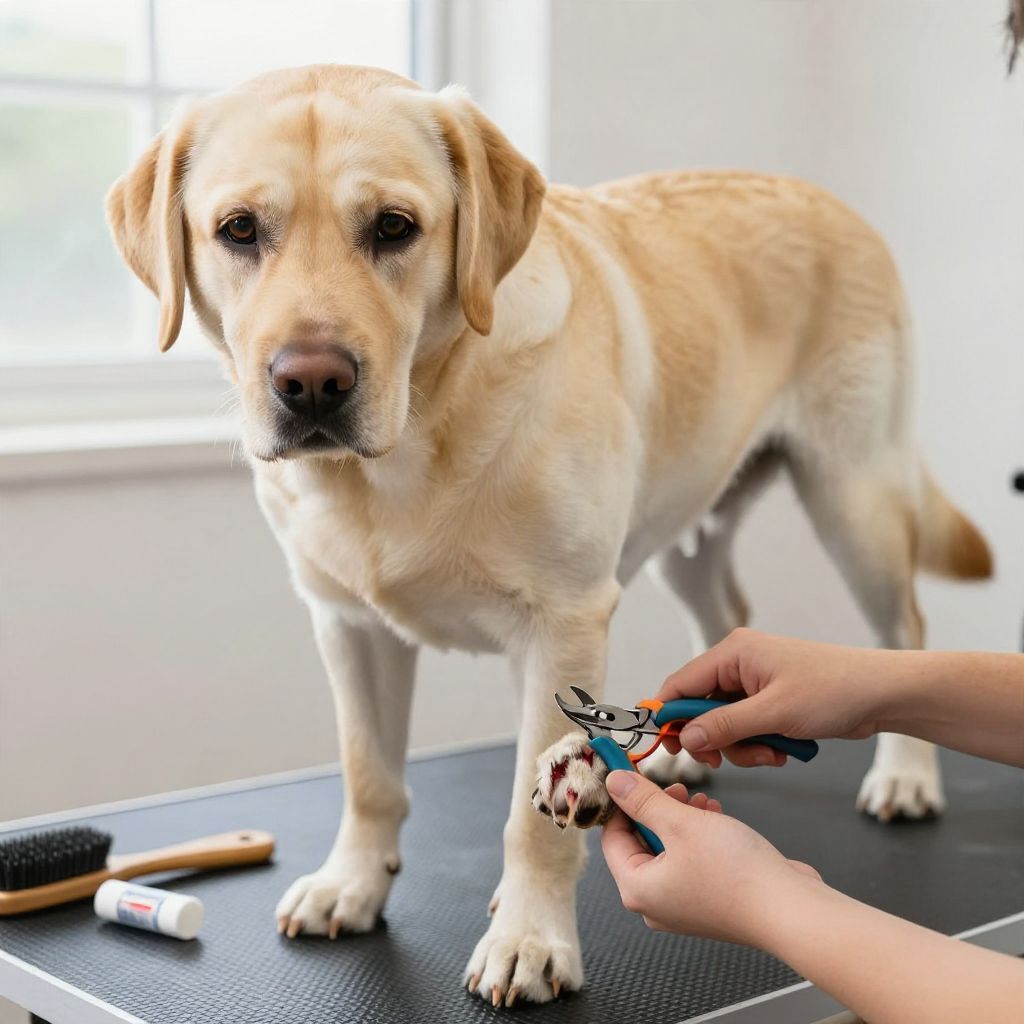
Overgrown dog nails can make walking uncomfortable, change your dog’s posture, and increase the chance of splitting or snagging. If the nails are long, the safest approach is to trim a little at a time and stop before you reach the quick.
If your dog has very long nails, dark nails, pain, or a history of bad experiences, go slowly and use a calm, reward-based approach. When in doubt, a veterinarian or groomer can show you the safest way to trim them.
Overgrown How To Cut Dog Nails?
To cut overgrown dog nails, use sharp dog nail clippers or a grinder, trim tiny amounts from the tip, and watch for the quick. If the nails are extremely long, curved, painful, or bleeding, trim gradually over several sessions or ask a veterinarian or groomer for help.
Why overgrown nails matter
Long nails are more than a grooming issue. They can affect how your dog stands and walks, especially on hard floors.
When nails are too long, they may:
- Push the toes into an unnatural position
- Catch on carpet, bedding, or outdoor surfaces
- Split, crack, or break painfully
- Make it harder for your dog to get traction
- Contribute to paw discomfort over time
In very overgrown cases, the quick inside the nail can also lengthen, which makes trimming more delicate.
How to tell if your dog’s nails are too long
A simple sign is hearing clicking on the floor when your dog walks. That often means the nails are touching the ground before the paw pads do.
Other signs include:
- Nails curling toward the paw pad
- Toes spreading or splaying
- Reluctance to walk on hard surfaces
- Snagging on rugs or blankets
- Visible difficulty balancing or standing comfortably
Some dogs naturally wear their nails down more than others, depending on activity level, surface types, age, and body structure. Indoor dogs often need trims more often than dogs that regularly walk on rough ground.
What you need before trimming
Having the right tools and a calm setup makes the job easier and safer.
- Dog nail clippers or a nail grinder
- Treats your dog likes
- A towel or non-slip mat
- Styptic powder or another product recommended by your vet for minor nail bleeding
- Good lighting so you can see the nail clearly
Use tools made for dogs. Human nail clippers are usually not the best choice for thick or curved dog nails.
Step-by-step: how to cut overgrown dog nails safely
- Choose a quiet, well-lit place where your dog feels relaxed.
- Let your dog sniff the clippers or grinder first.
- Hold one paw gently and separate one nail at a time.
- Trim only a small slice from the tip.
- Check the cut surface after each snip.
- Stop when you see a pale center change or a darker dot, which may mean you are getting close to the quick.
- Reward your dog often with praise and treats.
If the nails are very long, do not try to shorten them all at once. A gradual approach is safer because the quick may have grown longer inside the nail.
Using clippers
Clippers work well for many dogs, especially when the nails are not extremely hard or thick. Cut straight across the nail in small increments rather than taking off a large piece.
Using a grinder
A grinder can help smooth rough edges and may feel less abrupt for some dogs. It also lets you remove tiny amounts at a time, which is useful for overgrown nails. Keep the grinder moving and avoid holding it in one spot, since friction can heat the nail.
How to avoid cutting the quick
The quick contains blood vessels and nerves, so cutting it is painful and causes bleeding. The risk is higher when nails are dark, very long, or curved.
Helpful ways to reduce risk include:
- Trimming in very small steps
- Using bright light or a flashlight
- Looking for the lighter inner area of the nail
- Stopping if the nail surface changes to a small dark dot in the center
- Taking breaks if your dog becomes tense or wiggly
For dark nails, it can be harder to see the quick. That is one reason many owners prefer taking off only a tiny amount at a time or asking a professional to demonstrate the first few trims.
What to do if you cut too far
Minor bleeding can happen even with careful trimming. Stay calm so your dog does not become more anxious.
General first-aid steps include:
- Apply gentle pressure with clean gauze or a cloth
- Use a pet-appropriate styptic product if you have one and know how to use it
- Keep your dog from licking the nail while it starts to clot
- Watch the nail for continued bleeding
If bleeding does not stop, is heavy, or the nail is badly split, contact your veterinarian promptly. If you want more detail on handling a bleeding nail, see how to stop dog nail bleeding.
When overgrown nails need professional help
Some situations are better handled by a veterinarian or experienced groomer, especially if your dog is painful or fearful.
Get help if:
- The nails are tightly curled into the paw or nearly touching the pad
- Your dog will not let you handle the feet safely
- A nail is cracked, infected, or bleeding
- Your dog limps, cries, or resists weight-bearing
- You are unsure where the quick is
- Your dog has arthritis, neurologic disease, or other mobility issues
For some dogs, a veterinary visit is the kindest option because the nails may need careful trimming, pain assessment, or sedation if the dog is too stressed to handle safely.
How often should you trim dog nails?
The right schedule depends on your dog’s activity level, nail growth rate, and the surfaces they walk on. Many dogs need regular trimming every few weeks, but some need it more or less often.
Instead of waiting for nails to become overgrown, check them regularly. A short, frequent routine is usually easier for both you and your dog than occasional major trims.
Puppies and young dogs
Start handling paws early so nail care feels normal. Short, positive sessions help puppies learn that nail trimming is safe and predictable.
Adult and senior dogs
Older dogs may need more frequent trims if they are less active or have joint pain that changes how they walk. Senior dogs may also be more sensitive, so gentle handling matters even more.
Common mistakes to avoid
Good intentions can still lead to problems if the trim is rushed. Avoid these mistakes:
- Cutting too much at once
- Using dull tools that crush the nail
- Forcing a fearful dog to stay still
- Trimming in poor lighting
- Ignoring signs of pain, limping, or nail infection
- Trying to “fix” very overgrown nails in one session
If your dog has had a bad nail-trim experience before, rebuild trust slowly with treats, short handling sessions, and very small goals.
Making nail trims easier for a nervous dog
Some dogs need a gradual training plan before they can tolerate nail care well. That is normal and does not mean your dog is being stubborn.
You can help by:
- Touching the paws briefly and rewarding calm behavior
- Pairing the clippers with treats before using them
- Doing one nail, then stopping
- Practicing when your dog is relaxed, not after a stressful event
- Using a helper only if it keeps the session calm and safe
If fear is intense, a certified force-free trainer or veterinary behavior professional can help you create a plan that avoids panic and makes future trims easier.
Signs your dog may need a vet exam, not just a trim
Sometimes long nails are only part of a larger problem. A veterinary exam is important if your dog also has paw swelling, limping, licking at the feet, discharge, or sudden behavior changes.
Seek urgent care if your dog has:
- A nail torn off or hanging loose
- Heavy bleeding that will not stop
- Obvious pain or inability to walk normally
- Redness, pus, or a foul smell from the nail area
- A nail embedded into the paw pad
These signs can point to injury or infection, and they should not be managed as a simple grooming issue.
Conclusion
Overgrown dog nails should be trimmed carefully, in small steps, with attention to the quick and your dog’s comfort. If the nails are very long, dark, painful, or difficult to handle, it is safer to ask a veterinarian or groomer for help than to rush the job.
If you want more practical grooming guidance, a related read on how to cut dog nails can help you build a safer trimming routine.