
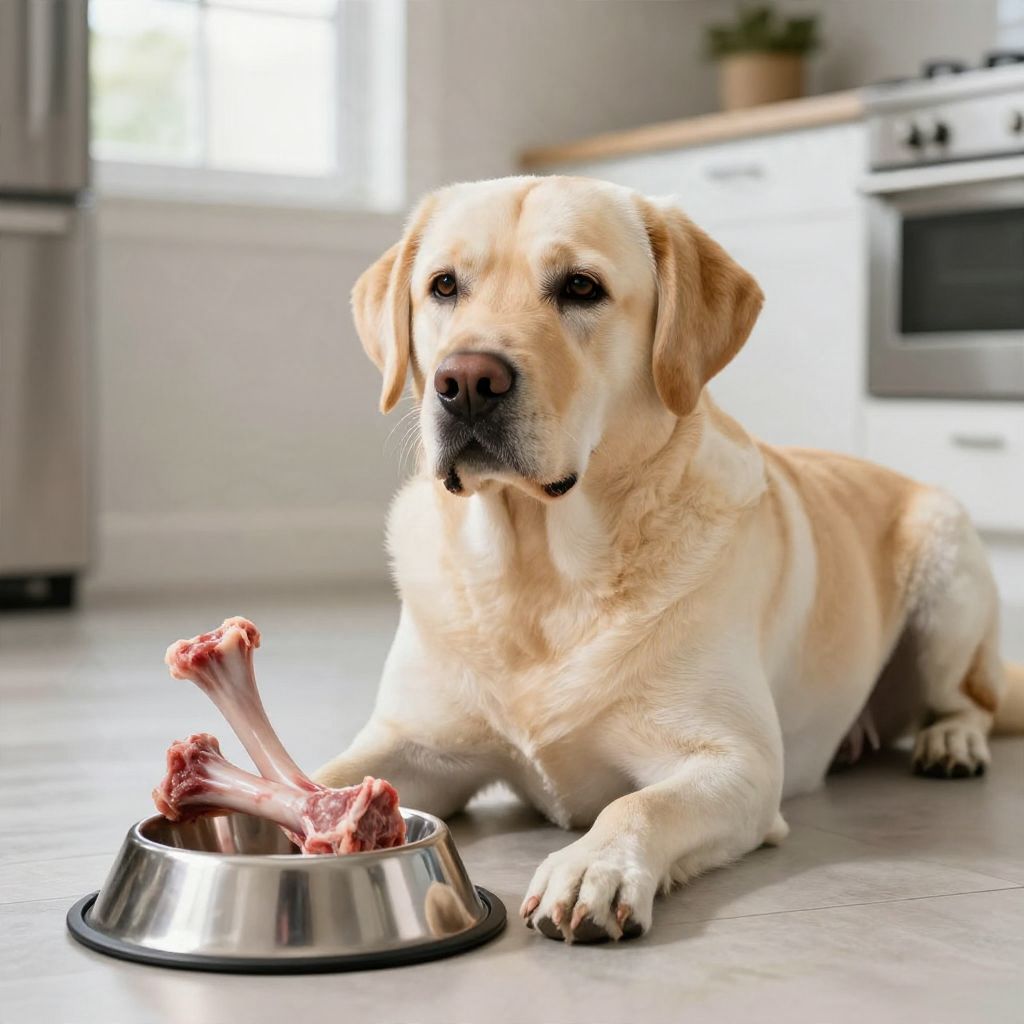
Can dogs have lamb bones? Sometimes, but only in very limited and careful circumstances. Cooked lamb bones are unsafe for dogs because they can splinter, while raw bones still carry choking, tooth-fracture, and digestive risks.
If you want to give your dog lamb, the safest approach is usually to offer boneless, properly prepared lamb meat instead. Whether a bone is ever appropriate depends on your dog’s size, chewing style, health, and your ability to supervise closely.
Can dogs have lamb bones?
Dogs should not be given cooked lamb bones, because they can splinter and cause choking, mouth injuries, blockages, or internal damage. Raw lamb bones are less likely to splinter, but they are still risky and are not safe for every dog. Many veterinarians recommend avoiding bones altogether unless specifically approved for your dog.
Why lamb bones can be dangerous
Lamb bones may seem natural, but they are not automatically safe. The biggest risk is not just the bone itself, but how a dog chews, swallows, and digests it.
Cooked lamb bones are especially unsafe
Cooking changes bone structure and makes bones more brittle. That means they can break into sharp pieces that may injure the mouth, throat, stomach, or intestines.
- Choking if a piece gets lodged in the throat
- Tooth fractures from hard chewing
- Gastrointestinal injury from sharp fragments
- Constipation or blockage from swallowed bone pieces
Raw bones still carry risks
Some people think raw bones are automatically safe, but that is not true. Raw lamb bones can still crack teeth, get stuck, or cause digestive upset. They can also carry bacteria that may affect both dogs and people in the household.
When lamb bones are most likely to cause problems
Risk varies from dog to dog. A large, calm chewer may handle a bone differently than a small dog, a puppy, or a dog that bites down aggressively and swallows pieces.
- Puppies with developing teeth and less chewing control
- Small dogs that may try to swallow pieces whole
- Power chewers that can crack bones quickly
- Senior dogs with worn teeth or slower digestion
- Dogs with dental disease, jaw pain, or a history of GI obstruction
- Dogs with pancreatitis, sensitive stomachs, or dietary restrictions
Even within the same breed, individual chewing habits matter more than appearance or size alone. Some dogs mouth a bone gently, while others crush it aggressively.
Signs your dog may have been hurt by a bone
If your dog has eaten a lamb bone, watch closely for warning signs. Some problems show up right away, while others develop over hours or days.
Emergency warning signs
Seek urgent veterinary care if you notice any of the following:
- Choking, gagging, or trouble breathing
- Repeated retching or vomiting
- Excessive drooling, pawing at the mouth, or obvious mouth pain
- Bloated abdomen, restlessness, or signs of severe discomfort
- Blood in vomit or stool
- Weakness, collapse, or severe lethargy
- Straining to defecate or no stool after swallowing bone pieces
Do not wait if your dog seems distressed, cannot swallow normally, or may have a blockage. These can become emergencies quickly.
Less urgent but still important signs
Call your veterinarian if your dog has eaten a bone and develops mild vomiting, reduced appetite, constipation, soft stool, or unusual behavior. Even “small” symptoms can signal irritation or a developing obstruction.
What to do if your dog ate a lamb bone
If your dog has already eaten a lamb bone, stay calm and assess the situation. What you do next depends on whether the bone was cooked or raw, whether your dog is acting normally, and whether any pieces are missing.
- Remove any remaining bone so your dog cannot keep chewing it.
- Check for immediate distress such as choking, coughing, or vomiting.
- Do not try to make your dog vomit unless a veterinarian specifically tells you to.
- Call your vet for advice, especially if the bone was cooked or your dog swallowed pieces.
- Monitor closely for appetite changes, stool changes, pain, or lethargy.
If your dog is breathing normally and seems comfortable, your vet may advise observation. If there is any sign of pain, vomiting, or blockage, your dog may need an exam and possibly imaging.
Are any lamb bones safer than others?
No lamb bone is completely risk-free. However, some bones are more hazardous than others, and the way the bone is prepared matters a great deal.
Higher-risk bone situations
- Cooked bones of any kind
- Small bones that can be swallowed whole
- Weight-bearing bones that are very hard and can crack teeth
- Bones with sharp edges, splinters, or leftover cooked meat attached
- Bones that have been left out too long and may be contaminated
If a veterinarian approves a raw bone
Some veterinarians may approve a specific raw bone for certain dogs, but this is individualized advice, not a general recommendation. If that happens, follow your vet’s instructions exactly and supervise the entire time.
- Choose a bone that is appropriately sized for your dog
- Supervise closely and take it away when it becomes small enough to swallow
- Discard the bone if it starts to splinter, crack, or become sharp
- Wash hands, bowls, and surfaces after handling raw bones
Safer alternatives to lamb bones
If your goal is enrichment, chewing satisfaction, or a special treat, there are safer options than lamb bones. The best choice depends on your dog’s age, chewing strength, and dental health.
- Vet-approved dental chews designed for dogs
- Stuffable chew toys with appropriate fillings
- Boneless cooked or plain lamb in small amounts as a treat
- Rubber chew toys matched to your dog’s chewing style
- Frozen enrichment toys if your dog enjoys licking and problem-solving
These options can provide chewing satisfaction without the same level of splintering or blockage risk. They also make it easier to control portion size and ingredient quality.
Can dogs eat lamb meat instead?
Yes, plain lamb meat can be a suitable treat for many dogs when it is fully cooked, boneless, and served without seasoning, onion, garlic, or rich sauces. It should still be given in moderation and should not replace a complete and balanced dog food.
Some dogs tolerate lamb well, while others may not. If your dog has a sensitive stomach, food allergy history, or pancreatitis risk, ask your veterinarian before adding lamb to the diet.
Common mistakes to avoid
Many bone-related injuries happen because a dog owner assumes a bone is “natural” and therefore safe. Natural does not always mean harmless.
- Giving cooked lamb bones after dinner
- Leaving a dog unsupervised with any bone
- Allowing a dog to chew until the bone is small enough to swallow
- Offering bones to a dog with dental disease or a history of obstruction
- Using bones as a substitute for a balanced diet
If you are unsure whether a specific bone is safe, the cautious choice is to skip it.
When to ask your veterinarian
Talk to your veterinarian if you want personalized advice about bones, especially if your dog has a medical condition or a history of chewing problems. A vet can help you decide whether any bone is appropriate at all.
You should also ask for guidance if your dog:
- Has had vomiting, constipation, or a blockage before
- Has broken teeth or painful chewing
- Is a puppy or a senior dog
- Has a sensitive stomach or chronic digestive disease
- Swallowed a bone and is now acting differently
If your dog is already showing emergency signs, do not wait for a routine appointment.
Bottom line
Can dogs have lamb bones? In general, it is safest to say no, especially for cooked bones. Raw bones may still be risky, so the best choice for most dogs is to avoid lamb bones and choose safer chew alternatives or boneless lamb instead.
If you want more guidance on feeding lamb safely, you may also find these related articles helpful: can dogs eat lamb and can dogs eat lamb bones.