
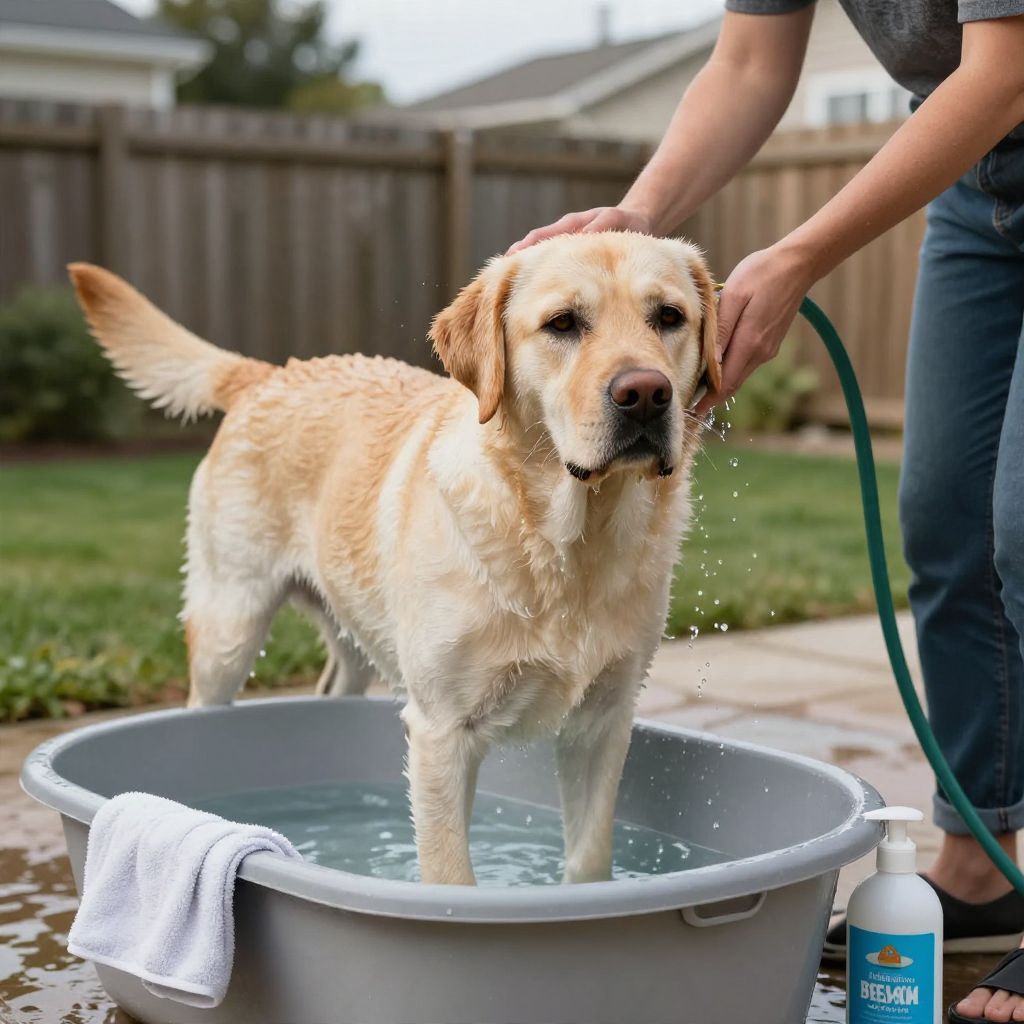
If your dog has been sprayed by a skunk, the smell can be overwhelming and stubborn. The good news is that you can usually reduce it quickly with the right cleaning steps, and most dogs recover well once the odor is removed.
The key is to act fast, protect your dog’s eyes and mouth, and use a safe cleaning approach. If your dog seems sick, has eye pain, or was sprayed directly in the face, contact your veterinarian right away.
How To Get Skunk Smell Out Of Dog?
Start by keeping your dog outside if possible, then check for eye irritation, wash off any visible spray, and bathe your dog with a pet-safe cleaning method. Focus on the coat, face, and paws, rinse thoroughly, and repeat if needed. If the smell lingers or your dog has symptoms, call your veterinarian.
What to do first after skunk spray
Before you begin cleaning, take a moment to protect yourself and your home. Skunk odor transfers easily to furniture, clothing, and hands, so handle your dog carefully.
- Keep your dog outside or in a well-ventilated area.
- Wear old clothes and gloves if you have them.
- Check whether the spray hit the eyes, nose, or mouth.
- Keep your dog calm and prevent rubbing on carpets or furniture.
- If the eyes look red, swollen, or painful, contact a vet promptly.
If your dog was sprayed in the face, avoid getting cleaning product into the eyes, ears, nose, or mouth. A dog that is coughing, drooling heavily, or acting distressed needs veterinary advice sooner rather than later.
Safe step-by-step cleaning method
The best approach is to remove as much of the oily spray as possible before bathing. Skunk oil clings to fur, so a regular shampoo alone often is not enough.
1. Blot and rinse first
If the spray is fresh, gently blot the fur with paper towels or an old cloth. Then rinse the coat with lukewarm water, avoiding the eyes and face as much as possible.
2. Use a pet-safe bath
Wash your dog with a shampoo made for dogs. Work it into the coat, especially around the neck, chest, back, and tail, then rinse well. You may need to repeat the bath more than once.
3. Pay attention to the face
For the muzzle and around the eyes, use a damp cloth and plain lukewarm water only unless your veterinarian gives different instructions. Do not pour products over the head.
4. Dry thoroughly
Use clean towels to dry your dog. If your dog tolerates it, a blow dryer on a cool setting can help, but keep it far enough away to avoid overheating or startling your dog.
Why skunk smell is so hard to remove
Skunk spray contains oily compounds that stick to fur, skin, and surfaces. That is why the odor can remain after a simple shampoo and why repeated washing is often needed.
The smell may also linger on collars, harnesses, bedding, and your own clothing. If you do not clean those items, your dog can seem “smelly” again even after a bath.
What to avoid when cleaning your dog
Some common reactions can make the problem worse or irritate your dog’s skin and eyes. Keep the cleaning process simple and gentle.
- Do not use products near the eyes unless they are specifically meant for that area and approved by your vet.
- Do not use harsh cleaners, bleach, or household disinfectants on your dog.
- Do not rub the spray deeper into the coat with vigorous scrubbing.
- Do not assume one bath will remove all odor.
- Do not ignore eye redness, swelling, or obvious pain.
If you are unsure about any product, skip it and ask your veterinarian. Dogs with sensitive skin, very young puppies, seniors, or dogs with skin disease may need a gentler approach.
How to handle skunk smell in the house
Even if your dog is cleaned well, the odor can spread indoors. Quick cleanup helps keep the smell from settling into fabrics and rooms.
- Wash your dog’s bedding, collars, harnesses, and washable blankets.
- Vacuum carpets and upholstered areas where your dog rested.
- Open windows if weather allows and use fans for ventilation.
- Wash your hands and any clothing that contacted the spray.
- Keep your dog away from soft furniture until the coat is fully cleaned.
If the smell is strong in your car or home, clean those surfaces separately from your dog. The odor often persists because the oily residue transfers from fur to fabric.
When the smell does not go away
Sometimes the odor remains after several baths because skunk oil is still trapped in the coat or on the skin. Long-haired dogs, thick-coated breeds, and dogs with dense undercoats may need extra attention simply because the spray is harder to reach and rinse out.
If the smell is still strong after repeated washing, check for hidden spots such as the chest, armpits, tail base, and paws. You may also need a veterinarian’s help if your dog has skin irritation from repeated bathing.
When to call the veterinarian
Most skunk encounters are a nuisance rather than a medical emergency, but some situations need professional care. Call your veterinarian if you notice any of the following:
- Eye redness, squinting, swelling, or discharge
- Vomiting, drooling, coughing, or trouble breathing
- Marked lethargy or unusual weakness
- Skin redness, hives, or signs of pain
- Spray directly in the mouth, nose, or eyes
- A puppy, senior dog, or medically fragile dog seems unwell after exposure
Seek urgent veterinary care if your dog has breathing trouble, severe eye pain, collapse, or swelling of the face. Those signs should not wait for home treatment.
How to reduce the chance of another skunk encounter
Prevention matters because repeated skunk spray can be stressful for both you and your dog. The right habits depend on your dog’s age, training, and temperament, but a few basics help most households.
- Supervise outdoor time at dawn, dusk, and night, when skunks are more active.
- Keep your dog on leash in areas where skunks may hide.
- Secure trash, pet food, and outdoor feeding areas.
- Block access to decks, sheds, and crawl spaces where skunks may den.
- Practice recall and “leave it” with reward-based training.
Some dogs are more likely to investigate wildlife because of their individual curiosity, energy level, or prey drive. Training helps, but management is still important because no dog is perfectly reliable around a skunk.
Common mistakes dog owners make
When the smell is intense, it is easy to rush the process. These mistakes can prolong the odor or make your dog uncomfortable.
- Bathing too late, after the oil has spread through the coat
- Using too little water or not rinsing thoroughly
- Ignoring the face and paws
- Forgetting to wash bedding and collars
- Assuming the dog is fine when eye or breathing symptoms are present
A calm, methodical cleanup usually works better than repeated scrubbing. If your dog becomes anxious during bathing, pause and keep the process as low-stress as possible.
Special considerations for puppies, seniors, and sensitive dogs
Age and health can affect how your dog handles both the spray and the cleanup. Puppies may be more sensitive to stress and chilling, while older dogs or dogs with arthritis may struggle with long baths or standing for extended periods.
Dogs with skin allergies, eye disease, or other medical conditions may also need a gentler plan. If your dog falls into one of these groups, ask your veterinarian how to clean safely and whether a clinic visit is the better choice.
What to expect after cleaning
After a successful bath, the odor should fade gradually. Some lingering smell on the coat or in the home is normal for a short time, especially if the spray was heavy or your dog has a thick coat.
Watch your dog for the next day or two. If the eyes, skin, or breathing seem normal and the odor is slowly improving, home care is usually enough.
Conclusion
To get skunk smell out of your dog, act quickly, clean the coat carefully, and watch closely for eye or breathing problems. Most dogs do well with prompt bathing and thorough rinsing, but any red-flag symptoms should be checked by a veterinarian right away.
If you want more practical help, see what to do if your dog gets sprayed by a skunk and how to give a dog a bath for related step-by-step guidance.