
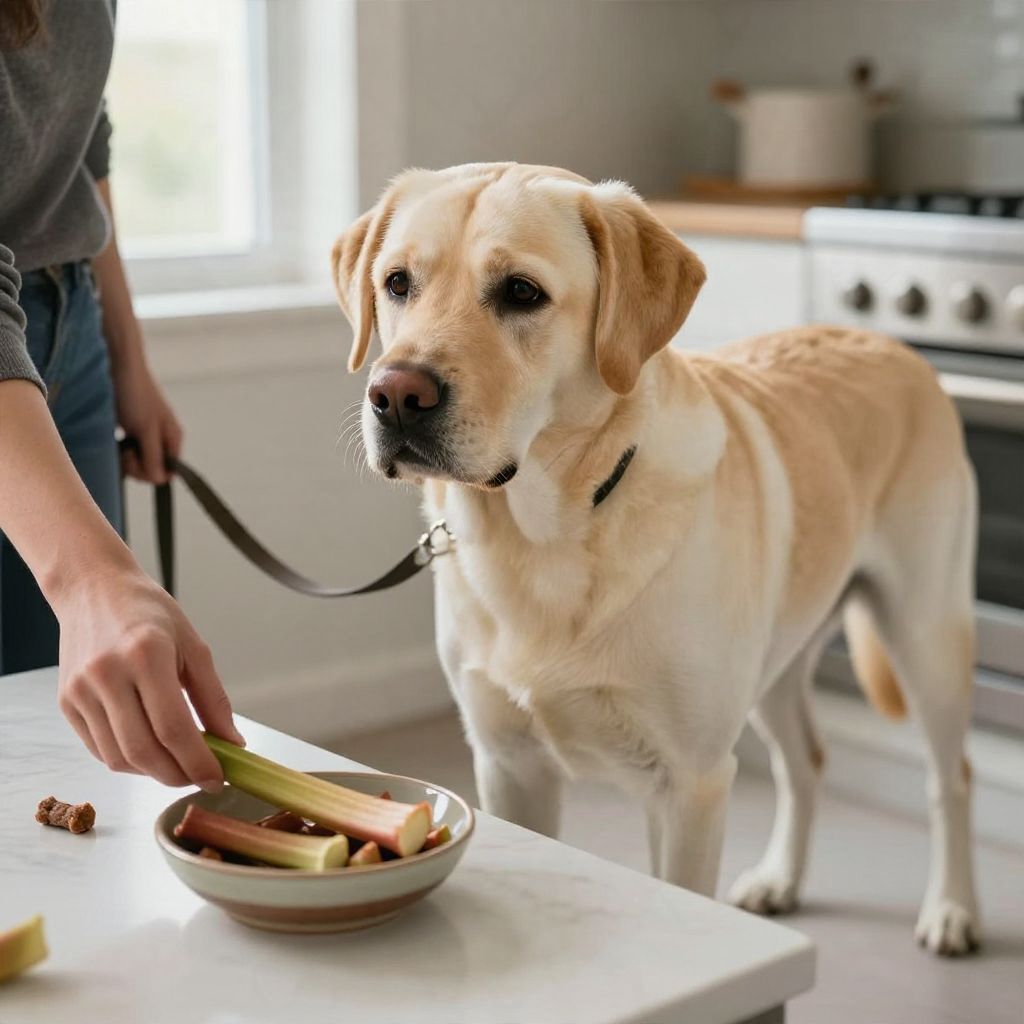
If you’re wondering, “Can dogs have rhubarb?” the short answer is no—rhubarb is not a safe treat for dogs. The leaves are especially dangerous, and even the stalk can upset your dog’s stomach. If your dog ate rhubarb, it’s important to know what signs to watch for and when to call a vet.
This matters because many dogs will sample food from the garden, counter, or compost before you can stop them. Knowing the risks can help you respond quickly and keep your dog safer.
Can dogs have rhubarb?
No, dogs should not eat rhubarb. Rhubarb leaves are toxic, and the stalk can still cause stomach upset or other problems. If your dog ate any part of the plant, contact your veterinarian or a pet poison resource for guidance, especially if your dog shows vomiting, drooling, weakness, or unusual behavior.
Why rhubarb is unsafe for dogs
Rhubarb is risky for dogs for two main reasons: the leaves contain toxic compounds, and the stalk can irritate the digestive tract. The exact effect depends on how much was eaten, your dog’s size, and whether any leaves were included.
Rhubarb leaves are the biggest danger
The leaves are the part most associated with poisoning. They can cause symptoms that range from mild stomach upset to more serious illness, depending on the exposure.
The stalk is not a good dog treat either
Even though the stalk is the part people eat, it is still not a safe snack for dogs. It may cause vomiting, diarrhea, or abdominal discomfort, and it should not be offered intentionally.
What symptoms can happen if a dog eats rhubarb?
Signs can vary based on how much your dog ate and whether the leaves were involved. Mild cases may look like simple digestive upset, while more serious cases can involve lethargy or worsening illness. Watch closely for any change after exposure.
- Vomiting
- Diarrhea
- Drooling
- Reduced appetite
- Abdominal pain or restlessness
- Weakness or lethargy
- Tremors or unusual behavior
Emergency signs include repeated vomiting, collapse, trouble breathing, severe weakness, tremors, or seizures. If you see any of these, seek urgent veterinary care right away.
What to do if your dog ate rhubarb
If your dog ate rhubarb, stay calm and act quickly. The safest next step is to call your veterinarian for advice, especially if the leaves were eaten or you are unsure how much was consumed.
- Remove any remaining rhubarb so your dog cannot eat more.
- Check whether the leaves, stalks, or both were eaten.
- Estimate how much was consumed and when it happened.
- Call your veterinarian or an emergency clinic for guidance.
- Monitor your dog closely for vomiting, diarrhea, weakness, or behavior changes.
Do not try to make your dog vomit unless a veterinarian specifically tells you to do so. Home remedies can make some situations worse.
When is rhubarb exposure more concerning?
Any rhubarb ingestion deserves attention, but some situations are more urgent than others. The risk may be higher if your dog is very small, young, elderly, or has a medical condition that makes vomiting or dehydration more dangerous.
Call a vet sooner if your dog is:
- A puppy or very small dog
- Already vomiting or having diarrhea
- Dehydrated or not drinking
- Taking medication that affects the stomach or kidneys
- Showing unusual tiredness or weakness
- Known to eat plants, compost, or garden scraps
Because dogs vary in size, health, and sensitivity, the same exposure can affect one dog more than another. Your veterinarian can help you decide whether home monitoring is reasonable or whether your dog needs an exam.
Can dogs eat cooked rhubarb or rhubarb pie?
No. Cooking does not make rhubarb safe for dogs, and rhubarb pie is also a poor choice because it often contains sugar, butter, spices, or artificial sweeteners. Some desserts may also include ingredients that are unsafe for dogs on their own.
Why desserts are a bad idea
- They can upset your dog’s stomach
- They may contain unsafe ingredients
- They are not nutritionally appropriate for dogs
- They can encourage begging and counter-surfing
If you want to share a treat, choose a dog-safe option made for canine digestion instead of human dessert.
How to keep your dog away from rhubarb
Prevention is the best protection, especially if you grow rhubarb in a garden or keep it in a kitchen where your dog can reach it. Dogs are often curious, and some will chew plants simply out of boredom or opportunity.
- Fence off garden beds or use barriers around plants
- Keep harvested rhubarb out of reach on counters
- Dispose of leaves where your dog cannot access them
- Supervise your dog outdoors if plants are within reach
- Teach a reliable “leave it” cue using positive reinforcement
Training helps, but management matters too. A dog that has learned “leave it” can still make a mistake if a tempting plant is left accessible.
What are safer alternatives if you want to share a fresh treat?
If you were hoping to offer something crisp or plant-based, choose dog-safe foods in small amounts and only if your dog tolerates them well. Introduce any new food slowly and keep treats to a small part of the daily diet.
- Plain cucumber slices
- Small pieces of apple without seeds or core
- Blueberries
- Carrot sticks or coins
- Plain green beans
Even safe foods can cause stomach upset if your dog eats too much. The right amount depends on your dog’s size, activity level, and health status.
Frequently asked questions about dogs and rhubarb
Can a tiny bite of rhubarb hurt my dog?
Maybe, but not always. A small amount of stalk may cause no obvious problem in some dogs, while a bite of leaves can be more concerning. Because you usually cannot know how your dog will react, it is safest to call your vet for advice after any exposure.
Is rhubarb toxic to puppies?
Puppies can be more vulnerable because they are smaller and more likely to get dehydrated from vomiting or diarrhea. If a puppy eats rhubarb, contact your veterinarian promptly.
What if my dog only licked rhubarb?
A quick lick is less concerning than eating a piece, but it still depends on whether the plant material was the leaf or stalk and how much was involved. If you are unsure, ask your vet whether monitoring is enough.
Can rhubarb cause long-term problems?
Most concerns are about the immediate reaction after eating it. However, severe poisoning or repeated vomiting and diarrhea can become serious, especially if a dog becomes dehydrated or weak. That is why fast veterinary guidance matters.
Bottom line: should dogs have rhubarb?
No—dogs should not have rhubarb. Keep both the leaves and stalks away from your dog, and treat any ingestion as a possible poisoning concern. If your dog ate rhubarb, call your veterinarian promptly, and seek urgent care if vomiting, weakness, tremors, or collapse occur.
If you want to compare rhubarb with other risky foods, you may also find this rhubarb safety guide for dogs helpful, along with this guide on raw fish for dogs for another common food-safety question.