
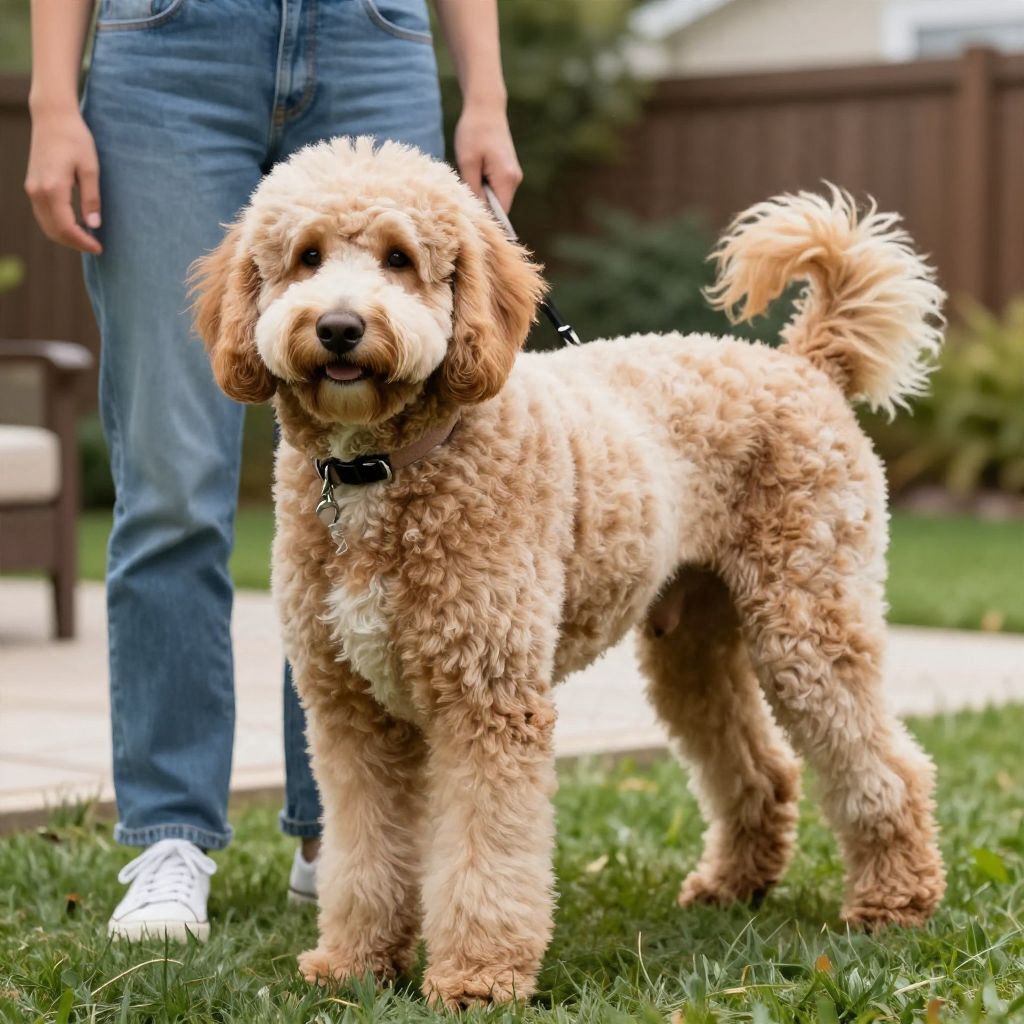
How big does a mini Goldendoodle get? Most mini Goldendoodles are small-to-medium dogs, but their adult size can vary depending on the Poodle and Golden Retriever lines used by the breeder. If you’re planning for a puppy, it helps to know the usual height and weight range, plus what can make one dog smaller or larger than another.
Understanding expected size also helps you choose the right crate, harness, food plan, and exercise routine. It can also help you spot growth problems early if your puppy seems much smaller, larger, or less active than expected.
How big does a mini Goldendoodle get?
A mini Goldendoodle usually reaches about 13 to 20 inches tall at the shoulder and often weighs roughly 15 to 35 pounds as an adult. Exact size depends on genetics, sex, diet, and overall health, so some dogs land outside the usual range. Your breeder’s parent dogs are the best clue to your puppy’s likely adult size.
What affects a mini Goldendoodle’s adult size?
Mini Goldendoodles are mixed-breed dogs, so there is natural variation. Even within the same litter, puppies can mature to noticeably different sizes.
- Parent size: Smaller parent dogs usually produce smaller puppies, though not always.
- Genetic variety: Mixed breeds can inherit more size from one side of the family than the other.
- Sex: Males are often a bit larger than females, but this is not guaranteed.
- Nutrition and health: Poor nutrition, parasites, or illness can affect growth.
- Age at measurement: Puppies grow quickly, then slow down as they mature.
If you are buying from a breeder, ask for the estimated adult size of both parents and whether the puppy is expected to be a true mini, a smaller medium, or a larger “mini” type. Labels are not always used consistently.
Mini Goldendoodle size by age
Growth happens fast in the first year, then slows as the dog approaches adult size. Many mini Goldendoodles are close to their adult height by 9 to 12 months, but they may continue filling out a bit after that.
Typical growth stages
- 8 to 12 weeks: Very small and still developing coordination.
- 4 to 6 months: Rapid growth; puppy size can change quickly.
- 6 to 9 months: Height growth slows, but body shape may still change.
- 9 to 15 months: Many mini Goldendoodles are near adult size.
Because growth rates vary, it is better to watch your puppy’s body condition and energy level than to focus only on the scale.
How to tell if your mini Goldendoodle is a healthy size
A healthy dog is not just about a number on the scale. You should be able to feel the ribs lightly under a thin layer of fat, and your dog should have a visible waist when viewed from above.
Signs your dog may be at a healthy size include:
- Easy movement without heavy panting after mild activity
- No obvious ribs sticking out sharply
- No sagging belly from excess weight
- Steady growth in puppyhood without sudden drops in appetite or energy
If your puppy seems unusually thin, has a pot-bellied look, or is not growing as expected, a veterinarian should check for parasites, digestive issues, or other health concerns.
How to support healthy growth in a mini Goldendoodle puppy
Good growth depends on balanced nutrition, appropriate exercise, and routine veterinary care. Avoid trying to make your puppy grow faster or stay smaller than nature intended.
- Feed a complete puppy food that matches your dog’s life stage.
- Follow the feeding guide, then adjust based on body condition and vet advice.
- Schedule regular wellness visits and vaccinations.
- Use parasite prevention recommended by your veterinarian.
- Provide age-appropriate exercise, not forced long-distance running.
Overfeeding can lead to excess weight and stress on developing joints. Underfeeding can interfere with normal growth, especially in a young puppy with high energy needs.
Exercise needs for a mini Goldendoodle
Mini Goldendoodles are often active, playful dogs, but exercise should match age and physical maturity. Puppies need short, frequent play sessions and gentle walks rather than intense workouts.
Good exercise options
- Short leash walks
- Fetch in a safe area
- Training games that use treats or toys
- Sniffing walks and simple enrichment puzzles
- Supervised play with compatible dogs
As your dog matures, you can usually increase activity gradually. If your dog limps, tires quickly, or seems sore after exercise, stop and contact your veterinarian.
Grooming and coat care for a growing mini Goldendoodle
Mini Goldendoodles often have coats that need regular grooming, but coat type can vary from wavy to curlier or straighter. Grooming needs are individual, not identical for every dog.
Helpful grooming habits include:
- Brushing several times a week, or more often if the coat tangles easily
- Regular ear checks, especially if the ears stay floppy and moist
- Nail trims before nails get too long
- Bathing only as needed with dog-safe products
Keeping the coat well maintained also helps you notice body changes, skin irritation, or weight gain sooner.
Common size-related mistakes owners make
Because mini Goldendoodles can vary, it is easy to make assumptions that do not fit your individual dog. A few common mistakes can affect comfort and health.
- Buying gear too early: Puppies grow quickly, so adjustable collars, harnesses, and crates are often more practical.
- Overfeeding treats: Small dogs can gain weight surprisingly fast from extra snacks.
- Expecting one fixed size: Two littermates may mature differently.
- Skipping vet checks: Growth concerns are easier to address early.
- Too much exercise too soon: Young joints need gradual conditioning.
When to call a veterinarian
Contact your veterinarian if your mini Goldendoodle is not gaining weight appropriately, seems much smaller than expected, or suddenly loses appetite or energy. Health problems are easier to manage when caught early.
Seek urgent veterinary care if your dog has trouble breathing, collapses, has repeated vomiting, cannot stand, seems severely weak, or has a swollen painful abdomen. Those are not normal size concerns and may signal an emergency.
Choosing supplies for the right size
If you are preparing for a puppy, it helps to choose adjustable supplies that can change as your dog grows. That way, you do not need to replace everything immediately.
- Crate: Pick one that allows standing, turning, and lying down comfortably, with a divider if needed.
- Harness: Choose an adjustable, well-fitting harness that does not rub the armpits.
- Bed: A medium bed often works well, but check your dog’s current length and sleeping style.
- Food bowl: Use a stable bowl that matches your dog’s muzzle and height.
If you are unsure, measure your puppy now and recheck every few weeks during growth.
What if your mini Goldendoodle is larger or smaller than expected?
Some mini Goldendoodles grow outside the usual range and still be perfectly healthy. The key question is not whether your dog matches a label exactly, but whether your dog is thriving.
If your dog is larger than expected, make sure exercise, food portions, and gear fit the actual body size. If your dog is smaller than expected, ask your veterinarian whether the growth pattern is normal or whether a medical issue should be ruled out.
Bottom line
A mini Goldendoodle usually grows into a small-to-medium adult, often around 13 to 20 inches tall and 15 to 35 pounds, but individual dogs can vary. Focus on healthy growth, balanced feeding, regular vet care, and age-appropriate exercise so your dog develops well at their own pace.
If you want to learn more about this breed, you may also find how big mini Goldendoodles get and how long mini Goldendoodles live helpful.