
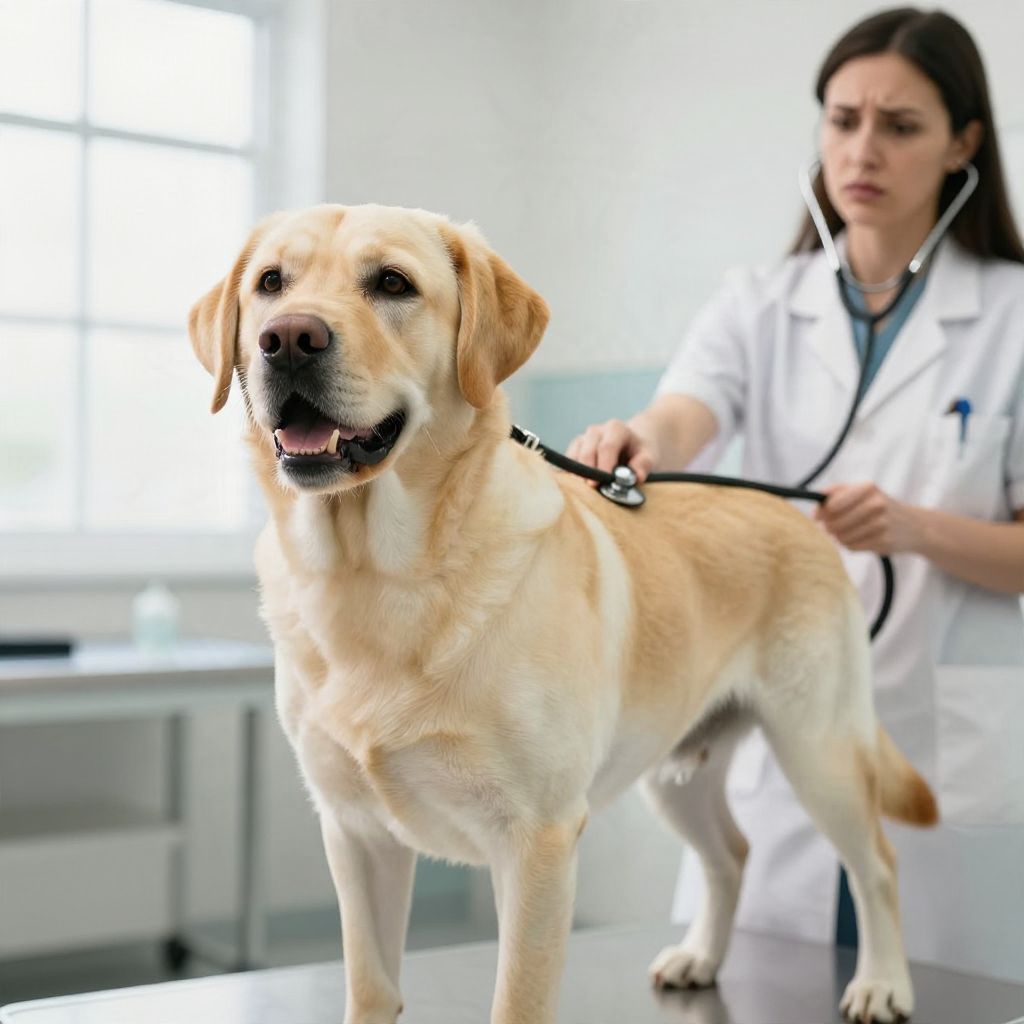
Why is my dog wheezing? Wheezing usually means air is having trouble moving through your dog’s airways. It can happen with allergies, irritation, infection, a collapsing airway, heart disease, or something stuck in the throat, and the cause matters because some are urgent.
If the wheezing is new, getting worse, or happening with breathing effort, coughing, blue gums, weakness, or collapse, your dog needs veterinary care right away. Mild, brief wheezing can still deserve a checkup, especially if it keeps coming back.
Why is my dog wheezing?
Dog wheezing is a whistling or squeaky sound caused by narrowed airways, airway irritation, or obstruction. Common causes include allergies, respiratory infections, asthma-like inflammation, a collapsing trachea, heart disease, parasites, or a foreign object. Because some causes can become emergencies, persistent or severe wheezing should be assessed by a veterinarian.
Common causes of wheezing in dogs
Allergies and airway irritation
Dogs can wheeze when their airways are irritated by pollen, dust, smoke, perfume, cleaning products, mold, or other environmental triggers. Some dogs also react to seasonal allergens or indoor irritants, and the signs may come and go.
You may notice sneezing, watery eyes, licking, or coughing along with the wheeze. If the pattern is repeatable, your veterinarian can help you narrow down likely triggers and rule out more serious disease.
Respiratory infection or inflammation
Infections can affect the nose, throat, trachea, or lungs and may cause wheezing, coughing, fever, nasal discharge, reduced appetite, or tiredness. Kennel cough and pneumonia are examples of conditions that can sound like wheezing or trigger noisy breathing.
Infections can range from mild to serious, and puppies, seniors, and dogs with other health problems may be more vulnerable. A vet exam is important if your dog seems unwell, is coughing frequently, or is breathing faster than usual at rest.
Collapsing trachea or other airway narrowing
Some dogs wheeze because the airway is physically narrower than normal or becomes more likely to collapse during breathing. This can be more noticeable with excitement, pulling on a collar, heat, or exercise.
Small dogs are often discussed in relation to collapsing trachea, but any dog can have airway problems. Individual anatomy, body condition, and underlying illness matter more than breed labels alone.
Heart disease
Heart problems can sometimes cause breathing changes that sound like wheezing, especially if fluid builds up in or around the lungs. You may also see coughing, exercise intolerance, restlessness, or fainting.
Heart-related breathing trouble can become urgent quickly. If your dog is struggling to breathe, seems weak, or has pale or blue gums, seek emergency veterinary care immediately.
Foreign object or throat irritation
A piece of grass, a toy fragment, a bone chip, or another object can irritate or block the airway and create wheezing, gagging, or repeated coughing. This is especially concerning if the problem starts suddenly.
Do not try to reach into your dog’s throat unless you can clearly see and safely remove the object. If your dog is panicking, choking, or unable to breathe normally, go to an emergency vet at once.
Parasites and lung disease
Some parasites can affect the lungs and airways, leading to wheezing or coughing. Lung disease, including inflammation or infection deeper in the respiratory system, may also change how your dog breathes.
These causes are not something you can confirm at home. Your veterinarian may recommend an exam, imaging, or testing based on your dog’s history and symptoms.
When wheezing is an emergency
Some breathing noises can wait for a routine appointment, but certain signs need urgent help. Do not watch and wait if your dog has severe breathing difficulty or appears in distress.
- Blue, gray, or very pale gums
- Open-mouth breathing at rest or obvious effort to breathe
- Collapse, weakness, or inability to stand
- Sudden wheezing after choking, chewing, or playing
- Repeated gagging, distress, or panic
- Swollen face, hives, or sudden facial swelling
- Very fast breathing at rest or worsening symptoms over minutes to hours
If you are unsure whether it is an emergency, treat it as one. Breathing problems can change quickly, and delays can be dangerous.
What you can do right now
While you arrange veterinary care, keep your dog calm and reduce anything that could make the wheezing worse. The goal is to minimize stress and avoid making breathing harder.
- Move your dog to a cool, quiet area.
- Stop exercise and excitement.
- Use a harness instead of a neck collar if you need to walk your dog.
- Avoid smoke, aerosols, strong fragrances, and dusty rooms.
- Observe whether the wheeze happens at rest, after activity, or only in certain places.
- Call your veterinarian and describe the timing, severity, and any other symptoms.
Do not give human medications unless your veterinarian specifically tells you to. Many common products are unsafe for dogs or can mask symptoms that need prompt diagnosis.
How your veterinarian may evaluate wheezing
Your vet will usually start with a physical exam and questions about when the wheezing began, what it sounds like, and whether it happens with exercise, eating, excitement, or sleep. They may also ask about coughing, vomiting, exposure to smoke or dust, and recent travel or boarding.
Depending on the findings, your vet may recommend tests such as chest X-rays, airway imaging, bloodwork, parasite testing, or oxygen assessment. The exact workup depends on your dog’s age, size, medical history, and how severe the breathing signs are.
Why the cause matters
Wheezing is a symptom, not a diagnosis. A dog with mild allergy-related irritation may need a very different plan than a dog with heart disease, pneumonia, or a blocked airway.
That is why it is risky to assume the sound is “just allergies” or “just an old-dog thing.” Even if your dog seems otherwise normal, recurring wheezing should be checked.
What not to do
When you hear wheezing, it is tempting to try quick fixes. Some common responses can make things worse or delay proper treatment.
- Do not use human inhalers, cough syrups, or decongestants unless prescribed for your dog.
- Do not force food, water, or pills if your dog is struggling to breathe.
- Do not use punishment or restraint to “calm” a panicked dog.
- Do not wait for the problem to become severe if the wheezing is recurring.
- Do not assume a noisy breath is harmless because your dog is still wagging or alert.
How age, size, and individual factors can affect wheezing
Wheezing can happen in dogs of any age, but the likely causes may differ. Puppies may be more prone to infections or swallowed objects, while older dogs may be more likely to have heart or chronic airway disease.
Body size and anatomy can also matter. Some smaller dogs are more likely to have airway collapse, while deep-chested or larger dogs may have different respiratory or heart-related risks. Still, individual health history matters more than breed assumptions.
Dogs with obesity, poor fitness, secondhand smoke exposure, or known allergies may wheeze more easily. If your dog has a chronic condition, even a mild change in breathing deserves attention.
Preventing future episodes
You cannot prevent every cause of wheezing, but you can reduce risk in some dogs. Good prevention focuses on airway health, safety, and early treatment of underlying problems.
- Keep your dog away from smoke, heavy dust, and strong sprays.
- Use a harness instead of a neck collar if your dog has airway sensitivity.
- Maintain a healthy body weight.
- Keep vaccinations and parasite prevention current as recommended by your vet.
- Supervise chewing and remove small or breakable toys.
- Seek care early for coughing, gagging, or repeated noisy breathing.
When to schedule a non-emergency vet visit
If your dog’s wheezing is mild but recurring, book an appointment soon. This is especially important if it happens during exercise, at night, after eating, or alongside coughing, gagging, snoring changes, or reduced stamina.
Bring notes or a short video if you can safely record the sound. A recording can help your veterinarian tell wheezing apart from coughing, reverse sneezing, gagging, or noisy nasal breathing.
Bottom line
Wheezing in dogs can be caused by anything from irritation to a serious breathing or heart problem, so the safest approach is to take it seriously. If your dog is struggling to breathe, collapsing, or showing blue or pale gums, go to an emergency vet now. For milder or repeated wheezing, schedule a veterinary exam soon.
If you want to learn more about related breathing signs, see why dogs breathe heavy and why dogs cough and gag.