
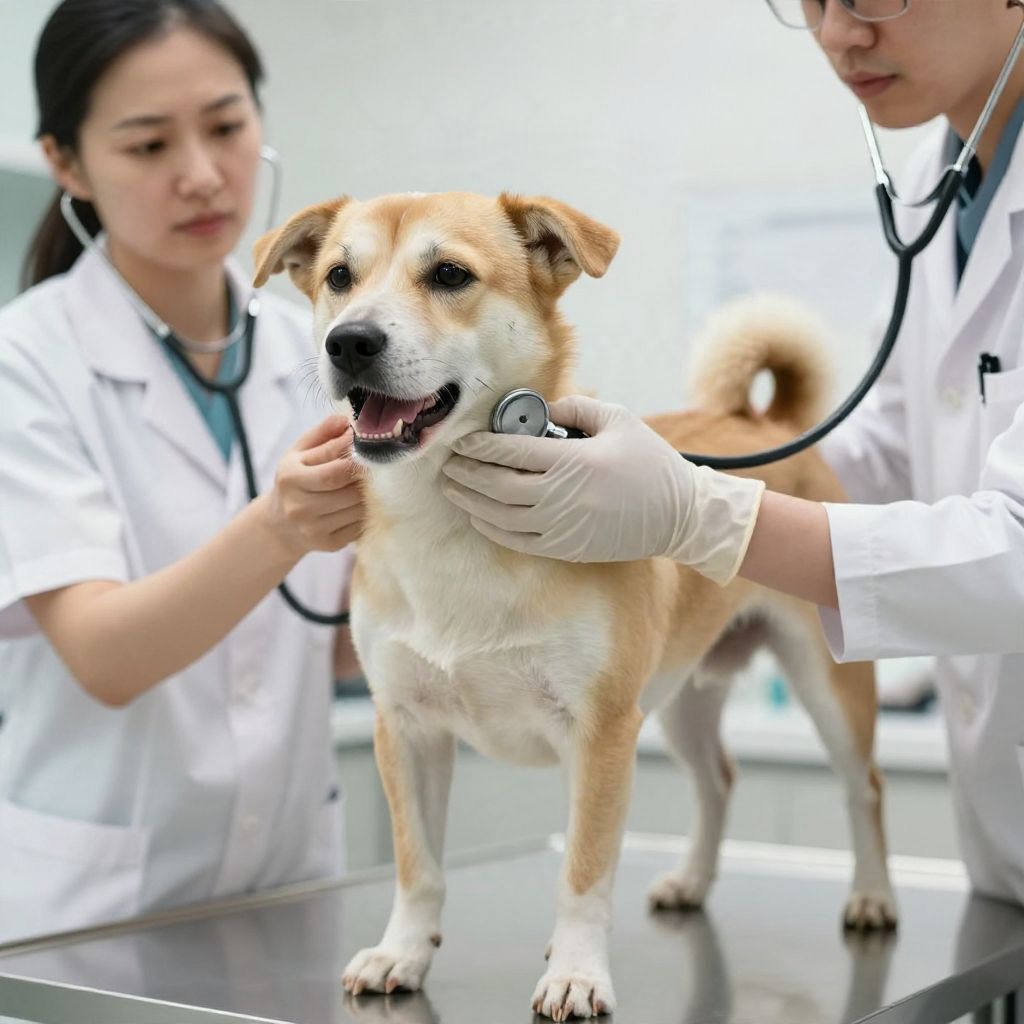
If your dog is coughing and gagging, it can be alarming, especially when it sounds like something is stuck in the throat. Sometimes the cause is minor irritation, but coughing and gagging can also point to a problem that needs veterinary care.
The right response depends on how your dog is acting, how long the signs last, and whether there are other symptoms such as breathing trouble, vomiting, or weakness. Some causes are mild; others are urgent.
Why is my dog coughing and gagging?
Dogs cough and gag for many reasons, including throat irritation, kennel cough, allergies, collapsing trachea, heart disease, infections, foreign objects, or vomiting that looks like gagging. If your dog has trouble breathing, blue gums, collapse, or repeated unproductive retching, seek urgent veterinary care right away.
Common causes of coughing and gagging in dogs
1. Throat irritation or something stuck
A small object, grass seed, bone fragment, or piece of food can irritate the throat and trigger coughing, gagging, or repeated swallowing. Your dog may paw at the mouth, drool, or seem uncomfortable eating or drinking.
If you suspect a foreign object, do not reach blindly into the mouth unless you can clearly see and safely remove the item. A vet should assess anything that seems lodged or is causing ongoing distress.
2. Kennel cough and other respiratory infections
Kennel cough is a common contagious airway infection that often causes a dry, honking cough and gagging at the end of the cough. Some dogs act fairly normal, while others may also have nasal discharge, fever, or reduced energy.
This is more likely after boarding, daycare, grooming, dog park visits, or contact with other dogs, but any dog can be exposed. Puppies, seniors, and dogs with other health issues may be more affected.
3. Collapsing trachea
Some dogs, especially smaller dogs, can develop a collapsing trachea, which can cause a harsh cough, gagging, or a goose-honk sound. Excitement, pulling on a collar, heat, or exercise may make it worse.
This condition needs veterinary evaluation. A harness is often safer than a neck collar for dogs prone to airway irritation, but your vet should guide the plan.
4. Heart disease
Coughing and gagging can happen when heart disease leads to fluid buildup or pressure on the airways. You may notice exercise intolerance, restlessness at night, or faster breathing along with the cough.
Because heart-related coughing can worsen over time, it is important not to assume it is “just a throat tickle,” especially in older dogs.
5. Allergies or environmental irritation
Dust, smoke, strong fragrances, pollen, mold, and other irritants can trigger coughing or throat clearing. Some dogs also have itchy skin, sneezing, or watery eyes at the same time.
Environmental irritation may improve when the trigger is removed, but persistent symptoms should still be checked by a vet to rule out more serious causes.
6. Vomiting, regurgitation, or nausea
What looks like gagging may actually be regurgitation or vomiting. Regurgitation is usually passive and may bring up undigested food, while vomiting often involves abdominal effort and nausea.
Digestive problems, eating too fast, motion sickness, or esophageal disease can all contribute. If your dog is repeatedly bringing up food or liquid, a veterinary exam is important.
7. Parasites and other medical conditions
Heartworm disease and some lungworms can cause coughing, though the pattern varies. Other illnesses, including pneumonia, throat inflammation, or growths in the airway, can also lead to coughing and gagging.
Because the causes are so varied, ongoing coughing should not be guessed at or treated blindly at home.
When coughing and gagging is an emergency
Certain signs mean your dog needs urgent veterinary attention now, not later. If you see any of these, contact an emergency vet immediately:
- Difficulty breathing, open-mouth breathing, or very rapid breathing
- Blue, gray, or very pale gums
- Collapse, extreme weakness, or unable to stand
- Repeated unproductive retching with a swollen abdomen
- Known or suspected choking
- Blood in the cough, vomit, or saliva
- Severe distress, panic, or worsening symptoms
Do not wait to “see if it passes” when breathing is affected. Airway and heart emergencies can become life-threatening quickly.
What you can do at home while you monitor your dog
If your dog is breathing comfortably and otherwise seems stable, you can take a few sensible steps while arranging veterinary advice if needed.
- Keep your dog calm. Excitement and exertion can worsen coughing.
- Use a harness instead of a collar if the neck seems irritated or your dog pulls.
- Remove obvious irritants such as smoke, aerosols, dust, and strong scents.
- Offer water if your dog wants it, but do not force drinking.
- Observe carefully for breathing changes, fever, lethargy, or reduced appetite.
- Keep other dogs away if an infectious cough is possible.
It can help to record a short video of the coughing or gagging episode. That can give your veterinarian important clues about whether the sound is a cough, gag, reverse sneeze, or regurgitation.
What not to do
When you are worried, it is easy to try quick fixes that may not be safe. Avoid these common mistakes:
- Do not give human cough medicine unless your veterinarian specifically instructs you to do so.
- Do not use essential oils, vapor rubs, or home inhalants on your dog.
- Do not force food, water, or pills if your dog is struggling to swallow.
- Do not assume a “kennel cough” diagnosis without an exam if symptoms are severe or unusual.
- Do not delay care if the cough is getting worse or your dog seems unwell.
How a vet may figure out the cause
Your veterinarian will usually start with a history and physical exam. They may ask how long the coughing has been happening, whether it is dry or wet, whether your dog gags after eating, and whether there has been exposure to other dogs.
Depending on the findings, they may recommend tests such as chest X-rays, heart evaluation, parasite testing, throat examination, or blood work. The exact workup depends on your dog’s age, breed tendencies, medical history, and symptoms.
Age, size, and individual risk factors
Different dogs can show coughing and gagging for different reasons. Small dogs may be more prone to tracheal issues, older dogs are more likely to have heart disease or chronic airway problems, and puppies may be more vulnerable to contagious infections.
That said, no sign belongs to one breed or age group only. Any dog with persistent coughing, gagging, or breathing changes deserves attention.
How to reduce the risk of future episodes
You cannot prevent every cause, but a few habits can lower risk and help you catch problems early.
- Keep your dog up to date on core vaccines and parasite prevention as recommended by your vet.
- Use a harness if your dog coughs when leashed or pulls hard.
- Avoid smoky, dusty, or heavily scented environments.
- Supervise chew toys and treats to reduce choking hazards.
- Seek prompt care for ongoing coughs instead of waiting for them to become severe.
When to call your veterinarian
You should call your vet if the coughing and gagging lasts more than a day, happens repeatedly, or is accompanied by sneezing, fever, lethargy, reduced appetite, vomiting, or nasal discharge. Even if your dog seems mostly normal, persistent coughing should be evaluated.
If the symptom started suddenly after eating, chewing, or playing, mention that clearly. A sudden onset can point to irritation, choking, or a swallowed object.
Bottom line
Why is my dog coughing and gagging? The cause may be a simple throat irritation, but it can also be a respiratory infection, airway problem, heart disease, or something stuck in the throat. Watch closely, keep your dog calm, and get veterinary help quickly if breathing changes or the symptoms persist.
If you want to learn more, you may also find these guides helpful: why your dog may be coughing like something is stuck in his throat and what home remedy you can give your dog for coughing.