
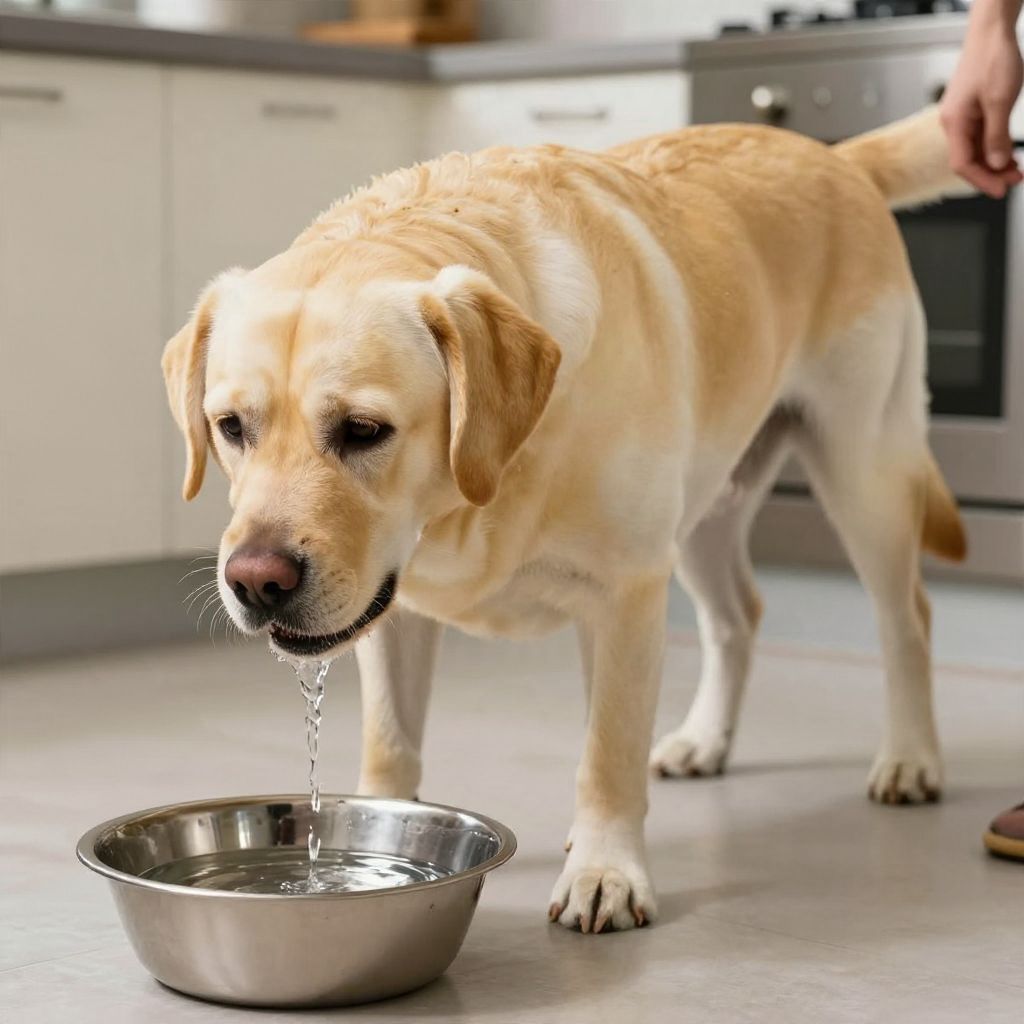
If your dog coughs after drinking water, it can be a one-off irritation or a sign that something is making swallowing harder. Many dogs occasionally gulp too fast and trigger a brief cough, but repeated coughing should not be ignored.
The cause can range from drinking too quickly to throat irritation, coughing from an airway problem, or a swallowing issue. Watch for patterns, breathing trouble, or other symptoms, and contact your veterinarian if the coughing keeps happening.
Why does my dog cough after drinking water?
Most often, a dog coughs after drinking because water went down “the wrong way,” the dog drank too quickly, or the throat and airway are irritated. If it happens often, or with gagging, choking, nasal discharge, or breathing changes, your vet should check for an underlying health problem.
Common causes of coughing after drinking water
Drinking too fast
Some dogs lap water enthusiastically and swallow air along with it. That can trigger a brief cough or gag, especially after exercise, excitement, or hot weather.
This is more likely in dogs that rush meals and water, but it can happen to any dog. Larger dogs may gulp more forcefully, while puppies and smaller dogs may be more prone to splashing and inhaling water.
Water going into the airway
If a small amount of water enters the airway instead of the esophagus, your dog may cough immediately. A single episode that stops quickly can happen in otherwise healthy dogs.
Frequent episodes, however, may suggest poor swallowing coordination, throat irritation, or another condition that needs veterinary attention.
Throat or airway irritation
Dry air, dust, smoke, pollen, or a recent bout of vomiting can irritate the throat and make coughing more likely after drinking. Some dogs also cough because their throat is already inflamed from another illness.
Collars that press on the neck can worsen irritation in some dogs. A well-fitted harness may be more comfortable for dogs with throat sensitivity.
Respiratory illness
Kennel cough and other upper respiratory infections can cause a dry, hacking cough that may seem worse after drinking. The water itself is not usually the problem; the cough reflex is already triggered.
If your dog also has sneezing, nasal discharge, low energy, or loss of appetite, an infection becomes more likely.
Tracheal or airway problems
Some dogs develop conditions that make the airway more sensitive or narrow. A classic example is tracheal collapse, which is more common in some small dogs, though any dog can have airway disease.
These dogs may cough after drinking, after excitement, or when pressure is placed on the neck. The cough is often described as honking or harsh, but symptoms vary.
Swallowing problems
Difficulty swallowing can cause coughing, choking, repeated gulping, or regurgitation after drinking. This may happen with esophageal disease, neurological problems, pain in the mouth or throat, or age-related weakness.
Older dogs may be more vulnerable to swallowing changes, but puppies can also have congenital or developmental issues.
Foreign material or something stuck in the throat
Grass awns, small bones, toys, or other debris can irritate the throat and make your dog cough when drinking. Your dog may also paw at the mouth, gag, drool more than usual, or refuse food.
If you suspect something is lodged in the mouth or throat, do not try to force it out unless it is clearly visible and easy to remove safely.
What to do if your dog coughs after drinking water
Start by watching when it happens, how long it lasts, and whether your dog seems otherwise normal. A single brief cough after a big drink is less concerning than repeated coughing or coughing paired with other symptoms.
- Offer smaller amounts of water more often if your dog gulps quickly.
- Use a clean, stable bowl that is easy for your dog to reach without stretching the neck awkwardly.
- Keep water bowls clean to reduce irritation from debris or slime buildup.
- Limit heavy exercise right before and right after drinking.
- Use a harness instead of a neck collar if neck pressure seems to trigger coughing.
If your dog tends to inhale water, you can also try a wider bowl or a slow-water feeder designed for dogs. These may help some dogs drink more calmly, but they are not a fix for medical causes.
When coughing after drinking is an emergency
Seek urgent veterinary care right away if your dog has trouble breathing, blue or pale gums, collapses, cannot stop coughing, or appears panicked. A dog that is actively choking or unable to swallow normally needs immediate help.
- Repeated gagging with no improvement
- Labored breathing or noisy breathing
- Excessive drooling or inability to swallow
- Vomiting, regurgitation, or repeated attempts to bring something up
- Sudden weakness, collapse, or severe distress
Do not wait to “see if it passes” if your dog is struggling to breathe or seems unable to clear the airway.
When to schedule a vet visit
Make an appointment if the coughing happens more than once, is getting worse, or is paired with other symptoms. Even if your dog seems fine between episodes, repeated coughing after drinking can point to a problem that is easier to treat early.
Your veterinarian may ask about your dog’s age, breed tendencies, diet, exercise, recent boarding or daycare exposure, and whether the cough happens with food, water, excitement, or sleep. They may examine the mouth and throat, listen to the chest, and recommend tests if needed.
Signs that deserve a prompt exam
- Coughing after nearly every drink
- Weight loss or reduced appetite
- Fever, lethargy, or nasal discharge
- Regurgitation after drinking
- Change in bark, voice, or breathing pattern
- Coughing that starts suddenly in an older dog
How your vet may investigate the cause
The right workup depends on the pattern of symptoms. Your vet may start with a physical exam and then recommend imaging or other tests if the cough is persistent or severe.
- Chest X-rays to look for airway, lung, or heart-related problems
- Throat or oral exam to check for irritation, injury, or a foreign body
- Swallowing evaluation if choking or regurgitation is part of the problem
- Infectious disease testing if kennel cough or another infection is suspected
- Further airway testing in dogs with chronic or unexplained cough
Because coughing after drinking can have more than one cause, the exact plan should be based on your dog’s age, history, and overall health.
How to help prevent coughing after drinking
Prevention depends on the reason behind the cough, but a few practical habits can reduce episodes for many dogs.
- Keep fresh water available throughout the day so your dog is less likely to gulp.
- Use calm routines around exercise, especially in hot weather.
- Choose a bowl height and shape that suits your dog’s body size and comfort.
- Clean bowls regularly to remove residue and reduce irritation.
- Watch for patterns after play, barking, excitement, or eating.
- Book a veterinary exam if the problem is ongoing or worsening.
Common mistakes to avoid
It is easy to dismiss a brief cough as “just drinking too fast,” but repeated episodes deserve attention. The goal is to notice patterns early rather than waiting for a bigger problem.
- Do not force water into a coughing or choking dog.
- Do not assume every cough is normal, especially if it is new.
- Do not use punishment if your dog is gulping or anxious around water.
- Do not delay care if breathing changes, collapse, or blue gums appear.
Breed, age, and individual differences
Some dogs are simply more likely to cough after drinking because of body shape, airway sensitivity, or age-related changes. Small dogs, brachycephalic dogs with short noses, and dogs with known airway issues may be more prone, but any dog can develop a problem.
Puppies may cough from excitement, clumsy drinking, or infectious disease exposure. Senior dogs are more likely to have swallowing changes, chronic airway disease, or other medical conditions that make coughing after water more concerning.
The bottom line
If your dog coughs after drinking water once in a while, fast drinking or mild throat irritation may be the reason. If it happens often, or comes with gagging, breathing trouble, regurgitation, or lethargy, contact your veterinarian promptly for a proper exam.
If you want more help comparing symptoms, you may also find why your dog may be coughing like something is stuck in his throat and this guide on why dogs cough after drinking water useful for next steps.