
If your dog is coughing, you may be looking for a safe home remedy that helps without making things worse. The right response depends on the cause, because coughing can come from mild throat irritation, kennel cough, allergies, heart disease, or something stuck in the airway.
Some simple home care can soothe a mild cough, but you should not rely on home remedies if your dog is struggling to breathe, collapsing, coughing up foam or blood, or acting very unwell. In those cases, contact a veterinarian right away.
What home remedy can I give my dog for coughing?
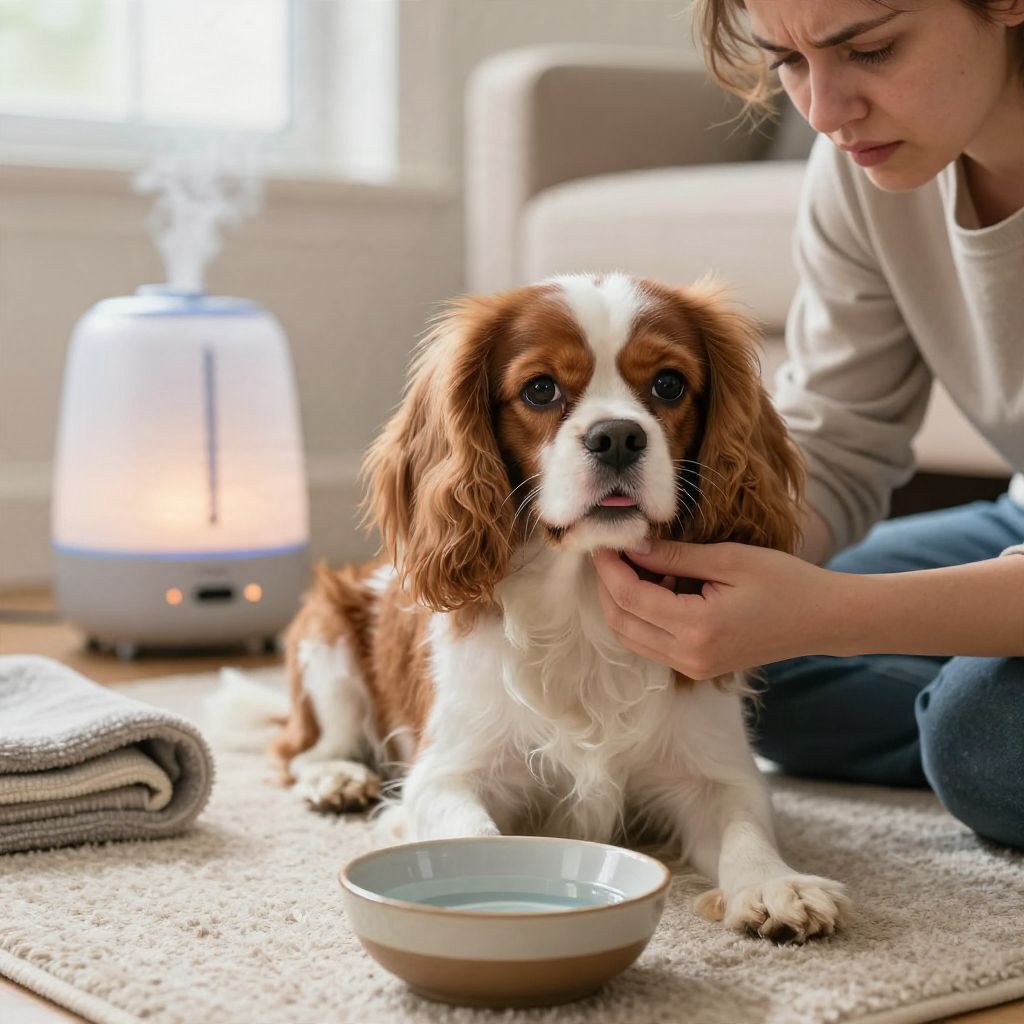
For a mild, occasional cough, the safest home support is usually rest, fresh water, humid air, and avoiding irritants like smoke or dust. You can also use a harness instead of a collar to reduce throat pressure. If the cough lasts more than a day or two, worsens, or comes with other symptoms, your dog needs a veterinary exam.
First, figure out whether the cough is mild or urgent
Not every cough needs emergency care, but some do. A dog that is otherwise bright, eating, and breathing normally may have a minor irritation, while a dog with labored breathing or weakness may have a serious problem.
Call a vet urgently if you notice any of these red flags
- Difficulty breathing, open-mouth breathing, or rapid breathing at rest
- Blue, gray, or very pale gums
- Collapse, extreme weakness, or fainting
- Coughing up blood or pink foam
- A swollen belly, repeated retching, or unproductive gagging
- A cough after choking, chewing on a toy, or possible foreign-body exposure
- Fever, marked lethargy, refusal to drink, or not eating
- A cough in a puppy, senior dog, or dog with heart or lung disease that is worsening quickly
Safe home care that may help a mild cough
These steps are supportive, not cures. They may reduce throat irritation while you monitor your dog and decide whether a vet visit is needed.
1. Keep your dog calm and rested
Excitement, barking, and hard exercise can trigger more coughing. Keep walks short and quiet until you know what is going on.
2. Offer plenty of fresh water
Hydration can help keep the throat from feeling dry and irritated. Encourage drinking, but do not force water into your dog’s mouth.
3. Use humid air
A cool-mist humidifier can make the air less irritating, especially in dry homes. You can also sit with your dog in a steamy bathroom for a short time if your veterinarian says that is appropriate.
4. Reduce throat pressure
If your dog wears a collar, switch to a well-fitting harness for walks. Pressure on the neck can aggravate coughing, especially in small dogs or dogs with tracheal sensitivity.
5. Avoid smoke, dust, and strong scents
Secondhand smoke, aerosol sprays, scented candles, and dusty bedding can all irritate the airways. Keep your dog away from these triggers.
6. Keep the environment clean
Wash bedding, vacuum regularly, and reduce dust where your dog sleeps. If your dog has seasonal allergies, these small changes may help reduce coughing triggers.
What not to do when your dog is coughing
Well-meaning home treatment can become risky if it delays proper care or uses the wrong product. Avoid guessing at the cause.
- Do not give human cough medicine unless your veterinarian specifically tells you to.
- Do not use essential oils, vapor rubs, or home inhalants on your dog.
- Do not give honey, syrup, or herbal mixtures as a substitute for veterinary care.
- Do not force exercise to “work it out.”
- Do not use punishment if the coughing happens during barking or excitement.
Some human products are dangerous for dogs, and even “natural” remedies can irritate the stomach, affect the nervous system, or interfere with other medications. If you are unsure, ask your vet before giving anything.
Common reasons dogs cough
Coughing is a symptom, not a diagnosis. The cause can range from minor to serious, and the right treatment depends on what is behind it.
Upper airway irritation
Dust, smoke, pollen, or a dry environment can irritate the throat and trigger a dry cough. This may be more noticeable after sleep, barking, or exercise.
Infectious causes
Kennel cough and other respiratory infections can spread between dogs. These often cause a dry, honking cough, though signs can vary by age, immune status, and exposure history.
Collapsing trachea or throat sensitivity
Some dogs, especially smaller dogs, can be prone to coughing when the airway is irritated. A harness and veterinary guidance are often more helpful than home remedies alone.
Heart or lung disease
A chronic cough can be linked to heart disease, pneumonia, or other lung problems. These conditions need veterinary evaluation and should not be managed with home care alone.
Something stuck or inhaled
If your dog suddenly starts coughing after chewing, eating, or playing with a toy, a foreign body or airway irritation may be involved. This can become an emergency quickly.
How age, size, and health can change what is safest
There is no one-size-fits-all home remedy for every dog. Your dog’s age, breed tendencies, body size, and medical history matter.
- Puppies can worsen quickly, especially if they are unvaccinated or exposed to other dogs.
- Senior dogs are more likely to have heart or airway disease, so a persistent cough should be checked sooner.
- Small dogs may be more sensitive to neck pressure from collars.
- Dogs with known heart, lung, or immune problems should not be managed with home care alone if coughing starts or changes.
Breed tendencies can matter too, but they are not guarantees. For example, some dogs may be more prone to airway sensitivity or breathing issues, yet any dog can cough for a serious reason.
When a vet visit is the right next step
You should contact your veterinarian if the cough is persistent, recurring, or paired with other symptoms. A vet can listen to the lungs and heart, check temperature, and decide whether testing is needed.
Make an appointment soon if
- The cough lasts more than a couple of days
- Your dog coughs mostly at night or after activity
- The cough is getting worse
- Your dog has nasal discharge, sneezing, or reduced energy
- Your dog was recently around other dogs, boarding, daycare, or grooming facilities
- Your dog has a history of heart disease, airway problems, or repeated coughing episodes
Your veterinarian may recommend rest, diagnostic tests, or treatment based on the cause. Do not try to “wait it out” if the cough is not improving or your dog seems uncomfortable.
How to monitor your dog at home while you wait for advice
If your dog seems stable, watch closely and note patterns. This information can help your veterinarian narrow down the cause.
- Count how often the cough happens and whether it is dry, wet, honking, or gag-like.
- Notice when it occurs: after exercise, at night, when excited, or after drinking.
- Check appetite, energy, and breathing rate at rest.
- Look for nasal discharge, fever, vomiting, or changes in gum color.
- Keep your dog away from smoke, dusty areas, and other dogs until you know more.
Can food help a coughing dog?
Food is not a cure for coughing, and you should not use snacks or supplements as a replacement for treatment. If your dog is eating normally, keep the diet consistent unless your vet advises otherwise.
If swallowing seems uncomfortable, your vet may suggest temporary feeding changes based on the cause. Do not change food abruptly unless instructed, especially for puppies, seniors, or dogs with other health conditions.
Practical takeaway
The safest home remedy for a coughing dog is supportive care: rest, water, humid air, a harness, and avoiding irritants. If the cough is persistent, worsening, or paired with breathing trouble, weakness, or blue gums, get veterinary help immediately.
If you want to learn more about related breathing and respiratory issues, you may also find how to stop reverse sneezing in dogs and can dogs catch colds from humans helpful for understanding similar symptoms.