
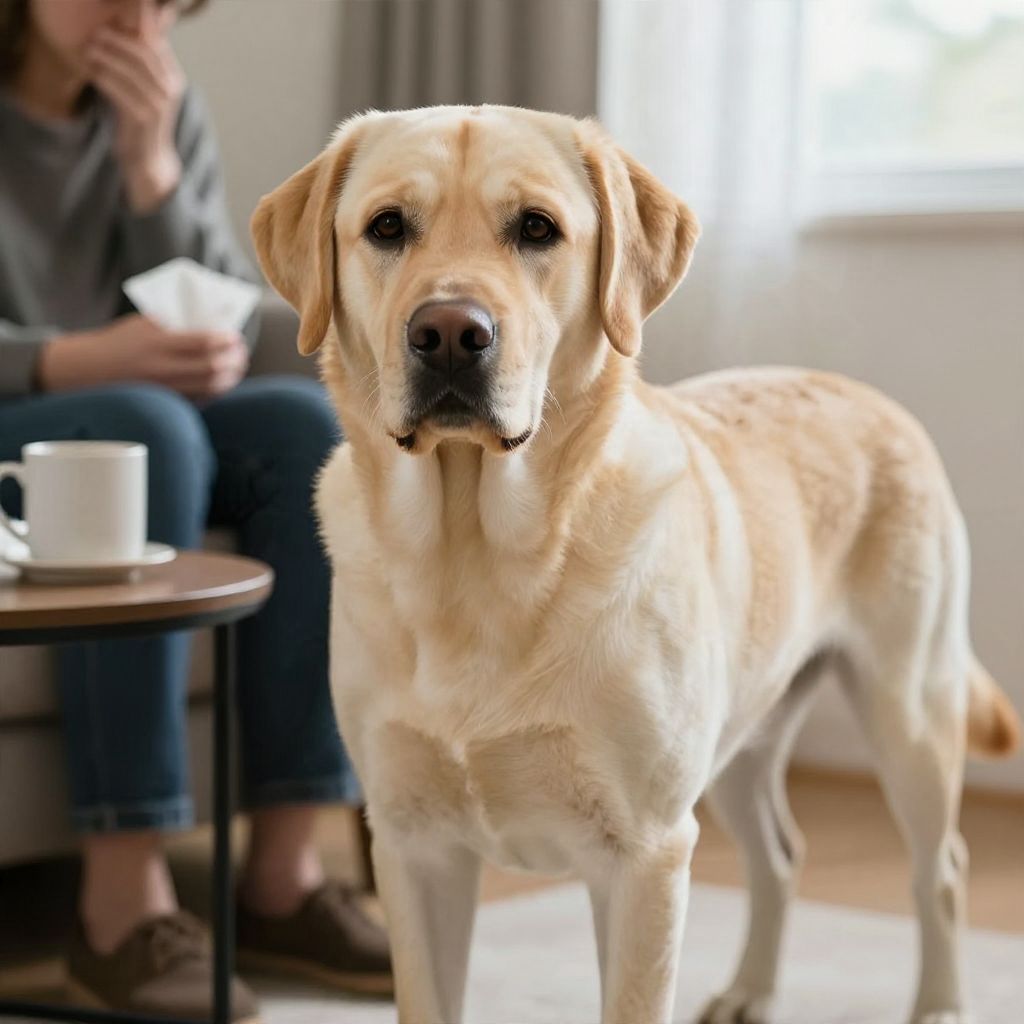
Can dogs catch colds from humans? Usually, no. The common cold viruses that affect people are generally species-specific, so your dog is unlikely to “catch your cold” the way another person would.
That said, dogs can still develop respiratory illness from other dogs, and some infections can look like a human cold. If your dog is coughing, sneezing, or acting unwell, it’s worth paying attention to the symptoms and calling your veterinarian when needed.
Can dogs catch colds from humans?
In most cases, dogs do not catch the same cold viruses that make people sick. Human colds are usually caused by viruses adapted to people, while dogs more commonly get respiratory problems from canine-specific infections or irritants. If your dog seems sick after you are ill, the timing may be coincidence or a different exposure.
What symptoms look like a “cold” in dogs?
Dogs with respiratory illness can show signs that resemble a cold, but those signs do not tell you the cause. A dog may have one mild symptom or several at once, depending on age, health, and the infection involved.
- Sneezing
- Runny nose
- Watery eyes
- Soft cough or frequent coughing
- Reduced energy
- Less interest in food
- Mild fever or warmth
Some dogs, especially puppies, seniors, and dogs with chronic disease, can worsen faster than a healthy adult dog. A mild-looking sniffle can become more serious if it affects breathing, hydration, or appetite.
When is it not just a cold?
Many illnesses can mimic a cold in dogs, including kennel cough, canine influenza, pneumonia, allergies, nasal irritation, and even dental disease. Because the signs overlap, it is safest not to assume your dog has a simple cold.
Call your veterinarian soon if you notice:
- Coughing that lasts more than a day or two
- Thick yellow, green, or bloody nasal discharge
- Fever, lethargy, or clear discomfort
- Loss of appetite
- Symptoms in a puppy, senior dog, or immunocompromised dog
- Exposure to other sick dogs at boarding, daycare, parks, or grooming facilities
Get urgent veterinary care right away if your dog has:
- Labored breathing or open-mouth breathing at rest
- Blue, gray, or pale gums
- Collapse, extreme weakness, or trouble standing
- Repeated vomiting along with respiratory signs
- Severe dehydration
- A swollen face or sudden facial pain
These can be emergency signs, not routine cold symptoms. If you are unsure, it is better to call a veterinarian promptly than to wait.
Why dogs usually do not catch human colds
Viruses tend to be species-specific, meaning they are adapted to infect certain hosts more easily than others. Human cold viruses are generally not well suited to dogs, so transmission from you to your dog is considered unlikely.
However, dogs can still pick up other respiratory infections from dog-to-dog contact, shared airspace, bowls, toys, or contaminated surfaces. A “cold” in dogs is often a broader respiratory issue rather than the same illness people mean when they say they have a cold.
What should you do if you are sick and have a dog?
If you have a cold, basic hygiene is a smart precaution even though your dog is unlikely to catch it. The goal is to reduce the chance of spreading any germs, protect your dog from other exposures, and keep your dog comfortable while you recover.
- Wash your hands before handling food, toys, or medications.
- Avoid sneezing or coughing directly on your dog.
- Keep shared items like water bowls clean.
- Limit contact with other dogs if your dog is already showing symptoms.
- Watch for any change in appetite, energy, coughing, or breathing.
If you are too unwell to exercise your dog normally, use short leash walks and enrichment at home rather than overexerting either of you.
How veterinarians usually approach a dog with cold-like signs
A veterinarian may ask about your dog’s age, vaccination status, recent contact with other dogs, travel, boarding, daycare, and whether the symptoms are getting worse. Those details help narrow down whether the issue is likely mild irritation or something more serious.
Depending on the exam, your vet may recommend rest, monitoring, testing, or treatment aimed at the underlying cause. Do not give human cold or flu medications unless your veterinarian specifically instructs you to do so.
Why home treatment can be risky
- Some human medicines are unsafe for dogs.
- Cold symptoms can hide pneumonia or another infection.
- Delaying care can matter more in puppies and older dogs.
- Different causes need different treatment plans.
Even if your dog seems only mildly sick, a vet visit may be the safest choice if symptoms persist or your dog has other health problems.
How to support a dog with mild respiratory symptoms
If your veterinarian says the illness appears mild, supportive care at home may be part of the plan. Keep things calm and simple so your dog can rest and recover without extra stress.
- Offer fresh water frequently.
- Encourage rest and avoid intense exercise.
- Keep your dog warm and comfortable.
- Use a harness instead of a collar if coughing is present.
- Monitor appetite, energy, and breathing closely.
Do not force food if your dog is refusing meals, and do not assume a “wait and see” approach is always safe. If signs worsen, contact your veterinarian.
Which dogs need extra caution?
Any dog can develop respiratory illness, but some dogs deserve closer monitoring because they may be more vulnerable to complications. Age, immune status, and underlying disease matter more than breed alone.
Dogs that may need faster veterinary attention include:
- Puppies, especially very young puppies
- Senior dogs
- Dogs with heart or lung disease
- Dogs taking immune-suppressing medication
- Dogs recovering from surgery or illness
- Dogs with a history of chronic respiratory issues
Breed can influence risk indirectly when anatomy affects breathing, such as in dogs with shorter muzzles or other airway challenges. Still, individual health and symptoms matter more than breed labels alone.
How to lower the chance of respiratory illness in dogs
You cannot prevent every illness, but you can reduce risk by supporting your dog’s overall health and limiting exposure to sick animals. Prevention is especially important for social dogs that visit parks, daycare, grooming salons, or boarding facilities.
- Keep vaccinations current as recommended by your veterinarian.
- Avoid close contact with visibly sick dogs.
- Choose clean, well-managed dog facilities.
- Wash bedding and bowls regularly.
- Support good nutrition, sleep, and routine exercise.
Good prevention does not guarantee your dog will never get sick, but it can reduce the chances of infection and help your dog recover better if illness does occur.
Common mistakes to avoid
When your dog has cold-like signs, it is easy to overreact or underreact. The safest approach is to stay observant, avoid guesswork, and get veterinary guidance when symptoms are concerning.
- Giving human cold medicine without veterinary approval
- Assuming every cough is “just a cold”
- Ignoring breathing changes because the dog is still eating
- Sending a coughing dog to daycare or group play
- Using harsh handling or punishment when the dog needs rest
Reward calm behavior, keep your dog comfortable, and focus on management rather than trying to “train away” a medical symptom.
When to call the vet even if the symptoms seem mild
It is reasonable to call your veterinarian if you are unsure whether your dog’s signs are normal, especially if your dog has been exposed to other dogs or the symptoms are not improving. Early guidance can prevent unnecessary worry and help you catch a more serious problem sooner.
Call sooner rather than later if your dog is coughing repeatedly, has nasal discharge that is thick or colored, or seems tired and off food. If your dog is struggling to breathe, seek emergency care immediately.
If you want more general background on canine respiratory illness, you may also find these related articles helpful: can dogs catch a cold and do dogs get colds.
Bottom line: dogs usually do not catch human colds, but they can develop similar-looking respiratory illness from other causes. Watch for red-flag symptoms, keep sick dogs away from other dogs, and contact your veterinarian if your dog’s breathing, energy, or appetite changes.