
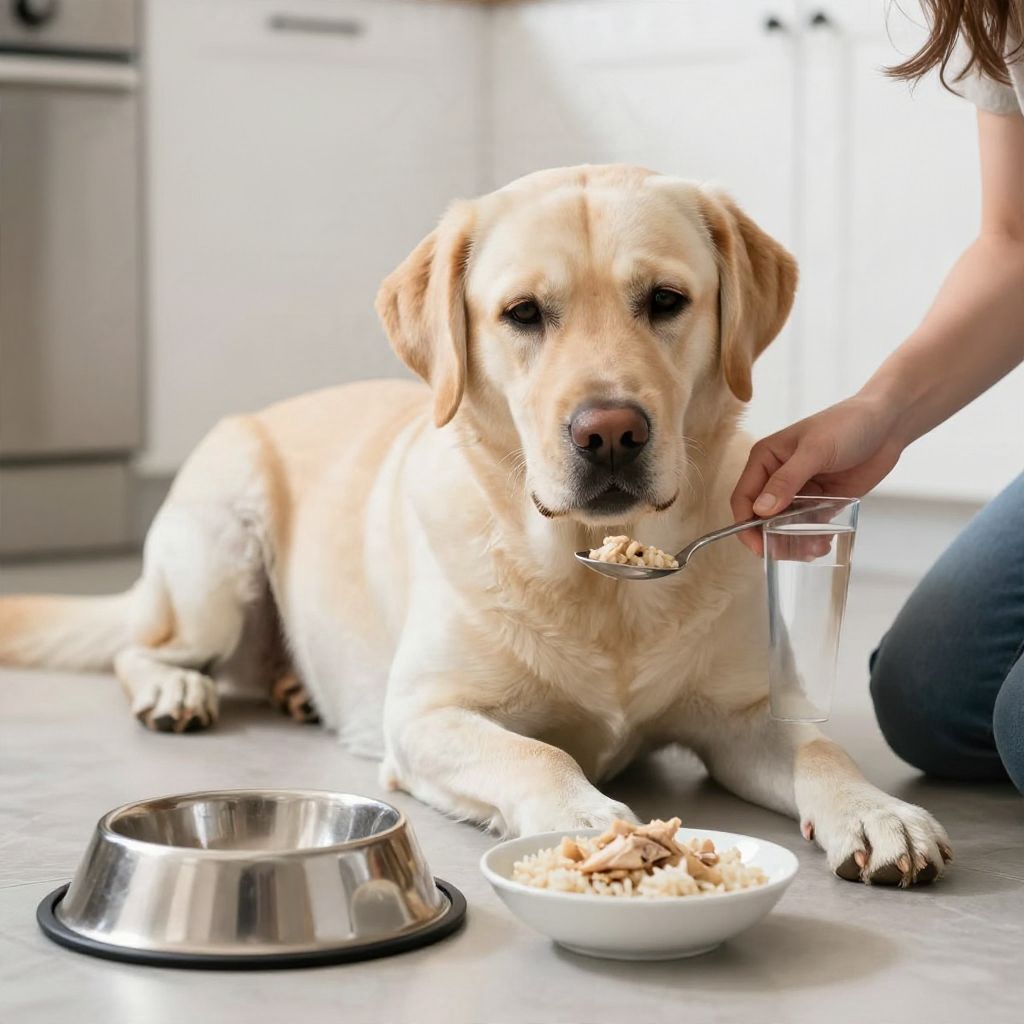
What can you give a dog for upset stomach? In many mild cases, the safest first step is a short break from food, plenty of fresh water, and a bland diet once vomiting has stopped. But stomach upset can also signal something more serious, so watch closely for warning signs.
If your dog is very lethargic, bloated, repeatedly vomiting, has blood in vomit or stool, or cannot keep water down, contact a veterinarian right away. Home care is only appropriate when symptoms are mild and your dog is otherwise acting fairly normal.
What can you give a dog for upset stomach?
For a mild upset stomach, you can usually offer small amounts of water and, after a brief rest from food, a bland meal such as plain cooked chicken and white rice or a veterinarian-recommended gastrointestinal diet. Avoid rich foods, fatty treats, and human medicines unless your vet specifically tells you to use them.
First, decide whether this is mild or urgent
Not every stomach issue should be treated the same way. A dog with a single soft stool and normal energy needs different care than a dog with repeated vomiting, pain, or dehydration.
Signs that may be mild
- One or two episodes of vomiting or loose stool
- Normal alertness and interest in water
- No obvious pain or bloating
- No blood in vomit or stool
Red flags that need urgent veterinary care
- Repeated vomiting or inability to keep water down
- Bloated or hard abdomen
- Weakness, collapse, or severe lethargy
- Blood in vomit or stool, or black/tarry stool
- Signs of pain, restlessness, or a hunched posture
- Possible toxin exposure, foreign body ingestion, or a sudden severe change
- Diarrhea or vomiting in a puppy, senior dog, or dog with another health condition
If you are unsure, it is safer to call your veterinarian than to wait. Puppies, toy breeds, seniors, and dogs with diabetes, kidney disease, pancreatitis, or other chronic illness can become dehydrated or unstable more quickly.
What to give a dog with an upset stomach at home
When symptoms are mild, the goal is to rest the digestive tract without causing dehydration or making the irritation worse. Keep things simple and bland.
1. Fresh water in small amounts
Offer clean water and let your dog drink small amounts at a time. If your dog gulps and vomits, try offering just a little more frequently rather than a full bowl all at once.
Do not force water into your dog’s mouth. If your dog cannot keep even small sips down, that is a veterinary concern.
2. A brief food break, if your vet agrees and your dog is otherwise stable
Some dogs benefit from a short pause from food when vomiting is mild and recent. This should be done cautiously and is not appropriate for every dog, especially puppies, small dogs, or dogs with medical conditions that make fasting risky.
If your dog is young, very small, diabetic, or has another health issue, ask your veterinarian before withholding food.
3. A bland diet once vomiting has stopped
When your dog can keep water down and is no longer actively vomiting, a bland meal may help. Common options include plain cooked chicken or turkey with white rice, or a vet-approved gastrointestinal diet.
- Use plain, fully cooked meat with no seasoning
- Keep portions small at first
- Feed several small meals instead of one large meal
- Return gradually to the regular diet if your dog improves
Some dogs do better with a veterinary therapeutic diet than with home-cooked bland food, especially if the stomach upset keeps coming back.
4. Rest and a calm environment
Keep exercise light and avoid excitement while your dog’s stomach settles. A peaceful routine can reduce stress-related nausea and limit further irritation.
What you should not give a dog with an upset stomach
Many common human foods and medications can make things worse or be dangerous. When in doubt, do not guess.
- Fatty foods, greasy leftovers, and rich treats
- Seasoned foods with onion, garlic, heavy spices, or sauces
- Milk or dairy if your dog is sensitive to lactose
- Human pain relievers or anti-nausea medicines unless prescribed by a veterinarian
- Random supplements without veterinary guidance
- Table scraps that can trigger pancreatitis or worsen diarrhea
Do not assume that a food safe for people is safe for dogs. Even when something is not toxic, it can still be hard to digest or aggravate vomiting and diarrhea.
How to tell if your dog needs a vet visit today
Some stomach upsets pass quickly, but others need prompt treatment. The more severe or persistent the signs, the more important it is to get professional help.
Call your vet promptly if
- Vomiting or diarrhea lasts more than a day
- Your dog is drinking less than usual
- Your dog seems uncomfortable after eating
- The problem keeps returning
- Your dog recently ate something unusual
- Your dog has a sensitive stomach or a known medical condition
Go to an emergency clinic now if
- Your dog has a swollen belly or repeated unproductive retching
- Your dog is weak, pale, or collapsing
- You see blood in vomit or stool
- Your dog may have eaten chocolate, xylitol, grapes, raisins, medications, cannabis, rodent bait, or another toxin
- Your dog may have swallowed a toy, bone, string, sock, or other foreign object
These situations can become life-threatening quickly, and home care is not enough.
Why dogs get upset stomachs
An upset stomach is a symptom, not a diagnosis. The cause may be simple or serious, and the right response depends on what is behind it.
- Dietary indiscretion, such as raiding the trash or eating rich food
- Sudden diet changes
- Mild stress or anxiety
- Parasites or infectious illness
- Food intolerance or sensitivity
- Pancreatitis
- Gastrointestinal blockage
- Toxin exposure
- Other health problems affecting the liver, kidneys, or pancreas
Because the causes vary so much, repeated stomach upset should always be discussed with a veterinarian rather than managed only at home.
Age, size, and health matter
What you can give a dog for upset stomach depends partly on the individual dog. A large adult with mild nausea may tolerate a short food break better than a tiny puppy, and a senior dog may dehydrate faster than a healthy young adult.
Puppies
Puppies can become weak or dehydrated quickly. If a puppy vomits or has diarrhea, call your veterinarian sooner rather than later.
Small-breed dogs
Small dogs have less body reserve and may be more vulnerable to low blood sugar if they do not eat. Do not fast a small dog without veterinary advice.
Senior dogs
Older dogs are more likely to have underlying disease, and stomach upset can be a sign that something more serious is happening. A vet visit is often wise if symptoms are not clearly improving.
Dogs with chronic conditions
If your dog has diabetes, kidney disease, liver disease, pancreatitis, inflammatory bowel disease, or takes regular medication, ask your vet before changing food or withholding meals.
Common mistakes to avoid
Well-meaning home care can accidentally make a mild problem worse. Keep the response simple and safe.
- Feeding a large meal too soon
- Switching foods repeatedly in a short period
- Giving human medications without veterinary guidance
- Ignoring repeated vomiting because the dog seems “mostly okay”
- Assuming diarrhea is harmless if the dog is still active
- Using leftovers, treats, or fatty foods as comfort food
How to help prevent future stomach upset
You cannot prevent every digestive issue, but a few habits can lower the risk.
- Keep your dog on a consistent, balanced diet
- Transition to new foods gradually
- Store trash and toxic foods securely
- Supervise dogs that chew or scavenge
- Use parasite prevention as recommended by your vet
- Limit access to table scraps and rich treats
- Schedule veterinary checks if stomach issues recur
When to ask about a special diet
If your dog often has a sensitive stomach, your veterinarian may recommend a different long-term diet. This could include a highly digestible food, a limited-ingredient diet, or a prescription gastrointestinal formula.
Do not keep rotating foods on your own. Frequent changes can make it harder to tell what is helping and what is causing the problem.
Bottom line
For a mild upset stomach, the safest answer to what can you give a dog for upset stomach is usually water, rest, and then a bland, vet-approved diet in small amounts. If vomiting, diarrhea, pain, blood, bloating, or weakness appears, contact a veterinarian right away.
For more practical dog-care guidance, you may also find this related upset-stomach guide helpful.