
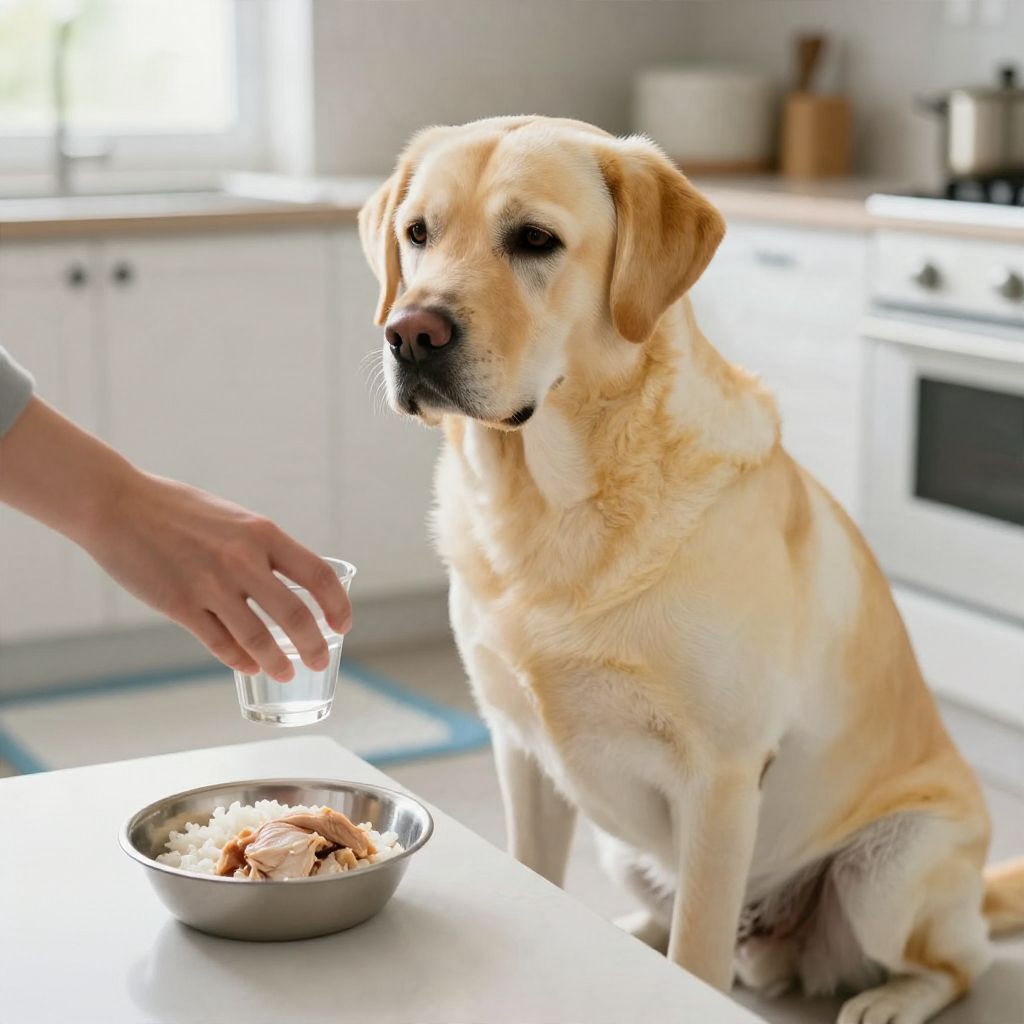
If your dog has diarrhea, the first step is to check how they’re acting overall. A single loose stool may pass on its own, but repeated diarrhea can quickly lead to dehydration, especially in puppies, seniors, and small dogs.
You can help by withholding rich treats, offering water, and watching for warning signs. If your dog seems weak, is vomiting, has blood in the stool, or the diarrhea lasts more than a day, contact your veterinarian promptly.
How to help a dog with diarrhea?
Start with hydration, a bland diet if your veterinarian says it’s appropriate, and close monitoring for red flags. Keep your dog calm, avoid sudden food changes, and contact a vet quickly if diarrhea is severe, bloody, persistent, or paired with vomiting, pain, or lethargy.
Step-by-step: what to do first
- Check your dog’s condition. Note appetite, energy level, vomiting, stool color, and whether your dog is drinking normally.
- Remove obvious triggers. Stop table scraps, fatty treats, new chews, and access to trash or spoiled food.
- Offer fresh water. Keep water available so your dog can drink small amounts frequently.
- Monitor the stool. Look for mucus, black/tarry stool, bright red blood, worms, or a change in frequency.
- Contact your vet if needed. Call sooner rather than later if your dog is young, old, medically fragile, or worsening.
When diarrhea is an emergency
Some cases need urgent veterinary care, not home management. Do not wait if your dog has any of the following:
- Repeated vomiting along with diarrhea
- Blood in the stool or black, tarry stool
- Severe weakness, collapse, or trouble standing
- Swollen abdomen, obvious pain, or repeated unproductive retching
- Signs of dehydration such as dry gums, sunken eyes, or extreme lethargy
- A puppy with diarrhea, especially if unvaccinated
- Possible toxin exposure, foreign object ingestion, or garbage eating
How to support hydration safely
Diarrhea can cause fluid loss fast, so hydration matters more than food at first. Encourage drinking, but don’t force large amounts if your dog is nauseated.
- Offer clean water in a quiet, easy-to-reach place.
- Refresh the bowl often so the water stays appealing.
- If your dog won’t drink, call your veterinarian for advice.
- For dogs who are vomiting, ask your vet before offering anything beyond water.
Some dogs drink better from a different bowl, a wider dish, or a second water station. Individual preferences vary, so simple changes can help without adding risk.
Food management: what to feed and what to avoid
Food choices depend on your dog’s age, size, health history, and whether vomiting is also present. Many dogs with mild diarrhea do better with a temporary bland diet, but you should confirm the plan with your veterinarian if your dog has any medical condition.
Foods that are usually safer during mild digestive upset
- Small, frequent meals of a bland diet recommended by your vet
- Plain, easy-to-digest foods your veterinarian approves
- Your dog’s usual diet, if the vet advises continuing it and symptoms are mild
Foods and items to avoid
- Fatty foods, greasy leftovers, and rich treats
- Sudden diet switches
- Milk or dairy if your dog is sensitive to it
- Bones, rawhide, and hard chews that may irritate the gut or cause obstruction
- Human medications unless your veterinarian specifically prescribes them
Do not assume a “natural” remedy is safe. Some home remedies can worsen diarrhea, delay proper treatment, or be harmful for puppies and dogs with kidney, liver, or heart disease.
Common causes of diarrhea in dogs
Diarrhea is a symptom, not a diagnosis. The cause can range from mild to serious, and the right response depends on what else is happening.
- Dietary indiscretion, such as eating trash or rich food
- Sudden diet changes
- Stress or excitement
- Parasites
- Viral or bacterial infections
- Food intolerance or sensitivity
- Inflammatory or chronic digestive disease
- Toxin exposure or foreign body ingestion
Age matters. Puppies are more vulnerable to dehydration and infectious disease, while senior dogs may have underlying conditions that make diarrhea more serious. Dogs with a history of digestive issues may also need a different approach than otherwise healthy adults.
How long you can monitor at home
Mild diarrhea in an otherwise bright, drinking dog may improve within a short period, but you should not “wait it out” if symptoms are intense or getting worse. If the diarrhea continues into the next day, keeps recurring, or your dog seems unwell, call your veterinarian.
- Monitor at home only if: your dog is alert, drinking, and not vomiting.
- Call the vet soon if: diarrhea lasts more than 24 hours or happens repeatedly.
- Seek urgent care if: there is blood, dehydration, pain, or lethargy.
Special considerations for puppies, seniors, and small dogs
Some dogs need faster help because they can dehydrate more quickly or have less reserve if they stop eating. Breed alone does not determine severity, but size, age, and health status do matter.
Puppies
Puppies with diarrhea should be taken seriously, especially if they are not fully vaccinated. They can become weak quickly, and infectious causes may spread to other dogs.
Senior dogs
Older dogs may have concurrent illness, take regular medications, or have reduced hydration reserves. Even mild diarrhea may warrant a call to your vet if it is unusual for them.
Small dogs
Small dogs can lose fluids faster relative to body size. If your small dog is tired, not drinking, or having multiple episodes, contact your veterinarian sooner rather than later.
What not to do
Well-meaning mistakes can make diarrhea worse or hide a serious problem. Avoid these common errors:
- Giving over-the-counter human medicines without veterinary guidance
- Switching foods repeatedly in one day
- Feeding rich “comfort” foods, table scraps, or fatty treats
- Ignoring vomiting, blood, or abdominal pain
- Letting your dog continue scavenging outdoors or from the trash
- Assuming diarrhea is always a minor stomach upset
How your vet may help
If the diarrhea is persistent, severe, or accompanied by other symptoms, your veterinarian may recommend an exam and targeted testing. The exact plan depends on your dog’s history, vaccination status, travel exposure, diet, and whether there is concern about parasites, infection, or another illness.
Possible next steps may include stool testing, hydration support, dietary changes, or further diagnostics. Your vet can also help you decide whether your dog needs immediate care or careful home monitoring.
Practical prevention tips
You can reduce the chance of future episodes by keeping your dog’s routine steady and limiting access to risky foods and objects.
- Transition to new foods gradually, not all at once.
- Keep trash, compost, and spoiled food out of reach.
- Use treats in moderation and avoid very rich snacks.
- Stay current on parasite prevention and vaccines recommended by your vet.
- Watch closely after boarding, travel, or stressful changes.
Quick recap
To help a dog with diarrhea, focus on hydration, remove possible food triggers, and watch for signs that the problem is more than a mild upset stomach. If your dog is vomiting, weak, dehydrated, or has blood in the stool, contact a veterinarian right away.
If you want more practical guidance, you may also find how to help a dog with diarrhea and what to do if my dog has diarrhea useful for comparing next steps and warning signs.