
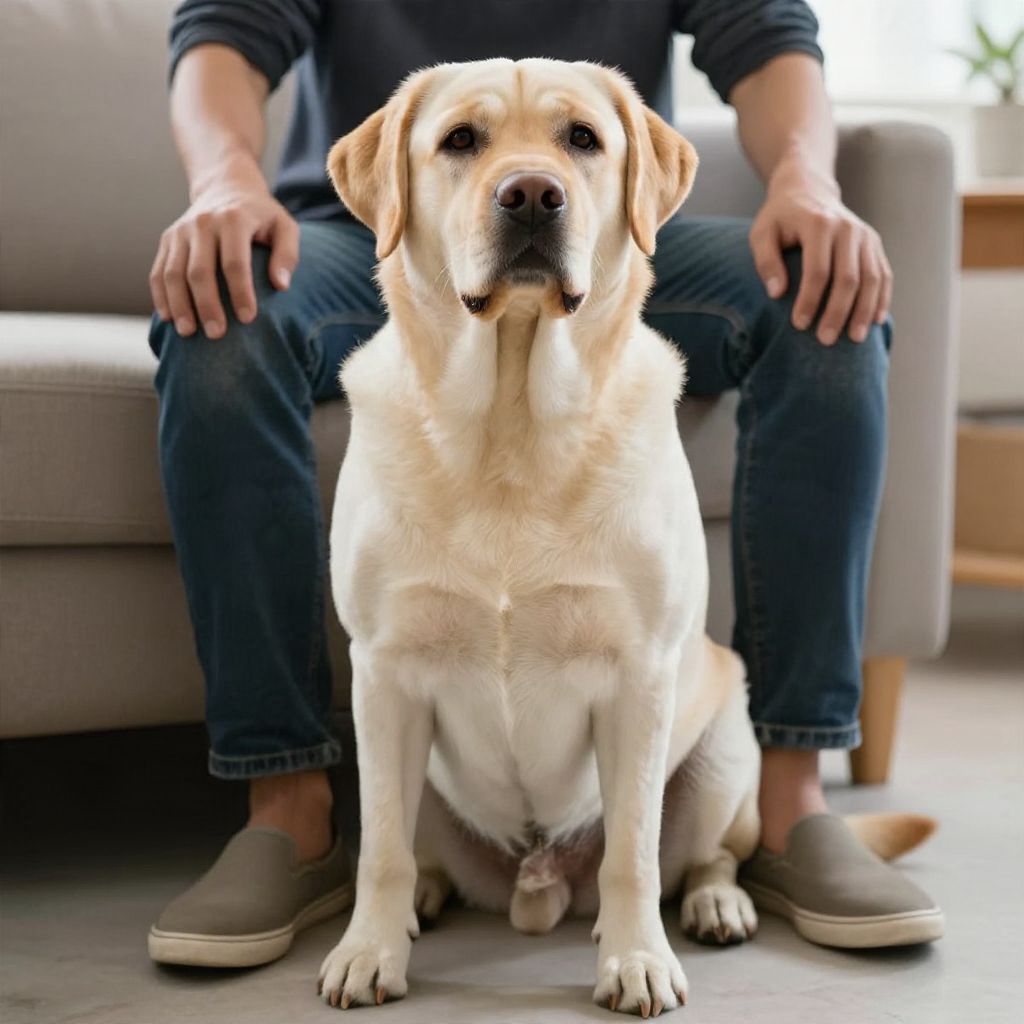
Why do dogs sit on your feet? Usually, it’s a mix of affection, attention-seeking, comfort, and habit. Some dogs also do it to feel secure, keep close to you, or claim a spot that smells like you.
Most of the time, it’s harmless. But if the behavior is sudden, intense, or paired with pain, anxiety, or other changes, it can point to an issue that needs attention.
Why do dogs sit on your feet?
Dogs often sit on your feet because they want closeness, reassurance, or your attention. It can also be a learned habit, a way to stay warm, or a sign of mild guarding or anxiety. In most cases, it is normal, but sudden changes or clingy behavior may deserve a closer look.
Common reasons dogs sit on your feet
1. They want closeness and comfort
Many dogs simply like being near their favorite person. Sitting on your feet keeps them physically close while still letting them rest.
This is especially common in dogs that are strongly bonded to you, shy dogs, or dogs that feel safest when they can touch you.
2. They are seeking attention
If your dog has learned that sitting on your feet gets a reaction, they may repeat it. Even a quick glance, petting, or talking to them can reinforce the behavior.
Some dogs do this when you are standing still, cooking, working, or talking to someone else because they want to redirect your focus back to them.
3. They feel anxious or insecure
Dogs that are worried, under-socialized, or unsettled by new environments may use physical contact as reassurance. Sitting on your feet can help them feel anchored.
If your dog also follows you constantly, startles easily, or struggles when left alone, anxiety may be part of the picture.
4. They are being protective or guarding space
Some dogs sit on your feet when they want to stay between you and something else, especially in crowded or unfamiliar settings. This can be a mild form of resource guarding or “I’m watching this situation” behavior.
It is not always a problem, but if your dog stiffens, growls, or blocks others from approaching you, take it seriously and work with a qualified trainer or veterinary behaviorist.
5. They like the warmth or scent
Your feet may be warm, familiar, and comforting. Dogs are highly scent-driven, and your smell can be soothing to them.
This is more likely in cool weather, on hard floors, or when your dog is tired and looking for a cozy place to settle.
6. They have learned it as a habit
Dogs repeat behaviors that have worked in the past. If sitting on your feet has consistently led to petting, praise, or being picked up, the habit may be well established.
Habit is especially common in puppies and young dogs that are still learning polite ways to ask for attention.
When sitting on your feet is normal
For many dogs, this behavior is simply a social preference. It is usually normal if your dog is relaxed, easy to move, and otherwise behaving as they usually do.
- Your dog is calm and loose-bodied.
- They move away easily when asked.
- There is no growling, snapping, or stiff posture.
- The behavior has been present for a while and is not escalating.
When it may signal a problem
Sometimes sitting on your feet is part of a bigger behavior or health issue. Pay attention if it appears suddenly or comes with other changes.
- New clinginess or separation distress
- Restlessness, pacing, or inability to settle
- Growling, guarding, or blocking access to you
- Hiding, trembling, or other fear signs
- Changes in appetite, sleep, or energy
- Signs of pain such as stiffness, limping, or reluctance to move
If your dog seems uncomfortable, unusually attached, or behavior changes happen quickly, contact your veterinarian. Pain, illness, or anxiety can all affect how a dog behaves around you.
What to do if your dog sits on your feet
If you do not mind the behavior
If it is harmless and you enjoy the closeness, you may not need to change anything. Just make sure your dog can also relax independently and is not becoming overly dependent on constant contact.
If you want to reduce it
Use calm, reward-based training to teach an alternative behavior. The goal is not to punish your dog for wanting closeness, but to show them a better way to get attention.
- Teach a “place” or mat cue so your dog has a clear spot to go to.
- Reward your dog for lying beside you instead of on your feet.
- Give attention when all four paws are on the floor or when they settle nearby.
- Ignore mild attention-seeking if it is safe to do so, then reward the behavior you want.
- Practice in short sessions so your dog learns the new pattern consistently.
If your dog is anxious
Do not force contact or push your dog away harshly. That can increase worry or frustration.
Instead, build predictability into the day, provide enrichment, and consider support from a certified trainer or veterinary behaviorist if the anxiety is frequent or severe.
How age, size, and temperament can affect the behavior
Individual dogs vary a lot. Puppies may sit on your feet because they are learning social cues and want security. Adult dogs may do it out of habit, while senior dogs may choose close contact because they are less confident or less mobile.
Smaller dogs may fit more easily on your feet, but larger dogs may do it too if they want closeness. A dog’s breed can influence general tendencies toward attachment or independence, but no breed guarantees this behavior.
Common mistakes to avoid
- Do not assume the behavior is “dominance.” That idea is not a useful explanation for most everyday dog behavior.
- Do not punish or scare your dog for sitting on your feet.
- Do not reward the behavior every time if you want it to stop.
- Do not ignore sudden behavior changes that could point to pain or anxiety.
When to call a veterinarian
Contact your veterinarian if the behavior changes quickly, your dog seems distressed, or you notice other symptoms. A medical issue can make a dog clingier, more reactive, or less able to settle.
Seek urgent veterinary care if your dog also has collapse, trouble breathing, severe pain, repeated vomiting, a swollen abdomen, sudden weakness, or any other emergency sign. Those symptoms need immediate attention, not watchful waiting.
How to make your dog feel secure without foot-sitting
Many dogs sit on your feet because they want safe, predictable contact. You can meet that need in healthier ways by giving them structure and choice.
- Provide a comfortable bed or mat near you.
- Reward calm settling beside you.
- Use regular exercise and mental enrichment to reduce restless attention-seeking.
- Keep greetings and departures low-key if your dog is prone to anxiety.
- Offer chew toys, sniffing games, or food puzzles when appropriate.
Bottom line
Why do dogs sit on your feet? Most often, it is a normal sign of affection, comfort, or attention-seeking. If the behavior is new, intense, or paired with pain, fear, or guarding, talk to your veterinarian and consider professional behavior help.
If you want to learn more about related habits, you may also find it helpful to read about why dogs sit on your feet and why dogs sleep at your feet.