
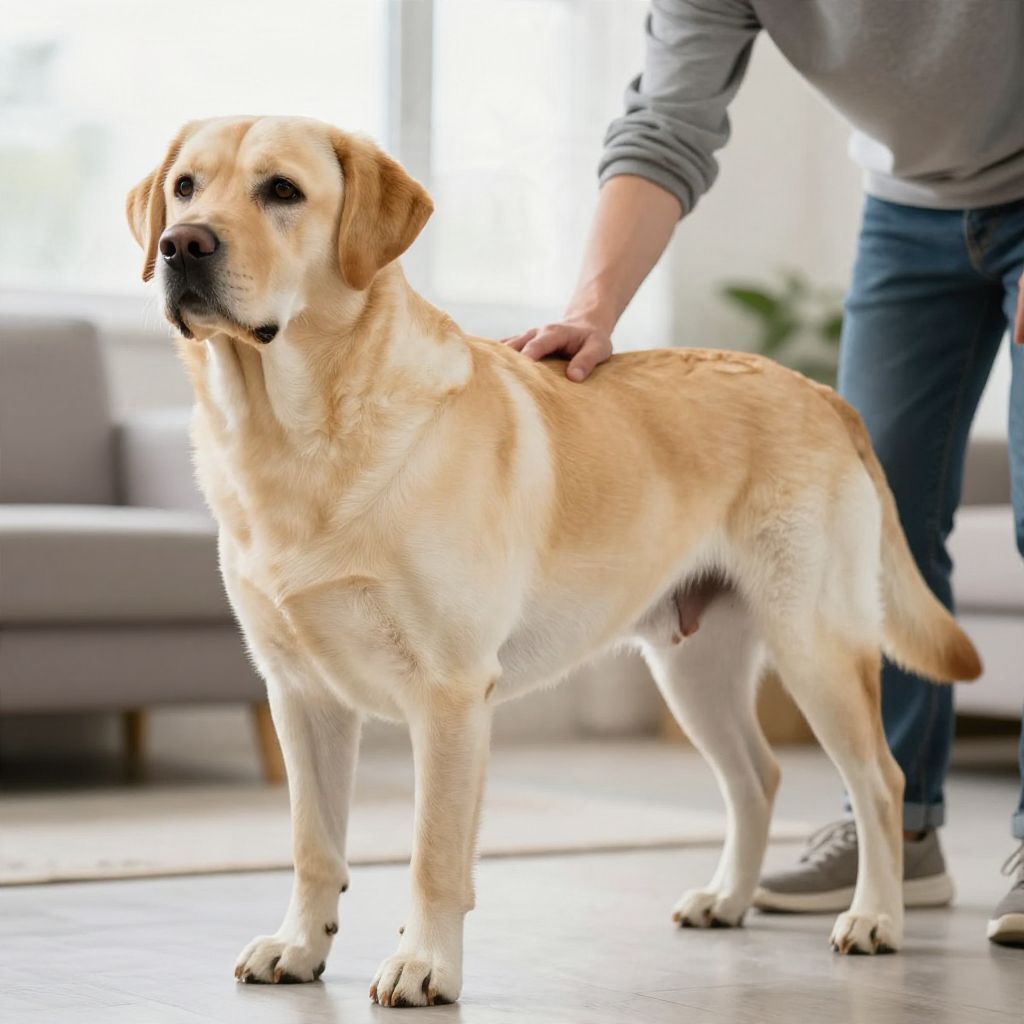
If your dog’s stomach feels hard but they’re acting normal, it can be harmless or it can be an early warning sign. A firm belly may happen after eating, gas, constipation, or normal abdominal muscle tension, but it can also point to bloat, pain, or swelling.
The safest approach is to watch closely for other symptoms and know when a firm abdomen needs urgent veterinary care. Dogs can seem normal at first, so changes in appetite, comfort, breathing, or belly size matter just as much as behavior.
My Dogs Stomach Is Hard But Acting Normal: What Does It Mean?
A hard stomach with normal behavior can be caused by something mild, like a full stomach, gas, or constipation, but it can also be the first sign of a serious problem. If the belly is suddenly tight, swollen, painful, or your dog starts vomiting, call a veterinarian right away.
Common Reasons a Dog’s Belly Feels Hard
Not every firm abdomen means an emergency. The context matters: your dog’s age, size, recent meals, activity, and whether the firmness is new or ongoing all help narrow down the cause.
1. A full stomach after eating
After a meal, the abdomen can feel firmer than usual, especially in smaller dogs or dogs who eat quickly. This is more likely if your dog is otherwise comfortable, breathing normally, and the belly is not visibly enlarged.
2. Gas or mild digestive upset
Some dogs develop a tight, bloated feeling from gas or a minor stomach upset. They may still seem normal at first, but you might notice burping, restlessness, or mild discomfort later.
3. Constipation
Constipation can make the abdomen feel hard or tense. You may also see straining, fewer bowel movements, small dry stools, or a dog that seems to need to go but cannot.
4. Muscle tension or posture
Sometimes a dog tightens the abdominal muscles when standing, lying awkwardly, or bracing due to mild discomfort elsewhere. A relaxed dog may feel softer when lying on their side than when standing alert.
5. More serious abdominal problems
A hard belly can also happen with internal pain, fluid buildup, organ enlargement, intestinal blockage, or gastric dilatation-volvulus, often called bloat. These conditions can become emergencies quickly, even if your dog initially seems only mildly off.
When a Hard Stomach Is an Emergency
Some signs mean you should not wait and see. If your dog has a firm abdomen plus any of the symptoms below, seek urgent veterinary care immediately.
- Repeated retching or trying to vomit without bringing anything up
- A swollen, distended, or rapidly enlarging belly
- Restlessness, pacing, or inability to get comfortable
- Pain when you touch the abdomen
- Drooling, panting, or breathing changes
- Weakness, collapse, or trouble standing
- Vomiting, especially repeated vomiting
- Refusing food or water suddenly
- Straining to poop with no stool passing
- Pale gums or a sudden change in gum color
Do not wait for “more symptoms” if the belly is hard and your dog seems uncomfortable, swollen, or unable to settle. Bloat and intestinal obstruction can worsen fast.
What You Can Check at Home Safely
If your dog is acting normal and the belly is only mildly firm, you can do a careful check while keeping a close eye on them. Avoid pressing hard on the abdomen or trying to “massage out” a problem.
- Look at the belly shape. Is it just firm, or is it visibly enlarged on both sides?
- Notice your dog’s comfort. Are they relaxed, or do they flinch, pace, or keep changing positions?
- Check appetite and thirst. A normal appetite is reassuring, but not a guarantee.
- Watch for bowel movements. Constipation or straining can be a clue.
- Observe breathing. Fast, shallow, or labored breathing is not normal.
- Track changes over time. A belly that becomes firmer, larger, or more sensitive needs prompt attention.
What Not to Do
When you are unsure why your dog’s stomach feels hard, it is easy to try quick fixes. Some common ideas can delay proper care or make things worse.
- Do not force food if your dog seems nauseated or bloated.
- Do not give human medications unless your veterinarian specifically tells you to.
- Do not try to make your dog vomit.
- Do not use vigorous belly rubbing if your dog seems painful.
- Do not assume “acting normal” means the issue is harmless.
Breed, Size, Age, and History Matter
Any dog can develop a hard abdomen, but risk and interpretation vary. Larger, deep-chested dogs are often discussed in relation to bloat, yet smaller dogs can also have constipation, gas, or other abdominal problems.
Large and deep-chested dogs
Some larger, deep-chested dogs are at higher risk for gastric dilatation-volvulus, a life-threatening emergency. If your dog is in this general body type, take sudden abdominal firmness especially seriously.
Puppies
Puppies may have a firm belly after eating, but they can also get into trouble quickly from swallowed objects, parasites, or stomach upset. A puppy with a hard belly and any vomiting, lethargy, or poor appetite should be checked promptly.
Senior dogs
Older dogs may have constipation, organ enlargement, or other health issues that make abdominal changes more concerning. If your senior dog’s belly feels hard more than once, schedule a veterinary exam even if they seem mostly normal.
How Vets Usually Evaluate a Firm Abdomen
If you call your veterinarian, they may ask about the onset, size of the belly, eating, vomiting, stool habits, and behavior changes. Depending on the signs, they may recommend an exam the same day or emergency care.
At the clinic, your vet may check hydration, pain, gut sounds, gum color, heart rate, and abdominal tension. They may also suggest imaging or other tests to look for gas, blockage, fluid, constipation, or other causes.
Helpful Monitoring If Your Dog Seems Otherwise Okay
If your dog truly seems normal and the belly is only mildly firm, short-term monitoring may be reasonable while you arrange advice from your vet. Keep the observation period brief and structured.
- Note the time you first noticed the firmness.
- Watch for appetite, vomiting, stool changes, or restlessness.
- Offer normal access to water unless your vet has advised otherwise.
- Keep activity calm and avoid rough play for the moment.
- Recheck the belly for changes in size or sensitivity.
If the firmness lasts, worsens, or comes back repeatedly, your dog should be examined. Ongoing abdominal changes are not something to ignore just because your dog still seems bright.
Common Mistakes Dog Owners Make
Many dogs hide discomfort well, so the biggest mistake is assuming a normal attitude rules out a problem. Another common error is waiting overnight when the abdomen is firm and the cause is unclear.
- Assuming a hard belly is always “just gas”
- Waiting for vomiting before acting
- Giving random over-the-counter remedies
- Ignoring subtle signs like pacing or drooling
- Delaying care because the dog is still eating or wagging
How to Reduce the Risk of Future Abdominal Problems
You cannot prevent every cause of a hard stomach, but a few habits can lower risk and help you notice problems sooner. These steps are especially useful for dogs with a history of digestive sensitivity or fast eating.
- Feed a consistent, balanced diet appropriate for your dog’s life stage.
- Use slow-feeding strategies if your dog gulps meals.
- Keep trash, toys, bones, and foreign objects out of reach.
- Maintain regular exercise and bathroom routines.
- Monitor stool quality so constipation is caught early.
- Schedule routine veterinary care, especially for senior dogs.
When to Call Your Vet Even If Your Dog Seems Fine
It is reasonable to ask for veterinary advice if the hard belly is new, unexplained, or recurring. You should also call if your dog has a history of digestive issues, has eaten something unusual, or seems less comfortable than usual in subtle ways.
Trust your instincts if something feels off. Dogs often hide pain, and a firm abdomen can be the first clue that something is developing.
Bottom Line
If my dogs stomach is hard but acting normal describes your situation, start by watching closely for swelling, pain, vomiting, pacing, or breathing changes. A mildly firm belly can be harmless, but sudden or persistent firmness deserves veterinary advice, and any emergency signs need immediate care.
If you want more general digestive guidance, you may also find what to give a dog for an upset stomach and how to help a dog with diarrhea useful for related symptoms.