
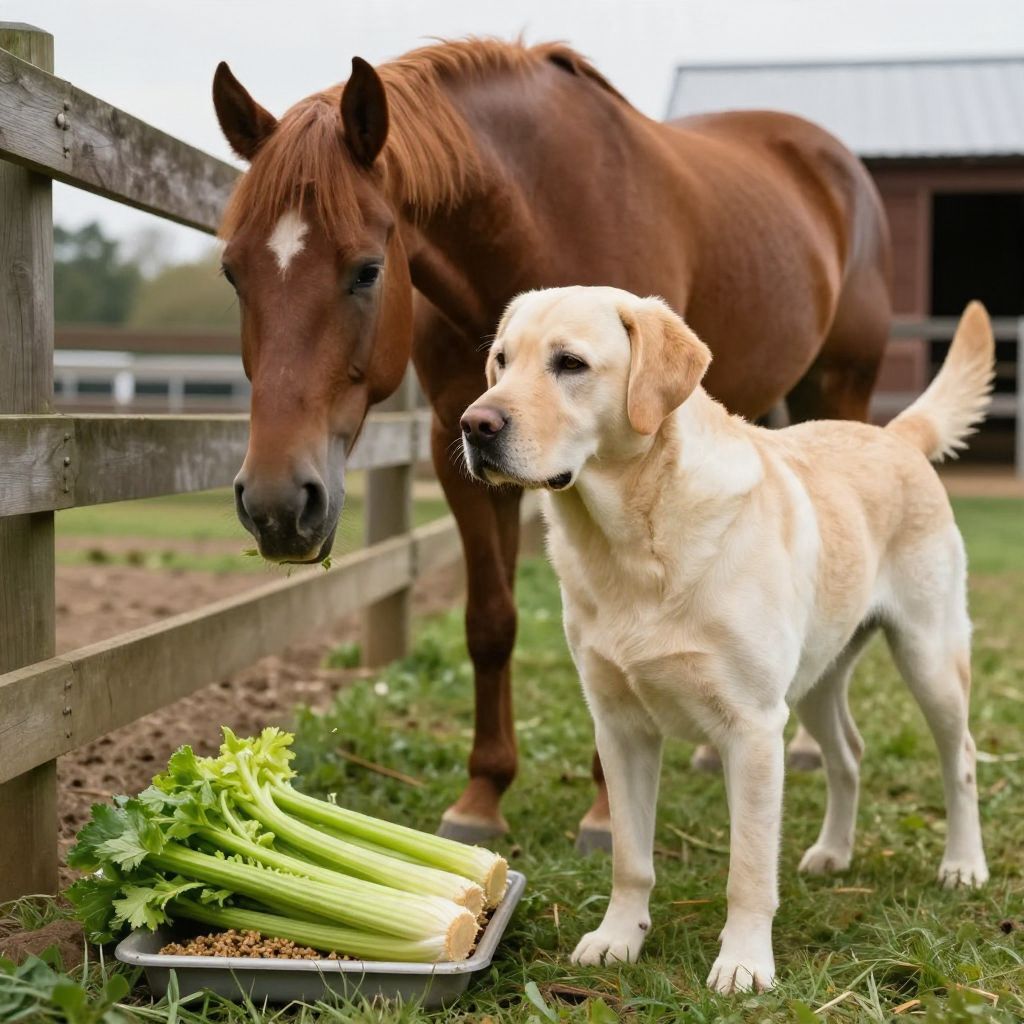
Can horses eat celery? If you’re asking because your dog got hold of celery, the good news is that plain celery is generally safe for dogs in small amounts. It can be a crunchy, low-calorie treat, but it should never replace a balanced dog food diet.
The main concerns are choking, stomach upset, and added ingredients like salt, butter, dips, or seasonings. How your dog tolerates celery can also depend on size, chewing habits, age, and any digestive or dental issues.
Can Horses Eat Celery?
Yes, dogs can usually eat plain celery in moderation. It is not toxic, but it should be served washed, cut into small pieces, and offered only as an occasional treat. Large pieces can be a choking hazard, and too much celery may cause gas, loose stool, or an upset stomach.
Why Celery Can Be a Safe Dog Treat
Celery is mostly water and fiber, which is why many owners like it as a low-calorie snack. For some dogs, the crisp texture can also help with chewing enrichment.
That said, “safe” does not mean “ideal for every dog.” Some dogs do fine with a few bites, while others may have a sensitive stomach or simply dislike the texture.
Potential benefits of plain celery
- Low in calories compared with many commercial treats
- Crunchy texture that some dogs enjoy
- Can add variety as an occasional reward
- May be useful for dogs on a weight-management plan when approved by your veterinarian
How to Feed Celery to Your Dog Safely
If you want to offer celery, keep it simple. Plain, fresh celery is the safest option, and preparation matters just as much as the food itself.
- Wash the celery thoroughly.
- Trim off any wilted or tough ends.
- Cut it into small, bite-size pieces.
- Offer only a small amount the first time.
- Watch your dog for digestive upset or trouble chewing.
For smaller dogs, puppies, seniors, and dogs that gulp food, tiny pieces are especially important. For larger dogs, you still should avoid giving a long stalk whole, because it can be awkward to chew and swallow.
Best forms of celery for dogs
- Plain raw celery cut into small pieces
- Lightly steamed celery with no seasoning, if your dog prefers softer textures
- Small amounts mixed into a meal only if your veterinarian says it fits your dog’s diet
When Celery Is Not a Good Idea
Even though celery is usually safe, there are situations where it may not be the best choice for your dog. Individual health and chewing ability matter.
Be extra cautious if your dog:
- Has a history of choking or swallowing food too quickly
- Has dental pain, missing teeth, or trouble chewing
- Has a sensitive stomach or frequent diarrhea
- Is recovering from gastrointestinal illness
- Needs a strict diet for a medical condition
If your dog has a medical diet, ask your veterinarian before adding any human food, even a simple vegetable. Some dogs need consistency more than variety.
What Makes Celery Unsafe for Dogs
The celery itself is usually not the problem. The risk often comes from how it is served or what is added to it.
- Seasonings such as garlic, onion, chili, or heavy salt
- Butter, cream cheese, ranch, or dips that add fat and extra ingredients
- Large, uncut stalks that can cause choking
- Moldy or spoiled celery that should never be fed
As a rule, if the celery is prepared for humans with flavorings or spreads, it is usually no longer a dog-safe snack.
How Much Celery Can Dogs Have?
There is no universal amount that fits every dog. Treats, including vegetables, should stay as a small part of your dog’s daily intake so they do not crowd out balanced nutrition.
A few small pieces are enough for most dogs. If you want to use celery more often, keep portions modest and pay attention to stool quality, appetite, and overall tolerance.
Signs you may be giving too much
- Loose stool
- Gas
- Vomiting
- Reduced interest in regular food
- Discomfort after eating
If those signs happen, stop offering celery and speak with your veterinarian if symptoms are persistent or severe.
Can Puppies Eat Celery?
Puppies can usually have tiny amounts of plain celery, but their digestive systems are still developing. They are also more likely to gulp food, so choking prevention matters even more.
For puppies, keep pieces very small and only offer celery occasionally. If your puppy has diarrhea, vomiting, or a sensitive stomach, skip it and ask your veterinarian before trying new foods.
Can Senior Dogs Eat Celery?
Many senior dogs can eat celery, but age-related issues may affect safety. Dogs with dental disease, missing teeth, or reduced chewing strength may struggle with raw stalks.
If your older dog likes celery, consider smaller pieces or a softer preparation. Stop if it seems difficult to chew or if your dog coughs, gags, or drops food while eating.
Warning Signs After Eating Celery
Most dogs who eat a small amount of plain celery will be fine. Still, watch for signs that your dog is not tolerating it well.
Call your veterinarian if you notice:
- Repeated vomiting
- Diarrhea that does not improve
- Refusing food
- Abdominal pain or a hunched posture
- Unusual lethargy
Seek urgent veterinary care immediately if your dog has:
- Choking or trouble breathing
- Blue or pale gums
- A swollen abdomen
- Collapse
- Inability to keep water down after eating
These signs can indicate an emergency and should not be managed at home.
Celery as a Treat, Not a Meal
It is easy to think of vegetables as “healthy,” but dogs still need a complete and balanced diet designed for them. Celery can be a treat or training reward, not a substitute for regular food.
If you use celery for training, keep the pieces tiny so your dog stays motivated without filling up too quickly. This is especially helpful for dogs that need weight control or have a big appetite for treats.
Common Mistakes Dog Owners Make
- Giving a whole stalk instead of small pieces
- Offering celery with dips or seasoning
- Using celery too often and causing digestive upset
- Assuming every dog tolerates the same foods equally well
- Ignoring chewing problems in puppies and seniors
The safest approach is simple: plain, washed, chopped celery in small amounts, with your dog’s individual needs in mind.
When to Ask Your Veterinarian
Check with your veterinarian if your dog has ongoing digestive issues, a medical diet, dental pain, or a history of choking. You should also ask before introducing celery to a dog with pancreatitis, inflammatory bowel disease, or another condition that affects diet choices.
If your dog accidentally ate celery with harmful ingredients, such as onion, garlic, or a large amount of rich dressing, contact your veterinarian or a pet poison resource right away for guidance.
In short, dogs can usually eat plain celery safely in small pieces, but moderation and preparation matter. Keep it unseasoned, cut it small, and stop if your dog shows any sign of stomach upset or choking risk.
If you want more dog-food safety reading, you may also find can horses eat strawberries and can horses eat grapes helpful for comparing safe and unsafe treat choices.