
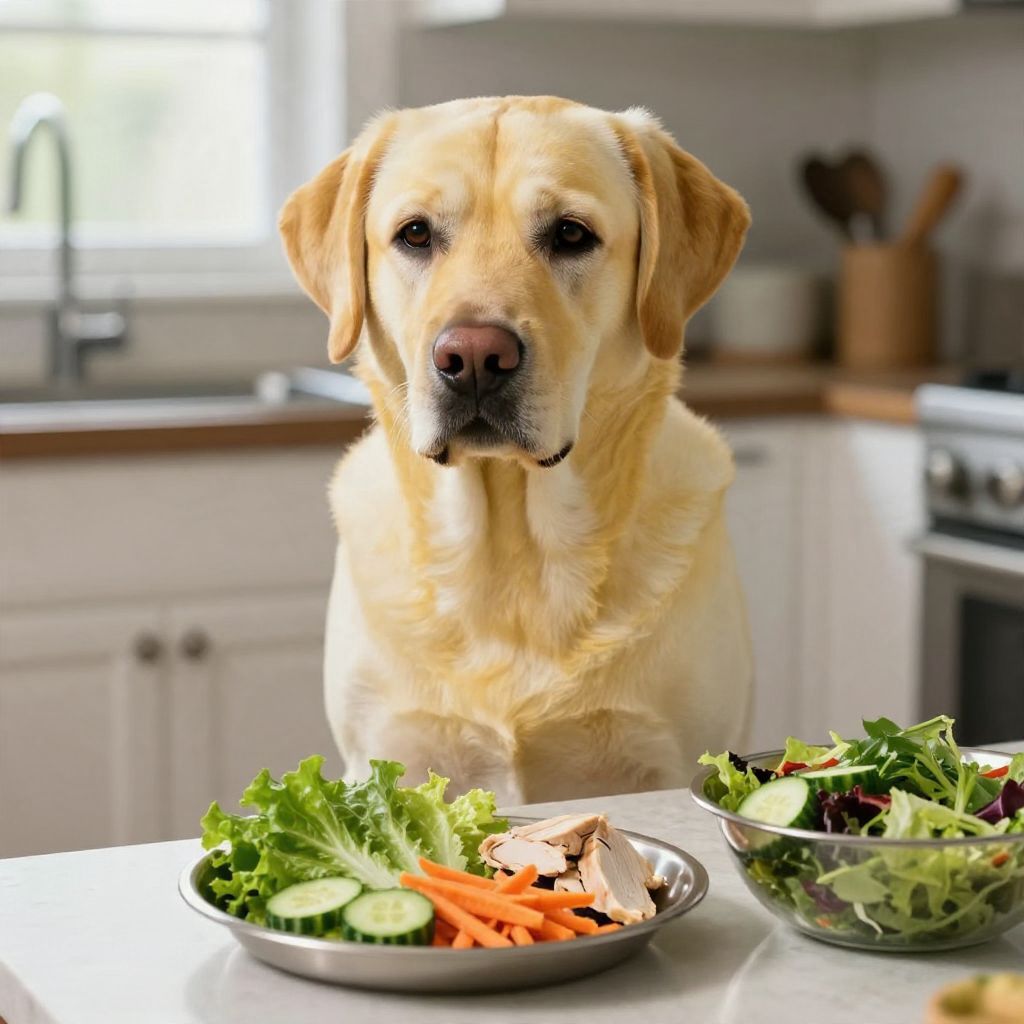
Can dogs eat salad? Sometimes, yes—but only if the salad is made with dog-safe ingredients and served plain. A simple mix of leafy greens can be an occasional treat, but many common salad add-ins, dressings, and seasonings are unsafe for dogs.
The real question is not whether salad is healthy for people, but whether each ingredient is safe for your dog. Some vegetables are fine in small amounts, while others can upset the stomach or cause poisoning.
Can Dogs Eat Salad?
Yes, dogs can eat plain salad in small amounts if it contains dog-safe ingredients like lettuce, cucumber, or plain spinach. Avoid onions, garlic, chives, raisins, grapes, avocado, high-fat toppings, and all dressings. Salad should be an occasional treat, not a meal replacement.
What Parts of Salad Are Safe for Dogs?
Many basic vegetables are safe when washed well and served plain. The safest options are usually low-calorie, non-seasoned ingredients that are easy to chew and digest.
Common dog-safe salad ingredients
- Romaine lettuce or other plain leafy greens in small amounts
- Cucumber, peeled if needed, cut into bite-sized pieces
- Carrot shreds or small pieces
- Plain spinach in limited amounts
- Green beans, cooked or raw if easy for your dog to chew
- Plain celery chopped small to reduce choking risk
These foods are best served as a small topper or occasional snack. Even safe vegetables can cause loose stool if your dog eats a lot at once.
Ingredients that are unsafe or risky
- Onions, garlic, leeks, and chives
- Raisins and grapes
- Avocado, especially if the salad also contains seasoning or rich toppings
- Nuts, especially if salted, seasoned, or moldy
- Croutons with garlic, onion, butter, or heavy salt
- Cheese, bacon, creamy dressings, and oily toppings
- Spicy seasonings, pepper blends, and flavored salts
If you are unsure about an ingredient, do not assume it is safe. Some salad items are harmless for people but dangerous for dogs.
Why Some Salads Cause Problems
Salad can cause issues for dogs for several reasons: toxic ingredients, too much fiber, choking hazards, or rich toppings that upset the stomach. Dogs with sensitive digestion may react even to simple greens if the portion is too large.
Digestive upset
Too much raw produce can lead to gas, soft stool, vomiting, or abdominal discomfort. This is more likely in puppies, seniors, and dogs that are not used to vegetables.
Choking and chewing concerns
Large pieces of lettuce, thick celery strings, cherry tomatoes, or hard toppings can be difficult for some dogs to chew safely. Small dogs and dogs that gulp food quickly may be at higher risk.
Seasonings and dressings
Many salad dressings contain oil, salt, sugar, garlic, onion, mustard, or artificial sweeteners. These can be harmful or simply too rich for dogs.
How Much Salad Can a Dog Eat?
Keep salad to a very small portion. For most dogs, a few bites of plain, dog-safe vegetables are enough. The right amount depends on your dog’s size, overall diet, and how well they tolerate new foods.
A good rule is to offer salad as a treat, not as a main part of the meal. If your dog is on a complete and balanced dog food, extra vegetables should stay limited so they do not crowd out proper nutrition.
Portion tips by dog type
- Small dogs: only a few small pieces
- Medium dogs: a small handful at most
- Large dogs: a slightly larger handful, but still modest
These are general guidelines, not exact rules. Dogs with pancreatitis, food allergies, kidney disease, diabetes, or chronic digestive problems may need stricter limits or a different diet altogether.
Can Puppies Eat Salad?
Puppies can eat tiny amounts of plain, safe vegetables, but salad is usually not necessary for them. Their digestive systems are still developing, and sudden changes can cause diarrhea or vomiting more easily than in adult dogs.
If you want to offer a puppy a taste, keep it very simple and very small. Avoid crunchy or stringy pieces that could be hard to chew, and never give a puppy salad with dressing or seasoning.
Can Senior Dogs Eat Salad?
Many senior dogs can eat plain salad in moderation, especially if they enjoy the texture and digest it well. Some older dogs benefit from softer, chopped pieces because dental problems can make chewing difficult.
However, senior dogs are also more likely to have medical conditions that affect diet. If your older dog has kidney disease, diabetes, arthritis that limits chewing, or a sensitive stomach, ask your veterinarian before adding new foods.
When Salad Is a Bad Idea
Do not give salad if it contains anything toxic, heavily seasoned, or very rich. Even a small amount of the wrong ingredient can be a problem.
Skip salad entirely if it includes:
- Onion, garlic, chives, or leeks
- Raisins or grapes
- Large amounts of oil, butter, cheese, or creamy dressing
- Spicy sauce, pepper flakes, or flavored seasoning blends
- Alcohol-based dressings or marinades
- Very salty toppings such as cured meats or seasoned croutons
If your dog has a history of pancreatitis, vomiting, inflammatory bowel disease, or food intolerance, even a “safe” salad may not be a good choice.
What to Do If Your Dog Ate a Bad Salad
If your dog ate salad with a risky ingredient, act quickly. The right response depends on what was eaten, how much, and your dog’s size and health.
- Remove the salad so your dog cannot eat more.
- Check the ingredient list if it was a prepared salad or leftovers.
- Call your veterinarian or a pet poison helpline for guidance if the salad contained onions, garlic, grapes, raisins, or another toxic food.
- Watch for vomiting, diarrhea, drooling, lethargy, belly pain, weakness, or loss of appetite.
Seek urgent veterinary care right away if your dog has trouble breathing, collapses, has repeated vomiting, a swollen abdomen, severe weakness, tremors, or seems painful and distressed. Do not wait for symptoms to worsen.
How to Serve Salad Safely to Dogs
If you want to share a little salad with your dog, keep it plain and simple. Preparation matters as much as the ingredients.
- Wash all produce thoroughly.
- Remove pits, seeds, stems, and tough cores.
- Chop food into small, bite-sized pieces.
- Serve without dressing, salt, pepper, onion, garlic, or oil.
- Offer only a few pieces the first time.
- Monitor your dog for stomach upset over the next 24 hours.
If your dog is a fast eater, mix the vegetables into a puzzle feeder or use them as training treats instead of serving a bowl of salad. That can reduce gulping and make the treat more useful.
Better Alternatives to Salad for Dogs
If you want a healthy snack, plain vegetables are often easier and safer than a true salad. They are more predictable and less likely to contain hidden ingredients.
- Plain cucumber slices
- Steamed green beans
- Small carrot pieces
- Plain zucchini
- Small amounts of romaine lettuce
Remember that treats of any kind should stay within a balanced diet. Vegetables are not a replacement for complete dog food.
When to Ask Your Veterinarian
Talk to your veterinarian if your dog has recurring digestive upset, a chronic illness, or you are unsure whether a specific salad ingredient is safe. This is especially important for dogs on prescription diets or dogs with a history of food sensitivities.
Your vet can help you decide whether a vegetable treat fits your dog’s needs and whether any ingredient should be avoided completely.
In short, dogs can eat salad only when it is plain, simple, and made from dog-safe ingredients. Keep portions small, avoid all dressings and toxic add-ins, and call your veterinarian if your dog eats something risky or develops symptoms. If you want more ingredient-specific guidance, you may also find can dogs eat romaine lettuce and can dogs eat raw cabbage helpful.