
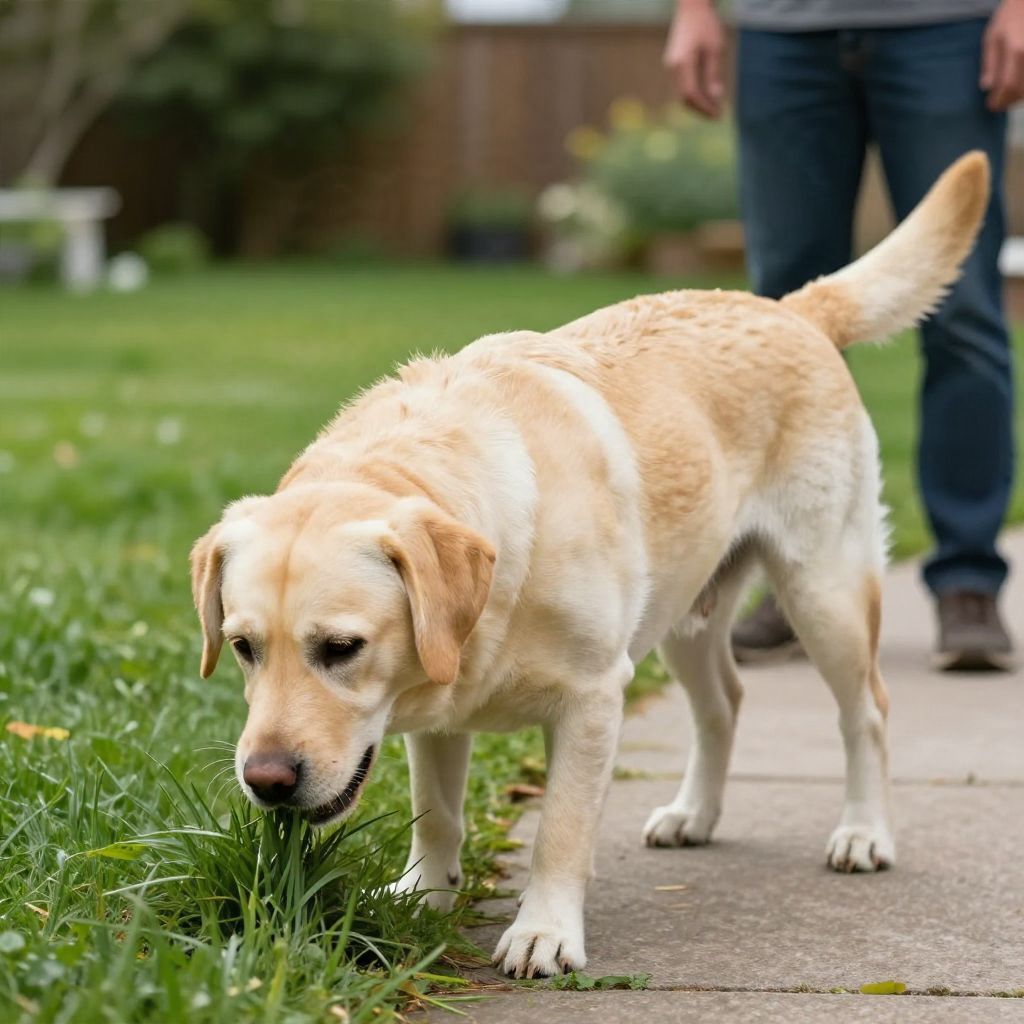
My dog is eating grass, and you’re probably wondering whether it’s normal or a sign of a problem. In many dogs, occasional grass-eating is common and not an emergency, but frequent or sudden changes can point to nausea, boredom, stress, or a medical issue.
The key is to watch for patterns. If your dog eats grass and then seems fine, it may be harmless; if it happens often or comes with vomiting, diarrhea, pain, or appetite changes, call your veterinarian.
My Dog Is Eating Grass: Is It Normal?
Yes, occasional grass-eating can be normal for many dogs. Some dogs nibble grass out of habit, curiosity, boredom, or because they enjoy the texture. It becomes more concerning when the behavior is new, frequent, obsessive, or paired with signs of illness.
Why Dogs Eat Grass
There is no single explanation that fits every dog. The reason may depend on age, diet, routine, environment, stress level, and overall health.
Common non-medical reasons
- Curiosity or habit: Some dogs simply like the taste or feel of grass.
- Boredom: Dogs with too little mental or physical enrichment may graze more often.
- Stress or excitement: A change in routine, household tension, or overstimulation can show up as grass-eating.
- Attention-seeking: If grass-eating gets a big reaction, some dogs repeat it.
Possible health-related reasons
- Nausea or stomach upset: Some dogs eat grass before vomiting, though this does not mean grass is the cause.
- Diet-related issues: Hunger, rapid eating, or an unbalanced diet can sometimes be associated with grazing.
- Medical discomfort: Gastrointestinal disease, dental pain, or other illnesses may change eating behavior.
When Grass-Eating Is a Concern
Grass-eating alone is usually not the emergency. The bigger question is whether your dog is also showing other symptoms, especially if the behavior is new or happening more often than usual.
Call your veterinarian if you notice:
- Repeated vomiting or retching
- Diarrhea, especially if it lasts more than a day or contains blood
- Loss of appetite or drinking much less than usual
- Abdominal pain, bloating, or a tense belly
- Lethargy, weakness, or hiding
- Weight loss
- Drooling, lip licking, or signs of nausea
- Grass-eating that starts suddenly and becomes frequent
Seek urgent veterinary care if your dog has a swollen abdomen, repeated unproductive vomiting, collapse, trouble breathing, pale gums, or you suspect they swallowed something sharp, toxic, or contaminated.
Could My Dog Be Eating Grass Because of an Upset Stomach?
It’s possible, but grass-eating is not a reliable sign of a simple stomach upset. Some dogs eat grass when they feel nauseated, yet many dogs with nausea do not eat grass at all. If your dog seems unwell, look at the whole picture rather than the grass alone.
Signs that suggest nausea or GI upset
- Eating less than usual
- Lip smacking or drooling
- Gulping or swallowing repeatedly
- Vomiting, loose stool, or gurgling belly sounds
- Restlessness or pacing
If these signs happen often, your veterinarian may want to examine your dog and discuss diet, parasites, infection, pancreatitis, foreign body risk, or other causes.
What You Should Do If Your Dog Eats Grass
Most of the time, you do not need to panic. Start by observing your dog carefully and making small, safe changes that reduce the chance of repeated grazing.
- Check for symptoms. Note whether your dog is vomiting, acting tired, or refusing food.
- Look at the environment. Make sure the grass was not treated with pesticides, herbicides, fertilizers, or other chemicals.
- Improve supervision outdoors. Use a leash or stay close if your dog tends to graze heavily.
- Increase enrichment. Add walks, sniffing time, puzzle toys, training games, and chew-safe activities.
- Review the diet. Ask your vet whether your dog’s current food, feeding schedule, or treat intake makes sense for their age and lifestyle.
- Track patterns. Write down when it happens, what your dog ate, and whether any symptoms followed.
How to Reduce Grass-Eating Safely
Because grass-eating can be linked to boredom, stress, or habit, the best approach is usually management plus enrichment rather than punishment.
Helpful strategies
- Offer more exercise: Match activity to your dog’s age, breed tendencies, and physical condition.
- Use reward-based training: Teach a reliable “leave it” cue and reward your dog for turning away from grass.
- Feed appropriately: Regular meals and appropriate portioning can help some dogs feel more settled.
- Provide mental work: Scent games, training sessions, and food puzzles can reduce boredom.
- Manage access: If your dog fixates on certain areas, avoid those spots or use a leash during walks.
What to avoid
- Do not punish your dog for eating grass.
- Do not use shock, intimidation, or harsh corrections.
- Do not assume grass-eating always means your dog “needs to vomit.”
- Do not let your dog graze on treated lawns or unknown plants.
Does Age Matter?
Yes. Puppies, adult dogs, and senior dogs may eat grass for different reasons, and the context matters.
Puppies
Puppies explore with their mouths, so occasional grass nibbling may be part of normal curiosity. Still, puppies are also more likely to ingest unsafe items, so supervise closely and contact your vet if the behavior is paired with vomiting, diarrhea, or low energy.
Adult dogs
In adult dogs, grass-eating is often related to routine, boredom, or mild stomach upset. If it is frequent, your vet can help rule out diet issues or underlying illness.
Senior dogs
Older dogs may develop new habits because of nausea, dental discomfort, digestive changes, or age-related illness. A sudden increase in grass-eating in a senior dog deserves a veterinary check.
Could Diet Be Part of the Problem?
Sometimes, yes. A dog that seems hungry all the time, eats too quickly, or has an unbalanced feeding routine may show more grazing behavior. That said, grass-eating does not automatically mean your dog’s food is “bad.”
Questions to discuss with your vet
- Is the current food appropriate for your dog’s life stage?
- Are treats or table scraps disrupting appetite?
- Could a feeding schedule change help?
- Is your dog’s weight, stool quality, and energy level normal?
Do not switch foods repeatedly on your own if your dog has vomiting or diarrhea. Sudden diet changes can make stomach upset worse.
When Grass-Eating May Be a Behavior Issue
Some dogs eat grass because they have learned it is rewarding. If your dog rushes to the lawn every walk and ignores you, the issue may be partly behavioral rather than medical.
Signs of a habit or attention pattern
- Your dog eats grass in the same places every day
- The behavior increases when you are distracted
- Your dog stops when redirected to something more interesting
- There are no other illness signs
In these cases, a certified trainer or veterinary behavior professional can help you build a plan using positive reinforcement and management.
Is Grass Dangerous for Dogs?
Plain, untreated grass is usually not dangerous in small amounts. The bigger risks are what may be on the grass or mixed into it.
Watch for these hazards
- Pesticides, herbicides, and fertilizers
- Sharp sticks, mulch, rocks, or debris
- Foxtails and other seed heads that can lodge in the nose, mouth, or skin
- Unknown plants that are not actually grass
- Contaminated areas where other animals may have urinated or defecated
If you are unsure whether your lawn or a public area is safe, keep your dog away from grazing spots.
When to Get Professional Help
Contact your veterinarian if the grass-eating is new, frequent, or linked with any digestive signs. A vet can help determine whether this is a harmless habit, a nausea pattern, or a sign of something more serious.
You may also want help from a certified trainer if your dog’s grass-eating is tied to leash frustration, boredom, or poor impulse control. If anxiety or compulsive behavior seems likely, a veterinary behaviorist can be especially useful.
Bottom Line
My dog is eating grass is often a normal behavior, but the context matters. If your dog is otherwise healthy and the habit is occasional, simple monitoring and better enrichment may be enough. If the behavior is sudden, frequent, or paired with vomiting, diarrhea, pain, or lethargy, call your veterinarian promptly.
If you want to learn more, you may also find why dogs keep eating grass and why dogs eat dirt helpful for comparing similar behaviors.