
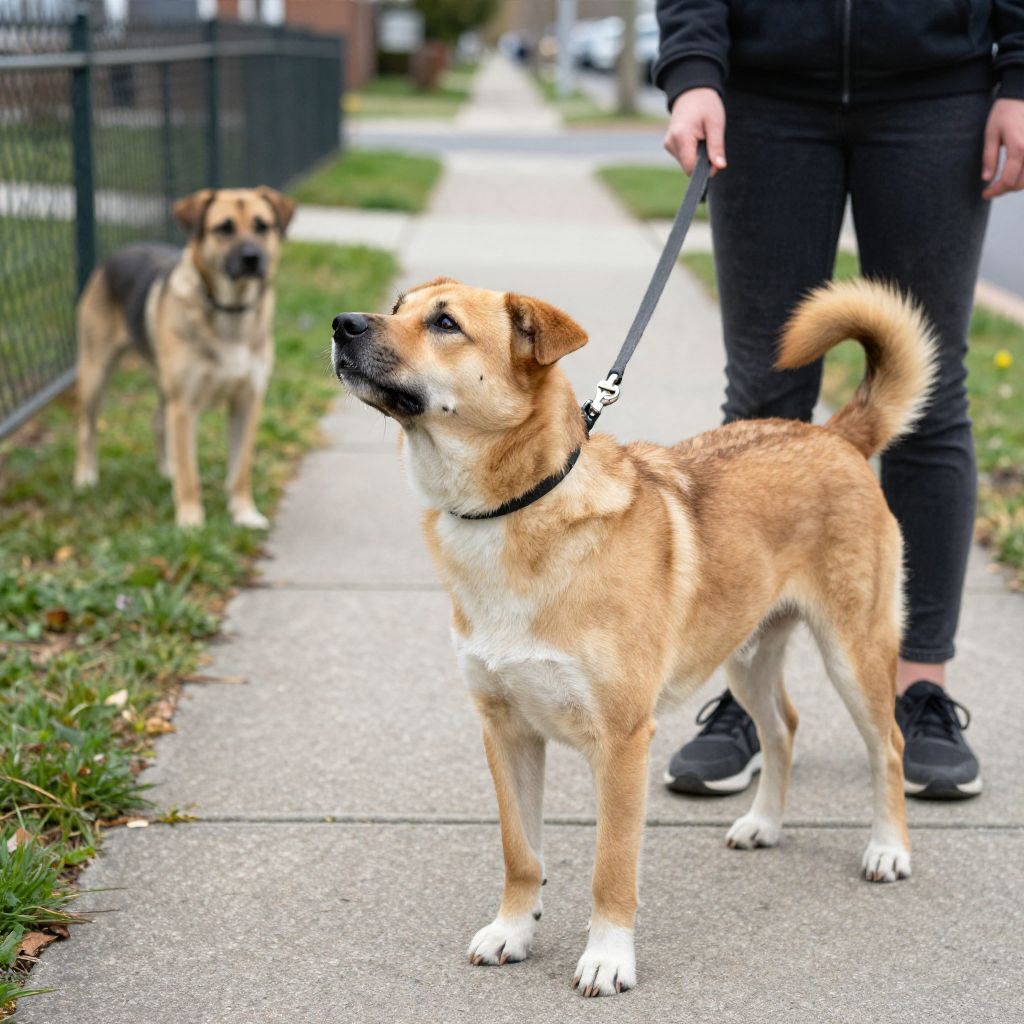
Why do dogs bark at other dogs? Most often, it’s communication: excitement, fear, frustration, territorial behavior, or a learned habit can all trigger barking. The context matters, and the same bark can mean different things depending on your dog’s body language and history.
Some barking is normal, but repeated or intense barking at other dogs can become stressful for you and your dog. The good news is that humane training, better management, and understanding the trigger usually help.
Why Do Dogs Bark At Other Dogs?
Dogs bark at other dogs to communicate emotion or create distance. Common reasons include excitement, alertness, fear, frustration, overarousal, poor social skills, or a past negative experience. The fix depends on what your dog is feeling, so watching body language and the situation is the best place to start.
Common reasons dogs bark at other dogs
1. Excitement or social enthusiasm
Some dogs bark because they want to greet, play, or get closer. This is common in dogs that are highly social, easily stimulated, or still learning impulse control.
You may see loose body movements, tail wagging, forward leaning, or spinning. Even friendly barking can become overwhelming if your dog doesn’t know how to settle.
2. Fear or insecurity
A dog that feels threatened may bark to make the other dog stay away. This is often paired with stiff posture, tucked tail, weight shifted backward, raised hackles, or attempts to hide.
Fear-based barking is not stubbornness. It usually means your dog needs more space, safer exposure, and patient training.
3. Frustration or barrier reactivity
Some dogs bark more when they are on leash, behind a fence, or in a car because they want to move toward the other dog but cannot. The leash or barrier can increase arousal and make barking more intense.
This is common in dogs that are otherwise social but struggle with self-control in tight spaces.
4. Territorial or protective behavior
Dogs may bark when another dog enters what they consider their space, such as the yard, car, or home. This behavior can be more noticeable in some dogs than others, but any dog can develop it depending on experience and reinforcement.
If barking happens mainly at windows, fences, or doorways, territory is often part of the picture.
5. Poor socialization or negative past experiences
A dog that missed early positive exposure to other dogs, or had a scary encounter, may bark out of uncertainty. They may not know how to approach, read signals, or disengage calmly.
In these cases, barking is often a warning that your dog feels unsure, not “mean.”
6. Overstimulation and lack of impulse control
Some dogs bark because they get overwhelmed by movement, noise, or the sight of another dog at close range. Puppies and adolescent dogs often need extra help learning how to settle around distractions.
High-energy dogs may also bark more if they are under-exercised or under-enriched, though exercise alone will not solve reactivity.
7. Pain, illness, or age-related changes
If your dog suddenly starts barking at other dogs more often, discomfort or a medical issue could be contributing. Pain, hearing loss, vision changes, cognitive decline, or general irritability can all affect behavior.
When behavior changes appear suddenly, a veterinary check is important before assuming it is purely training-related.
How to tell what your dog’s barking means
Look at the whole picture, not just the sound. The same bark can mean different things depending on posture, distance, and what happens next.
- Loose, wiggly body often suggests excitement or play interest.
- Stiff body, hard stare, closed mouth can suggest tension or guarding.
- Backing away, cowering, tucked tail often points to fear.
- Leaping, lunging, spinning, vocalizing may indicate frustration or overarousal.
- Barking only near fences, windows, or leashes often suggests barrier-related triggers.
If you are unsure, assume your dog needs more space and lower-stress handling.
What to do when your dog barks at other dogs
1. Increase distance right away
Distance is one of the most effective tools. If your dog starts barking, calmly move away or cross the street before they escalate further.
Trying to “push through” the moment usually makes the reaction stronger, not weaker.
2. Reward calm behavior near other dogs
Use treats, praise, or a favorite toy when your dog notices another dog and stays calm. The goal is to change the emotional association from “other dog equals problem” to “other dog predicts good things.”
Keep rewards easy and immediate. Timing matters more than quantity.
3. Teach a simple attention cue
Practice a cue like “look,” “watch me,” or your dog’s name at home first, then in low-distraction settings. When your dog sees another dog, ask for the cue and reward quickly if they respond.
This gives your dog something to do instead of barking.
4. Use management tools that reduce rehearsal
If your dog barks at every dog they see, avoid repeated practice of the unwanted behavior. Use routes with more space, block window access if needed, and choose quieter walk times.
Management is not giving up. It is preventing your dog from rehearsing the habit while you train.
5. Work below threshold
Your dog is “below threshold” when they can still notice another dog but remain calm enough to eat treats, respond to cues, and think. Training works best at this distance.
If your dog is already barking, they are likely too close to learn well in that moment.
6. Build calm skills at home
Practice settle behaviors, mat work, loose-leash walking, and controlled exposure to mild distractions. A dog that can relax at home often has an easier time in public.
Short, frequent sessions are usually better than long drills.
What not to do
Some common approaches make barking worse or damage trust.
- Do not yell at your dog for barking.
- Do not use punishment, shock, or intimidation.
- Do not force close greetings with unfamiliar dogs.
- Do not let your dog repeatedly practice barking at the fence or on leash.
- Do not assume your dog is “dominant” or “bad.”
These methods can increase fear, frustration, and reactivity.
When barking at other dogs may need professional help
Consider a certified force-free trainer or veterinary behaviorist if the barking is frequent, intense, or hard to interrupt. Professional help is especially useful if your dog lunges, snaps, or cannot recover after seeing another dog.
You should also seek veterinary advice if the behavior changed suddenly, your dog seems painful, or you notice other symptoms such as limping, appetite changes, head shaking, confusion, or vision problems.
Urgent situations
Get urgent veterinary care if your dog’s barking is paired with collapse, trouble breathing, severe agitation, disorientation, or a suspected injury. If another dog fight occurred and your dog may be hurt, a vet exam is important even if wounds are not obvious.
Does age or breed matter?
Age, size, and breed tendencies can influence barking, but they do not determine behavior on their own. Puppies may bark from excitement or poor impulse control, while older dogs may bark more if hearing, vision, or comfort changes.
Some breeds are often described as more vocal or alert, but individual temperament, training, and environment matter just as much. Your dog’s history is usually more important than a label.
How to prevent barking from becoming a habit
Prevention is easier than undoing a long-standing pattern. Early socialization, calm exposure, and consistent reinforcement of quiet behavior can help dogs learn that seeing another dog does not require barking.
- Expose your dog to other dogs at a comfortable distance.
- Reward calm observation before barking begins.
- End sessions before your dog becomes overexcited.
- Practice around different places, distances, and movement levels.
- Keep greetings brief and positive, not crowded or rushed.
For puppies, gentle, positive experiences matter a lot. If you want more help with early vocal habits, you may also find how to stop a puppy from barking useful.
Bottom line
Why do dogs bark at other dogs? Usually because they are excited, stressed, frustrated, or unsure. The best response is to create distance, prevent rehearsal, and teach calm alternatives with reward-based training. If the barking is sudden, severe, or linked to pain or illness, talk to your veterinarian.