
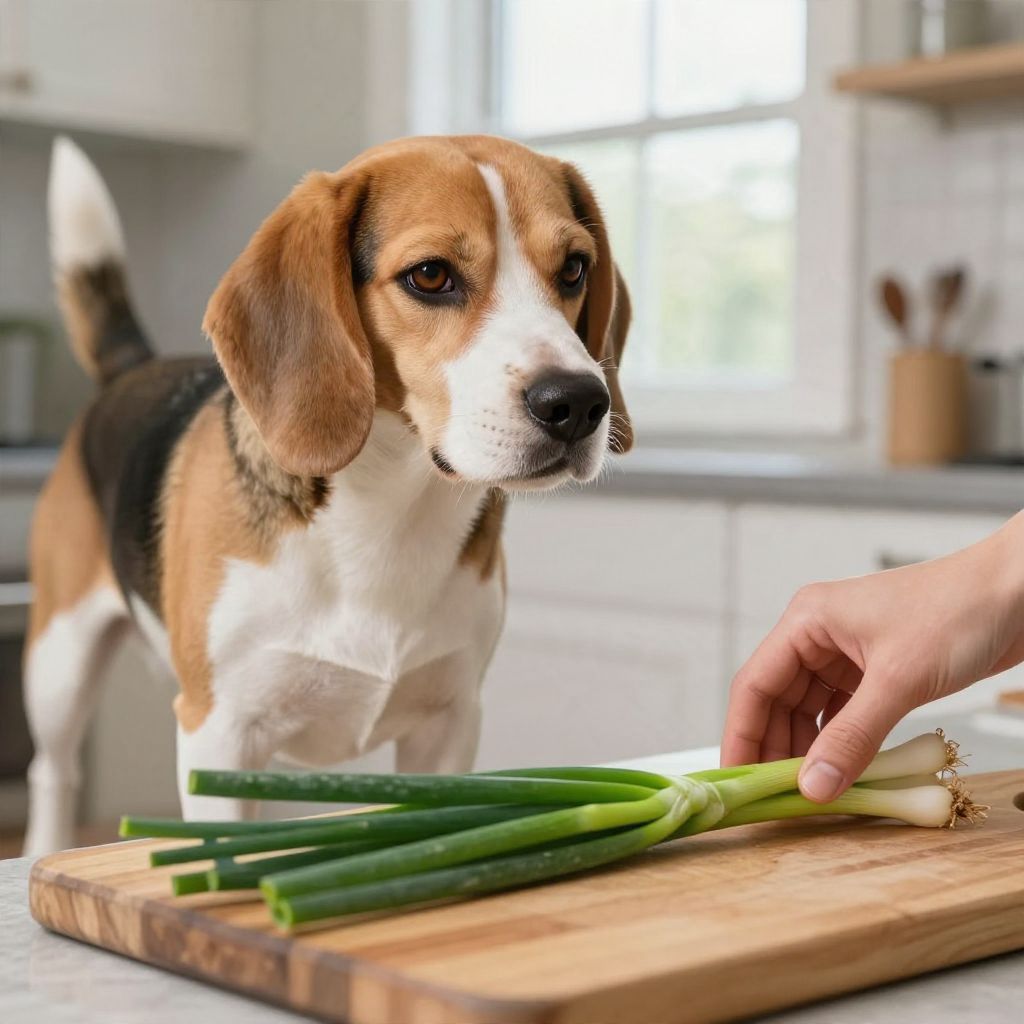
Can dogs have green onions? In general, no—green onions are not safe for dogs. Like other alliums, they can damage a dog’s red blood cells and cause illness, even if the amount seems small.
If your dog ate green onions, the right response depends on how much was eaten, your dog’s size, and whether any symptoms are already showing. When in doubt, call your veterinarian or an emergency clinic right away.
Can dogs have green onions?
No. Green onions, also called scallions, are toxic to dogs and should be avoided completely. Even small amounts can be a problem, especially for small dogs, puppies, seniors, or dogs with existing health issues.
Why green onions are unsafe for dogs
Green onions are part of the allium family, which also includes onions, garlic, leeks, and chives. These foods can damage a dog’s red blood cells and may lead to anemia.
The risk is not limited to raw green onions. Cooked, dried, powdered, and mixed-in forms can also be harmful. Onion powder in soups, sauces, seasoning blends, and table scraps is a common hidden danger.
Forms of green onion that can still be risky
- Raw green onion pieces
- Cooked green onions in stir-fries, soups, or casseroles
- Green onion powder in seasoning mixes
- Foods flavored with onion or scallion, even if the pieces are hard to see
What happens if a dog eats green onions?
Signs may not appear immediately. Some dogs develop stomach upset first, while others show signs of red blood cell damage later, after the toxin has had time to act.
Possible symptoms include vomiting, diarrhea, drooling, tiredness, weakness, pale gums, fast breathing, rapid heart rate, and dark or reddish urine. Severe cases can become emergencies.
Emergency warning signs
- Collapse or extreme weakness
- Difficulty breathing
- Very pale, white, or blue-tinged gums
- Repeated vomiting or refusal to drink
- Dark urine or trouble standing
If you see any of these signs, seek urgent veterinary care now. Do not wait for symptoms to “pass.”
What to do if your dog ate green onions
Act quickly and contact a veterinarian, poison helpline, or emergency clinic for guidance. The sooner your dog is assessed, the better the chance of preventing serious complications.
- Remove any remaining green onions or contaminated food.
- Note what was eaten, how much, and when it happened.
- Call your veterinarian or an emergency veterinary clinic immediately.
- Follow professional instructions exactly.
Do not try to make your dog vomit unless a veterinarian specifically tells you to do so. Home remedies can make the situation worse, especially if your dog is already weak, vomiting, or having trouble breathing.
How much green onion is dangerous for dogs?
There is no safe amount to feed on purpose. Toxicity can vary based on your dog’s size, the amount eaten, the form of the onion, and your dog’s individual sensitivity. Because of that variation, even a small exposure deserves a call to your vet.
Dogs may be more vulnerable if they are very small, very young, older, anemic, or dealing with another illness. Repeated small exposures can also add up over time.
Are green onions ever okay in dog food?
No. Green onions should not be used as a treat, topper, or “healthy” ingredient for dogs. They do not provide a benefit that outweighs the risk.
If you want to add variety to your dog’s diet, choose dog-safe foods your veterinarian approves, and keep extras to a small part of the overall diet. Human foods should never replace a complete and balanced dog food.
Safer alternatives to share instead
- Plain cooked carrots
- Plain green beans
- Plain pumpkin puree with no added sugar or spices
- Small pieces of apple without seeds or core
- Plain cooked sweet potato
Common mistakes dog owners make
Many accidental exposures happen because green onions are hidden in human food. Dogs are often quick to steal from counters, trash cans, plates, or dropped food on walks.
- Assuming a small amount is harmless
- Forgetting that onion powder counts too
- Feeding leftovers without checking ingredients
- Waiting to see if symptoms appear before calling for help
- Using garlic or onion-based “natural” remedies
How to prevent green onion exposure
Prevention is usually simple once you know where the risk comes from. The main goal is to keep all onion-family foods out of reach and avoid sharing seasoned human meals.
- Store onions, scallions, and prepared foods securely
- Keep trash cans closed and inaccessible
- Check ingredient labels on soups, sauces, seasonings, and leftovers
- Teach a reliable “leave it” cue using reward-based training
- Supervise dogs around food prep and outdoor cooking areas
Does breed, age, or size change the risk?
Yes, the risk can vary. Small dogs may be affected by less food simply because the same amount is a larger dose for their body size. Puppies may also be more vulnerable because they are smaller and more likely to explore with their mouths.
Older dogs or dogs with other medical problems may have less reserve if anemia develops. Still, no breed is “safe” from allium toxicity, so the same caution applies to every dog.
When to call the vet even if your dog seems fine
Call your veterinarian if your dog ate green onions, even if you do not see symptoms yet. A dog can look normal at first and still become ill later.
Prompt advice is especially important if your dog ate a large portion, ate onion powder or a heavily seasoned dish, or has a history of anemia or other health concerns.
Bottom line
Can dogs have green onions? No. Green onions are unsafe for dogs and can cause serious illness, including anemia. If your dog eats any amount, contact a veterinarian right away and watch closely for warning signs.
If you want to learn more about allium risks, see can dogs eat green onions and why onions are bad for dogs.