
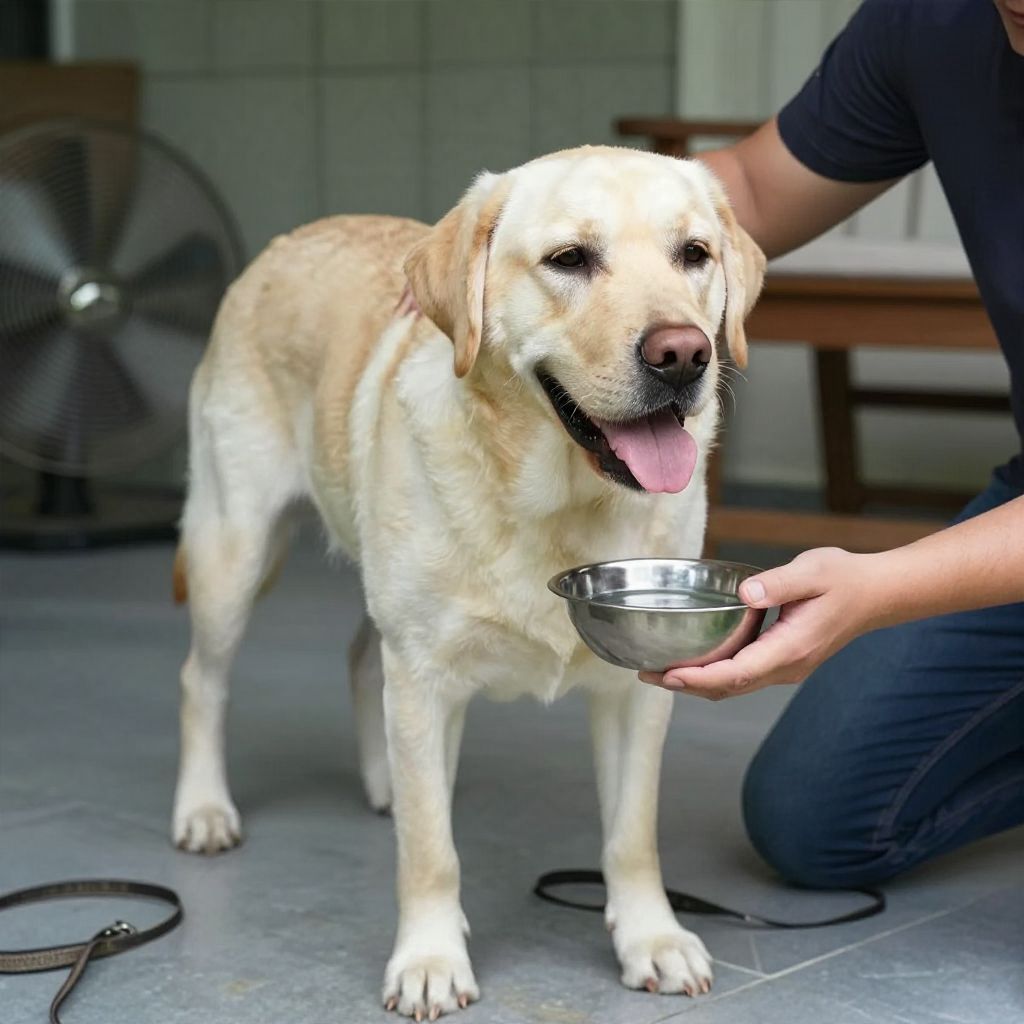
How to calm a panting dog starts with finding out why your dog is panting. Some panting is normal after exercise, heat, excitement, or stress, but heavy or sudden panting can also signal pain or illness.
The safest approach is to help your dog cool down, reduce stress, and watch for warning signs that need a vet. If the panting seems unusual, severe, or comes with other symptoms, get professional help promptly.
How To Calm A Panting Dog?
Move your dog to a cool, quiet place, offer fresh water, and help them settle with calm, low-key handling. Check for overheating, pain, anxiety, or other symptoms. If panting is intense, sudden, or paired with weakness, vomiting, collapse, pale gums, or trouble breathing, seek urgent veterinary care.
First, figure out why your dog is panting
Panting is a normal cooling mechanism, but the cause matters. A dog that just finished a walk needs a different response than a dog panting at rest with no obvious reason.
Common non-emergency reasons
- Heat or humidity
- Recent exercise or play
- Excitement or stress
- Car rides or unfamiliar environments
- Mild discomfort after activity
Possible health-related reasons
- Pain or injury
- Fever or infection
- Respiratory or heart problems
- Heatstroke
- Medication side effects
- Anxiety or panic
Age, body size, coat type, breed tendencies, and overall health can all affect panting. For example, brachycephalic dogs with short muzzles may struggle more with airflow, while seniors or dogs with medical conditions may pant more easily than healthy adults.
Step-by-step: how to calm a panting dog safely
- Move to a cooler, quieter area. Get your dog out of direct sun, hot pavement, or a noisy room.
- Offer cool, fresh water. Let your dog drink small amounts. Do not force water into the mouth.
- Reduce stimulation. Turn down noise, stop play, and keep other pets or children from crowding your dog.
- Check your dog’s body. Look for overheating, limping, wounds, swelling, or signs of pain.
- Use gentle cooling if heat is the issue. A fan, air conditioning, or a cool damp towel on the body can help. Avoid ice-cold water or extreme cooling.
- Let your dog rest. Keep movement minimal until breathing settles.
- Monitor closely. If panting does not improve quickly or worsens, contact a veterinarian.
When panting may be an emergency
Some panting needs immediate veterinary attention. Do not wait if you see signs of heatstroke, serious pain, breathing trouble, or collapse.
- Collapse, extreme weakness, or inability to stand
- Vomiting, diarrhea, or drooling along with heavy panting
- Pale, gray, or blue gums
- Labored breathing, wheezing, or open-mouth breathing at rest that looks strained
- Confusion, staggering, or shaking
- Very hot body temperature or suspected overheating
- Bloated abdomen, repeated retching, or distress
- Known injury, toxin exposure, or sudden severe pain
If your dog is overheating, treat it as urgent. Move them to a cool place and call a veterinarian right away while you begin gentle cooling.
How to help with heat-related panting
Heat is one of the most common reasons dogs pant heavily. Some dogs, especially those with thick coats, short noses, obesity, or heart and airway issues, may have a harder time cooling themselves.
What to do
- Bring your dog indoors or into shade immediately.
- Use air conditioning or a fan.
- Offer small amounts of water frequently.
- Wet the paws, belly, and chest with cool water if needed.
- Stop exercise and avoid hot surfaces.
What to avoid
- Ice baths or very cold water
- Forcing your dog to drink
- Covering your dog with a wet towel that traps heat
- Waiting to see if it “passes” when signs are severe
Some dogs are more vulnerable in warm weather, but any dog can overheat. Watch closely during exercise, travel, or outdoor time, especially in humid conditions.
If panting is caused by stress or anxiety
Dogs may pant when frightened, overstimulated, or unsettled by change. This can happen during thunderstorms, fireworks, car rides, vet visits, separation, or new environments.
How to calm anxious panting
- Keep your voice low and your movements slow.
- Give your dog space if they want to move away.
- Use a familiar bed, crate, or blanket if your dog finds it comforting.
- Close curtains and reduce noise during storms or fireworks.
- Offer a chew, lick mat, or food puzzle only if your dog is calm enough to use it safely.
Do not punish, scold, or force interaction. That can increase stress and make panting worse.
When anxiety needs more help
If your dog frequently pants, paces, hides, trembles, or cannot settle, talk with your veterinarian. They may rule out medical causes and suggest behavior support, environmental changes, or referral to a certified trainer or veterinary behaviorist.
Panting after exercise: what is normal?
After play or a walk, panting should gradually ease as your dog cools down and rests. The exact recovery time varies with fitness, age, weather, and body condition.
- Provide water and a calm rest area.
- Keep exercise sessions shorter in heat or humidity.
- Build conditioning gradually for less-fit dogs.
- Watch for lingering distress, coughing, or weakness.
If panting stays heavy long after exercise ends, or your dog seems uncomfortable, contact your veterinarian. Persistent recovery problems can point to pain, overheating, or an underlying health issue.
Common mistakes to avoid
- Ignoring unusual panting. Not every pant is harmless.
- Using punishment. It does not treat pain, heat, or anxiety.
- Overcooling too fast. Gentle cooling is safer than extreme measures.
- Forcing food or water. This can cause stress or aspiration.
- Assuming breed explains everything. Breed tendencies matter, but individual health matters more.
When to call your veterinarian even if it’s not an emergency
Schedule a veterinary visit if panting is new, frequent, or happening at rest without an obvious reason. This is especially important if your dog is older, has a chronic condition, or has recently started a new medication.
- Panting during sleep or quiet rest
- Changes in appetite, thirst, or energy
- Coughing, limping, or stiffness
- Restlessness or trouble lying down comfortably
- Repeated episodes with no clear trigger
Your vet can check for pain, fever, heart disease, respiratory problems, endocrine issues, and other causes that are not safe to diagnose at home.
How to prevent future panting episodes
You may not be able to prevent every episode, but you can reduce common triggers.
- Exercise during cooler parts of the day.
- Keep your dog at a healthy weight.
- Use a harness that does not restrict breathing.
- Provide shade, water, and rest breaks outdoors.
- Help your dog build confidence with gradual, reward-based exposure to stress triggers.
- Keep up with routine veterinary care.
For dogs that pant while resting, it can help to track when it happens, how long it lasts, and what else you notice. That information can help your vet narrow down the cause. You may also find it useful to read more about why dogs pant while resting and heavy breathing in dogs.
Bottom line
To calm a panting dog, move them to a cool, quiet place, offer water, reduce stress, and watch closely for warning signs. If the panting is sudden, severe, or paired with other symptoms, contact a veterinarian right away.