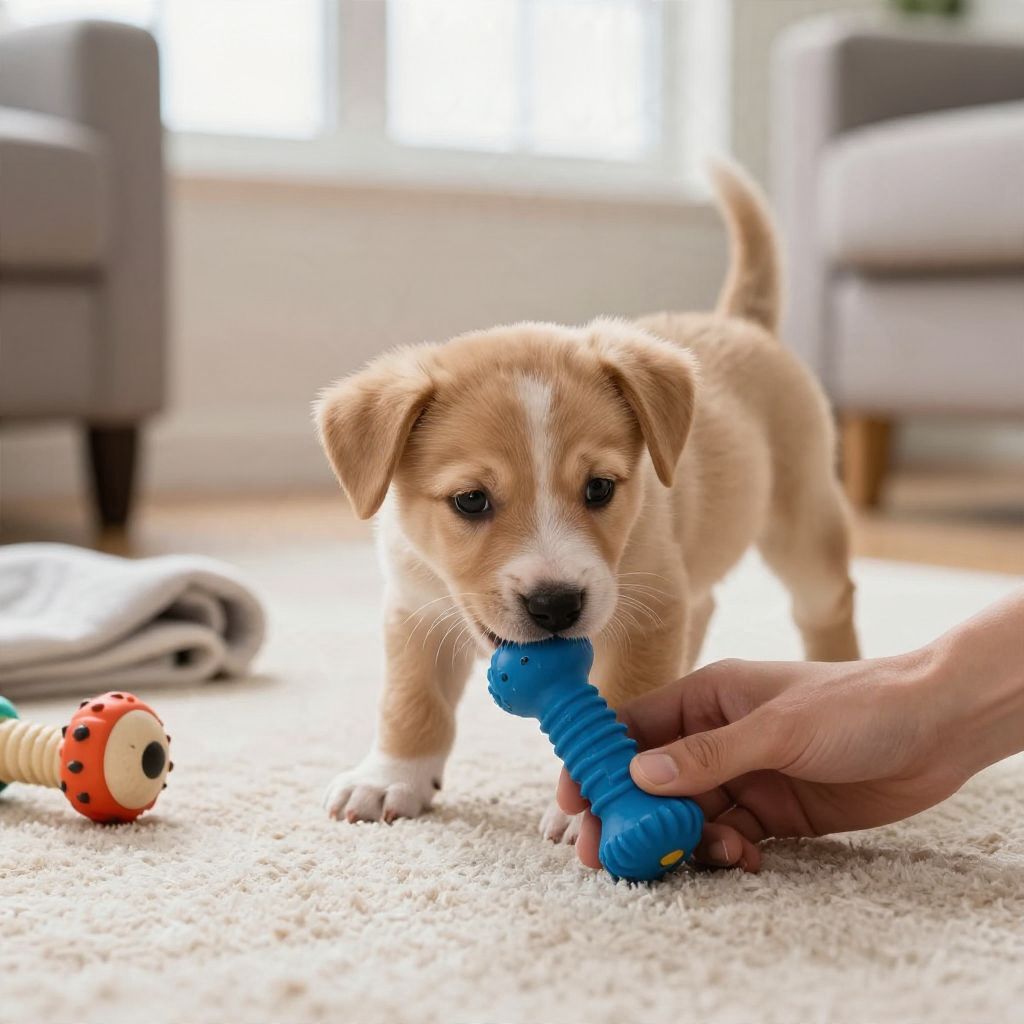
When do puppies start teething? Most puppies begin teething around 3 to 4 weeks of age, when their baby teeth start coming in. The process continues as those teeth are replaced by adult teeth, usually between 3 and 7 months old.
During this time, chewing, drooling, and mild gum irritation are common. Knowing what is normal and what needs a vet visit can help you keep your puppy comfortable and safe.
When do puppies start teething?
Puppies usually start teething at about 3 to 4 weeks old, when their first baby teeth erupt. By 6 to 8 weeks, most puppies have a full set of baby teeth, and adult teeth begin replacing them around 3 to 4 months. Teething is usually finished by 6 to 7 months, though timing can vary.
What happens during puppy teething?
Teething is a normal developmental stage. Your puppy first grows 28 baby teeth, then gradually loses them as 42 adult teeth come in.
This change can make chewing more intense because the gums become sore and the loose teeth can feel uncomfortable. Some puppies breeze through it, while others seem more restless or mouthy for a few weeks.
Common signs of teething
- Chewing more than usual
- Drooling
- Red or slightly swollen gums
- Small spots of blood on toys
- Temporary loss of appetite for hard food
- Needing more sleep or seeming irritable
These signs are often mild. If your puppy seems very painful, refuses food, or has major swelling, that is not typical teething and should be checked by a veterinarian.
Teething timeline: what to expect by age
Every puppy is different, but this general timeline helps you know what is normal.
- 3 to 4 weeks: Baby teeth begin to erupt.
- 6 to 8 weeks: Most baby teeth are present.
- 3 to 4 months: Adult teeth start replacing baby teeth.
- 4 to 6 months: Chewing often peaks as many teeth loosen and fall out.
- 6 to 7 months: Most puppies have their adult teeth.
Smaller, larger, and mixed-breed puppies can all vary a bit. Health, genetics, and individual development can shift the timing by several weeks.
How to help a teething puppy comfortably
The goal is to soothe sore gums and protect your home without encouraging destructive chewing. Safe management and appropriate chew options work better than punishment.
- Offer puppy-safe chew toys. Choose toys designed for young dogs that are soft enough to be comfortable but sturdy enough not to break apart easily.
- Rotate toys. Changing toys keeps your puppy interested and can reduce boredom chewing.
- Use chilled items carefully. A cool chew toy can feel soothing for some puppies. Make sure it is safe for chewing and not frozen hard enough to damage teeth.
- Supervise chewing. Watch your puppy with any new toy to make sure pieces do not break off.
- Redirect gently. If your puppy chews furniture, hands, or shoes, calmly offer an approved chew instead.
- Protect your home. Use baby gates, crates used appropriately, and puppy-proofing to reduce access to tempting items.
Chewing is normal, but your puppy still needs boundaries. Redirection and prevention are usually more effective than trying to stop teething chewing entirely.
What not to do during teething
Some common “fixes” can create more problems than they solve. Avoid approaches that risk injury or fear.
- Do not give hard objects that can crack teeth, such as bones, antlers, or very hard chews.
- Do not use punishment for chewing; it can increase stress and does not teach what to chew instead.
- Do not leave your puppy alone with toys that can shred into pieces and be swallowed.
- Do not assume every chewing problem is teething; boredom, anxiety, and lack of supervision can also play a role.
If your puppy is chewing excessively even when comfortable and well-managed, talk with a veterinarian or qualified trainer to rule out behavior or medical issues.
Feeding and dental care during teething
Most puppies can keep eating their normal balanced puppy food during teething. If hard kibble seems uncomfortable, you can ask your veterinarian whether briefly softening it is appropriate for your puppy.
Teething is also a good time to start gentle dental handling. Short, positive practice sessions can help your puppy accept mouth care later.
Helpful dental habits to begin early
- Touch the lips and muzzle briefly, then reward calm behavior.
- Lift the lips to look at teeth for a second or two.
- Introduce a puppy toothbrush gradually.
- Keep sessions short and positive.
Never force mouth handling if your puppy is distressed. Build comfort slowly so dental care becomes routine instead of stressful.
When teething is normal and when it is not
Mild discomfort is expected, but some symptoms need veterinary attention. Knowing the difference can prevent bigger problems.
Usually normal
- Chewing on toys and safe objects
- Small amounts of drool
- Minor gum redness
- A few baby teeth falling out
- Brief fussiness or sleepiness
Call your veterinarian if you notice
- Bad breath that is strong or worsening
- Bleeding that seems more than a small spot
- Gums that are very swollen, pale, or infected-looking
- Refusal to eat for more than a short period
- A baby tooth that seems stuck while the adult tooth is already coming in
- Broken teeth or obvious pain when chewing
Seek urgent veterinary care for emergencies
- Choking, gagging, or trouble breathing
- Swallowing a broken toy piece or sharp object
- Severe bleeding from the mouth
- Facial swelling, especially if it appears suddenly
- Extreme lethargy, collapse, or repeated vomiting along with mouth pain
Do not wait if you suspect your puppy has swallowed something dangerous or is struggling to breathe.
Why some puppies seem to teethe harder than others
Teething intensity can vary a lot. Some puppies barely notice it, while others become very chewy and sensitive for weeks.
Differences in breed size, jaw shape, individual pain tolerance, and the way baby teeth fall out can all affect what you see. A puppy with crowded teeth or retained baby teeth may have more discomfort and may need a veterinary exam.
Temperament and daily routine also matter. Puppies that are overtired, under-exercised, or understimulated may chew more intensely, even if teething is only part of the issue.
How to manage chewing without creating bad habits
Teething is a great time to teach what is okay to chew. Consistency matters more than force.
- Keep approved chew toys within easy reach.
- Use praise or treats when your puppy chooses the right item.
- Interrupt unsafe chewing early and redirect immediately.
- Limit access to shoes, cords, and furniture when you cannot supervise.
- Make sure your puppy gets enough sleep, play, and mental enrichment.
Many puppies chew more when they are overtired. If your puppy gets wild in the evening, a nap may help more than extra play.
When should all the baby teeth be gone?
Most puppies lose their baby teeth by about 6 to 7 months old. By then, the adult teeth should be in place and chewing should begin to settle down.
If baby teeth remain after the adult teeth have come in, especially canines or incisors, your veterinarian should examine your puppy. Retained baby teeth can crowd the mouth and raise the risk of dental problems later.
Practical takeaway for puppy owners
When do puppies start teething? Usually around 3 to 4 weeks old, with the most noticeable chewing phase often happening between 3 and 6 months. Offer safe chew toys, supervise closely, and watch for signs that go beyond normal teething.
If you want to support your puppy through this stage, it also helps to understand related routines like rest and bathroom habits. You can read more about how long puppies sleep and how often puppies poop as part of your overall care plan.