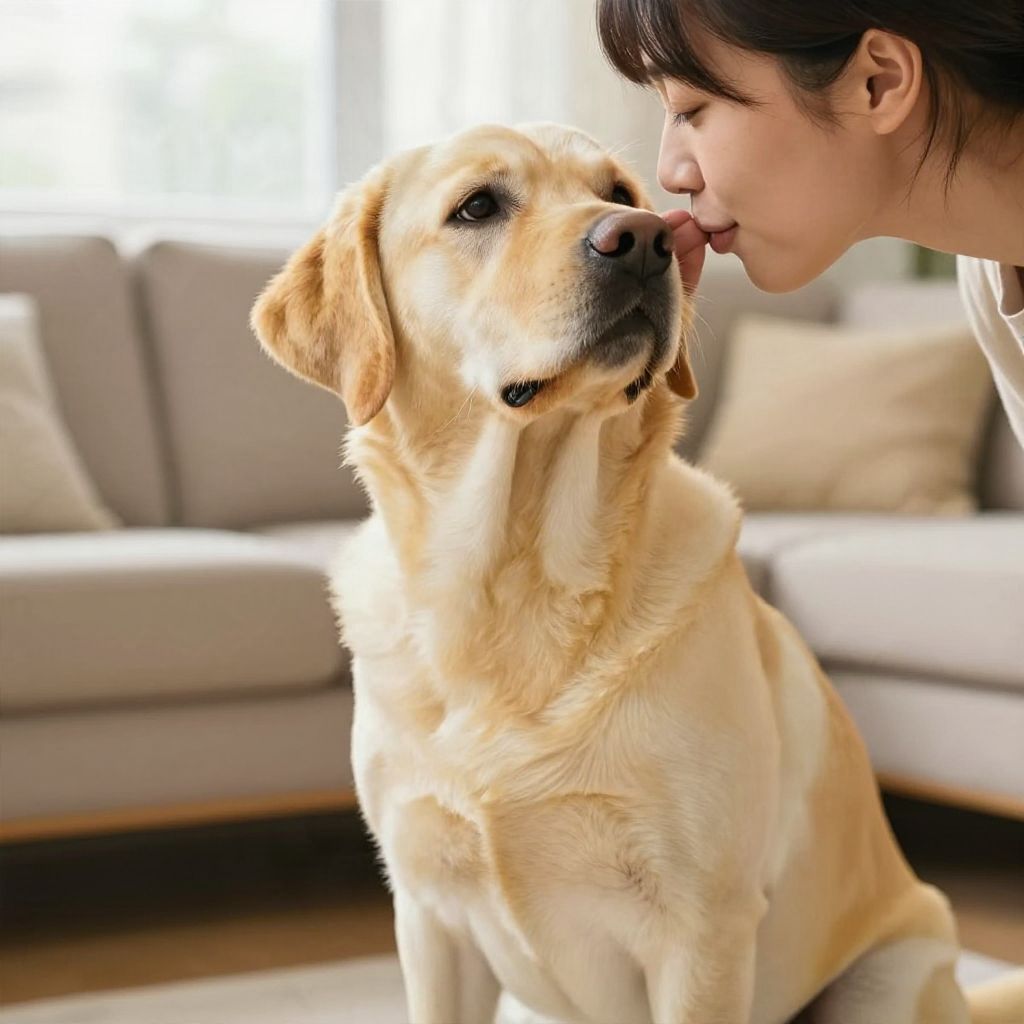
If you kiss your dog, you may wonder whether they understand what it means. Many dogs learn that kisses predict gentle attention, but they do not interpret them the same way humans do.
Some dogs enjoy face closeness and soft affection, while others feel uneasy, especially if they were not socialized to it. The safest approach is to read your dog’s body language and let them choose how much contact they want.
Do dogs know what kisses are?
Most dogs do not understand kisses as a human sign of love, but many learn to associate them with calm voices, petting, and positive attention. Whether a dog enjoys kisses depends on their temperament, age, history, and comfort with close face-to-face contact.
What dogs may learn from kisses
Dogs are excellent at learning patterns. Over time, a kiss may become a cue that usually leads to something pleasant, such as praise, cuddling, or a relaxed tone of voice.
That does not mean your dog thinks, “This is a kiss.” More often, they notice the context: your posture, facial expression, voice, and what happens next.
Common things dogs may associate with kisses
- A soft voice or happy tone
- Gentle petting or attention
- Relaxed body language from you
- Routines such as greeting time or bedtime
How to tell whether your dog likes kisses
Some dogs actively seek out face contact or lean in for affection. Others tolerate kisses but do not truly enjoy them, and a few may find them stressful.
Look at the whole picture, not just whether your dog stays still. A dog can freeze, turn away, or show subtle stress even if they do not growl or snap.
Signs your dog is comfortable
- Loose, soft body posture
- Relaxed mouth and facial muscles
- Leaning in or staying close voluntarily
- Soft eyes, normal breathing, or a wagging tail that looks loose rather than stiff
Signs your dog may not like kisses
- Turning the head away
- Licking lips, yawning, or looking away repeatedly
- Stiff body, closed mouth, or tense face
- Trying to leave, duck, or hide
- Growling, lip lifting, snapping, or showing teeth
Why some dogs dislike kisses
Humans often see kisses as affectionate, but dogs can experience a face moving toward them as invasive or unpredictable. This is especially true if they have not learned that close contact is safe.
Dogs with a history of fear, pain, poor socialization, or limited handling may be more sensitive. Puppies are still learning, and older dogs or dogs with arthritis, eye pain, or other discomfort may also be less tolerant of face contact.
Breed, age, and individual differences
There is no breed that universally loves or hates kisses. Some dogs may be more socially tolerant, while others are more reserved, but individual personality and life experience matter more than labels.
Small dogs, large dogs, brachycephalic dogs, and seniors can all have different comfort levels. A dog with breathing issues, facial sensitivity, or pain may dislike close contact even if they are normally affectionate.
Is it safe to kiss your dog?
Usually, a quick kiss is not harmful if your dog is calm and comfortable, but there are a few safety concerns to keep in mind. The main risks are stress, accidental bites, and hygiene issues.
Never force kisses on a dog who is tense, cornered, or trying to move away. Respecting their space is safer than assuming they will “get used to it.”
Safety points to remember
- Do not kiss a dog’s face if they are nervous, guarding, or eating.
- Avoid putting your face near a dog you do not know well.
- Supervise children closely around dogs and teach them not to hug or kiss without permission.
- Wash your hands after contact, especially if your dog licks your face or has been outside.
How to show affection in ways dogs usually understand better
If you want to bond with your dog, there are many forms of affection that are easier for them to understand than kisses. Most dogs respond well to predictable, gentle, and choice-based interactions.
Dog-friendly ways to say “I love you”
- Offer calm praise in a soft voice
- Pet the chest, shoulder, or side if your dog enjoys touch
- Use play, training games, or a favorite toy
- Give treats for relaxed, voluntary closeness
- Let your dog approach you instead of reaching into their space
Many dogs prefer side-by-side contact over face-to-face contact. Sitting near them, speaking gently, and allowing them to initiate interaction often builds trust more effectively than kissing.
How to teach children and visitors about dog kisses
Children often want to hug and kiss dogs, but that can be unsafe if the dog feels trapped. Even a friendly dog may react defensively if a child gets too close to the face.
Teach kids to ask an adult before approaching any dog and to look for signs that the dog wants interaction. Visitors should also avoid sudden face contact, especially with shy, senior, or newly adopted dogs.
Simple rules for families
- Let the dog come to you first.
- Pet the dog on the chest or shoulder, not the face.
- Stop immediately if the dog turns away or stiffens.
- Never disturb a dog while sleeping, eating, or chewing.
- Reward calm behavior with praise or a treat.
What to do if your dog reacts badly to kisses
If your dog backs away, growls, or snaps when you kiss them, do not punish the reaction. Those signals are communication, not disobedience, and punishment can make fear or defensive behavior worse.
Instead, give your dog space and change how you interact. If the reaction is new or seems linked to pain, schedule a veterinary exam to rule out medical causes.
Helpful next steps
- Stop kissing your dog’s face for now
- Use calm, non-invasive affection instead
- Watch for patterns around certain people, times, or situations
- Ask a certified trainer or veterinary behaviorist for help if the behavior is persistent
When kisses may signal a bigger problem
Sometimes a dog who suddenly dislikes affection is uncomfortable because of illness or injury. Pain can make even familiar handling feel threatening.
Contact your veterinarian if your dog’s change in tolerance is sudden or comes with limping, stiffness, sensitivity around the head or mouth, appetite changes, drooling, bad breath, eye redness, or behavior changes. Seek urgent veterinary care if your dog shows severe pain, facial swelling, trouble breathing, collapse, or a sudden aggressive reaction that is unusual for them.
The bottom line on whether dogs know what kisses are
Dogs usually do not understand kisses the way people do, but many learn that they predict affection and attention. The best way to know if your dog accepts them is to watch their body language and respect their limits.
If your dog enjoys close contact, keep it gentle and brief. If they do not, choose other forms of affection that feel safer and more natural to them.
If you want to keep learning about canine communication, you may also find do dogs understand kisses and how dogs think helpful for reading your dog’s behavior more accurately.