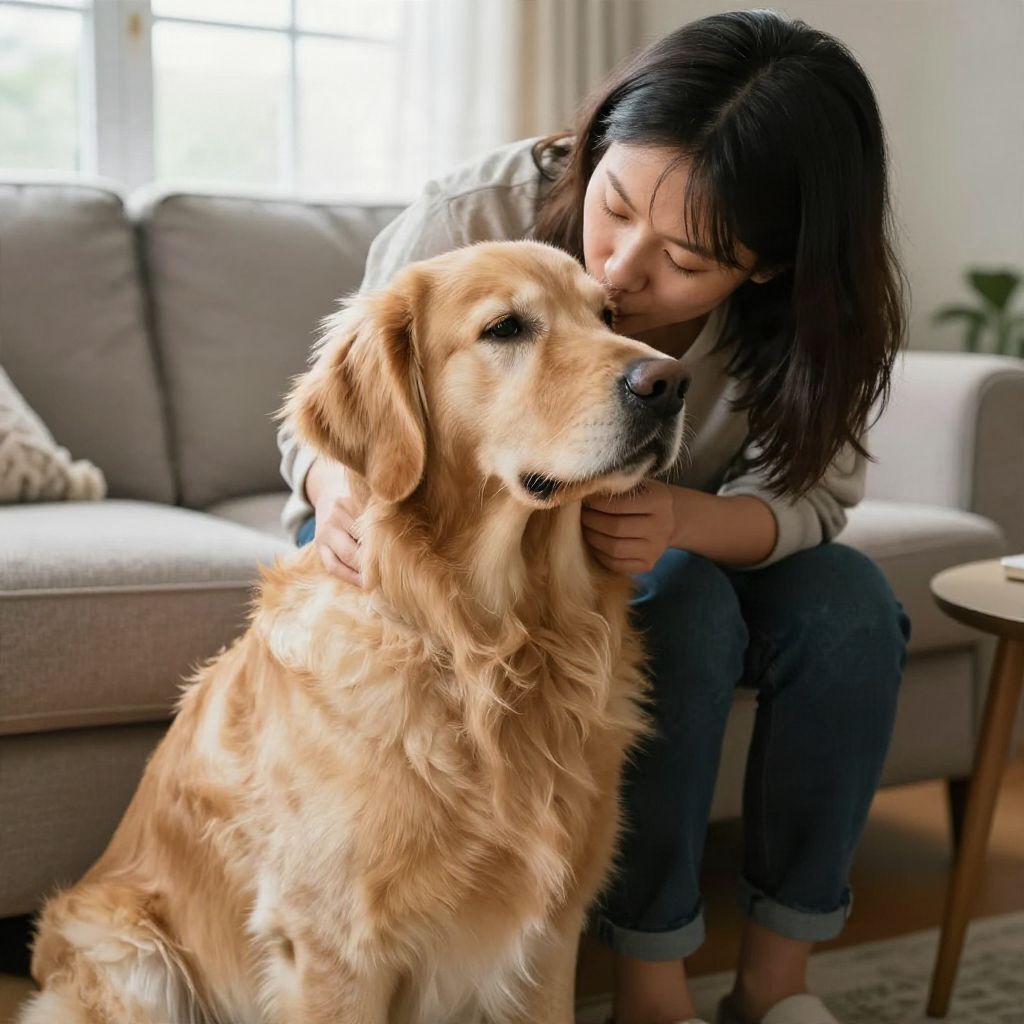
Do dogs understand kisses? Sometimes, but not in the human way. Many dogs learn that kisses usually come with gentle attention, a calm voice, or affection, so they may enjoy them. Others feel confused, uncomfortable, or stressed by face-to-face contact.
Your dog’s reaction depends on body language, early socialization, temperament, age, and past experiences. The safest approach is to watch your dog closely and respect their comfort level.
Do Dogs Understand Kisses?
Dogs do not naturally understand kisses as “love” the way people do, but many learn to associate them with positive attention. Some dogs tolerate or enjoy kisses, while others find a face close to theirs intrusive. Their response depends on body language, history, and how comfortable they are with handling.
How Dogs Usually Read Human Kisses
Dogs are very good at reading your tone, posture, and routines. They may not know the meaning of a kiss, but they can learn the pattern: your face comes close, you speak softly, and then they get petting or calm interaction.
What your dog may be noticing
- Your relaxed or tense body language
- Whether your voice is soft, excited, or loud
- Whether the interaction usually leads to praise or affection
- How close you get to their face
In other words, your dog may understand the context of kisses even if they do not understand the gesture itself.
Signs Your Dog Likes Kisses
Some dogs clearly enjoy affectionate face contact. Look for relaxed, loose body language rather than just staying still.
- Soft eyes and a relaxed face
- Loose body posture
- Leaning in or staying close
- Tail wagging in a relaxed way
- Licking you back, nudging, or seeking more contact
Even when a dog seems to accept kisses, keep in mind that tolerance is not always the same as enjoyment. Some dogs simply put up with it.
Signs Your Dog Does Not Like Kisses
Many dogs dislike a face suddenly moving toward them, especially from above. Watch for subtle stress signals before assuming your dog is fine with it.
- Turning the head away
- Yawning when not tired
- Licking lips or nose repeatedly
- Stiff body or frozen posture
- Whale eye, where the whites of the eyes show
- Backing away, ducking, or hiding
- Growling, snapping, or baring teeth
If your dog growls, snaps, or shows repeated avoidance, stop kissing them and give space. Those are important warnings, not bad behavior.
Why Some Dogs Dislike Kisses
Dogs are not people, and close face contact can feel threatening or confusing. This is especially true for dogs that were not gently socialized, have had rough handling, or simply prefer more personal space.
Common reasons include
- Face-to-face contact feels invasive
- They cannot easily predict your movement
- They have had negative experiences with handling
- They are nervous, in pain, or overstimulated
- They are resting and do not want interaction
Puppies may also be unsure about kisses because they are still learning human body language. Senior dogs or dogs with vision, hearing, or pain issues may react more defensively if startled.
Is It Safe to Kiss Your Dog?
It can be safe for some dogs if they are comfortable, healthy, and calm, but it is not risk-free. A kiss near the face can startle a dog, and close contact can expose you to germs from saliva or skin if hygiene is poor.
Use extra caution if your dog
- Has a history of snapping or guarding
- Is injured, sick, or in pain
- Is eating, chewing, or resting
- Is a puppy still learning boundaries
- Is a fearful or anxious dog
Also be careful around the mouth, eyes, and nose. Avoid kissing any dog that has open sores, eye discharge, vomiting, diarrhea, coughing, or other signs of illness until a veterinarian says it is okay.
How to Tell If Your Dog Is Comfortable With Affection
The best way to know whether your dog understands kisses as a positive thing is to observe their whole response, not just whether they stay still. Comfort looks relaxed, voluntary, and easy to interrupt.
- Approach slowly and watch your dog’s posture.
- Offer gentle praise or a soft pet instead of moving in quickly.
- See whether your dog leans in or moves away.
- Stop immediately if they stiffen, turn away, or lick their lips repeatedly.
- Reward calm, willing closeness with a treat, praise, or a scratch they enjoy.
If your dog chooses to come back for more, that is a better sign than simply tolerating the interaction.
Better Ways to Show Affection If Your Dog Is Unsure About Kisses
You do not have to kiss your dog to show love. Many dogs prefer lower-pressure forms of affection that feel safer and easier to understand.
- Gentle chest or shoulder scratches
- Calm praise in a soft voice
- Training games with rewards
- A short walk or sniffing break
- Quiet time near you without touching
If your dog enjoys physical contact, let them initiate it. A dog that comes to you, leans against you, or offers a paw is often telling you what kind of affection they prefer.
Teaching Children and Visitors Safe Dog Affection
Children often want to hug or kiss dogs, but many dogs do not enjoy that kind of close contact. Supervision matters, even with a family dog that seems very gentle.
Simple rules to teach
- Do not put your face close to a dog’s face
- Do not kiss a dog without checking first
- Do not disturb a dog while eating, sleeping, or chewing
- Let the dog approach first
- Pet the dog on the chest, shoulder, or side if they seem relaxed
For toddlers and young children, it is usually safer to encourage calm petting instead of face-to-face affection.
When Kisses May Be a Bad Idea
Even a usually affectionate dog may not want kisses in certain situations. Avoid them when your dog is uncomfortable, distracted, or physically vulnerable.
- After surgery or during recovery
- When your dog is in pain or limping
- During thunderstorms, fireworks, or other stressful events
- While your dog is guarding food, toys, or a bed
- When your dog is meeting new people or animals
Never force affection. Forced kissing can damage trust and increase the risk of defensive behavior over time.
What If Your Dog Licks You Back?
Licking does not always mean your dog understands kisses as affection, but it can show interest, appeasement, or learned social behavior. Some dogs lick because they are excited, anxious, or hoping for attention.
If your dog licks your face after you kiss them, that may be part of their way of interacting with you. Still, it is best not to assume every lick means “I love this.” Watch the rest of their body language.
When to Ask a Veterinarian or Behavior Professional
If your dog suddenly stops tolerating affection, becomes snappy, or seems unusually sensitive around the face, check with a veterinarian. Pain, dental disease, ear problems, eye irritation, or other medical issues can make touch feel threatening.
You should also seek help from a certified trainer or veterinary behaviorist if your dog shows fear, growling, or biting around handling. Early guidance can prevent the problem from getting worse.
Get urgent veterinary help if your dog
- Has sudden swelling, bleeding, or facial injury
- Seems painful when touched near the head or mouth
- Has trouble breathing, collapses, or seems weak
- Shows rapid behavior change along with illness signs
Practical Bottom Line
Do dogs understand kisses? Some dogs learn that kisses mean affection and enjoy them, but many do not naturally understand them and may dislike the closeness. The safest choice is to let your dog’s body language guide you and use affection they clearly welcome.
If you want to learn more about everyday dog communication, you may also find it helpful to read about why dogs lick you so much and whether dogs watch TV.