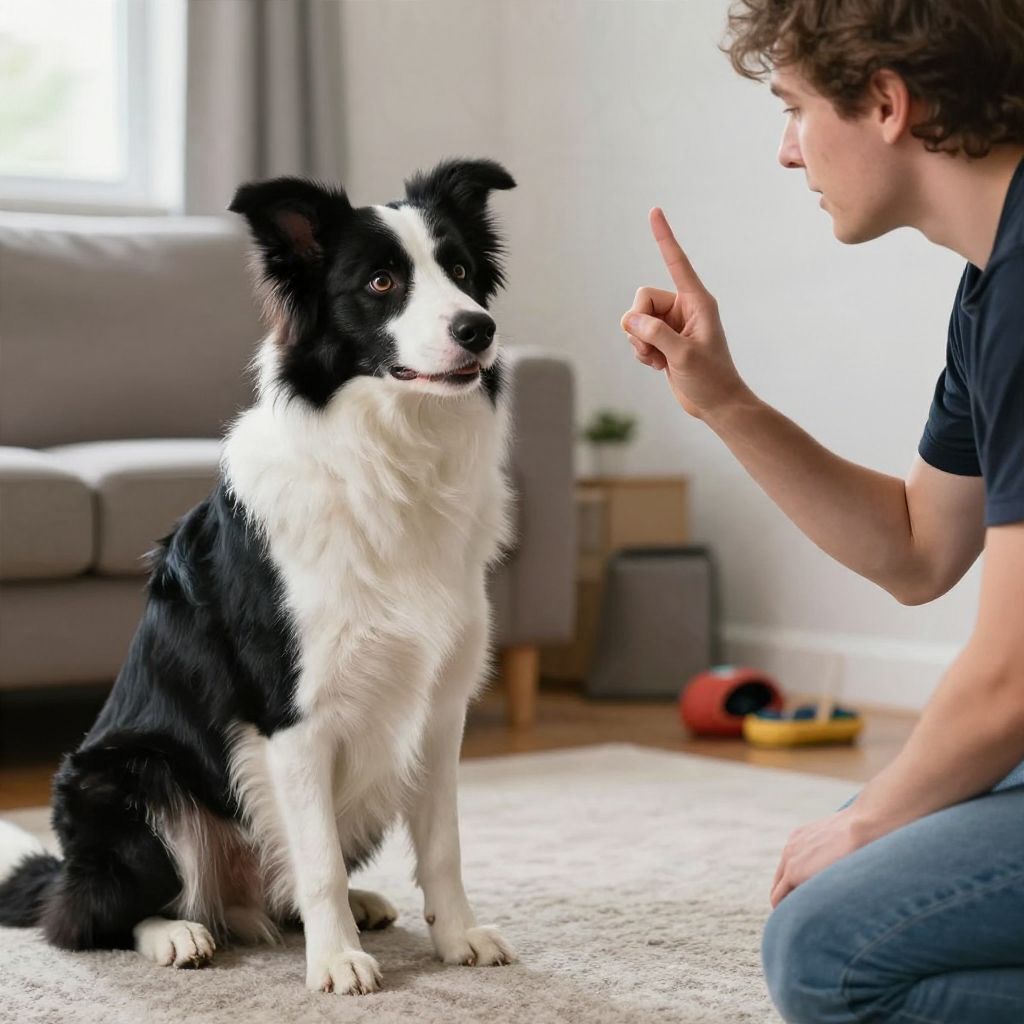
Do dogs understand English, or are they just reacting to tone and routine? Most dogs learn that certain English words predict specific outcomes, such as a walk, meal, or car ride.
They do not understand English like people do, but many can learn a meaningful vocabulary through repetition, body language, and context. How much they understand depends on the individual dog, training history, age, and attention.
Do Dogs Understand English?
Dogs do not understand English grammar or full sentences the way humans do. They can, however, learn to associate many English words, phrases, and tone patterns with actions, objects, and routines. In practice, they respond to a mix of word recognition, voice cues, body language, and past experience.
How Dogs Learn Words
Most dogs learn language through association, not translation. If you say “sit” and reward the behavior consistently, the dog learns that the sound predicts a specific action and outcome.
What dogs usually pick up
- Names of common objects, such as “ball” or “leash”
- Routine phrases, such as “outside,” “treat,” or “let’s go”
- Emotion in your voice, including happy, tense, or calm tones
- Hand signals and body posture that match your words
What dogs usually do not understand
- Complex explanations
- Long instructions with several steps at once
- Sarcasm, abstract language, or moral reasoning
- Every word in a sentence just because it sounds familiar
What Affects How Well a Dog Understands English
Some dogs seem to understand far more English than others, but that does not mean they are “smarter” in every way. Individual learning ability, motivation, and experience matter more than breed labels alone.
Common factors
- Training history: Dogs trained with consistent cues usually learn faster.
- Age: Puppies can learn quickly, but attention spans are short. Senior dogs may learn too, though hearing or mobility changes can affect responses.
- Health: Pain, hearing loss, anxiety, or cognitive decline can reduce responsiveness.
- Environment: A noisy or distracting setting makes word learning harder.
- Temperament: Some dogs are naturally more people-focused or food-motivated, which can help training.
Signs Your Dog Understands a Word
If your dog consistently reacts to a word before you finish the action, that is a strong sign of learning. The response should be reliable across normal settings, not just in one room or with one person.
- Perking up at a specific word
- Going to the door when you say “walk”
- Fetching a named toy from a group
- Offering a trained behavior when cued
- Looking to you for the next step after a known phrase
Keep in mind that excitement can look like understanding. A dog may react to “park” because it predicts fun, not because it understands the word in a human sense.
How to Teach Your Dog English Words Clearly
The best way to help your dog understand English is to keep words simple, consistent, and tied to one behavior or event. Reward the right response quickly so the meaning stays clear.
- Choose one word for one cue or object.
- Say the word once, in a calm voice.
- Immediately show or prompt the action if needed.
- Reward the correct response with praise, play, or a treat.
- Repeat in short sessions until the dog responds reliably.
Helpful training tips
- Use the same word every time.
- Keep commands short, such as “sit,” “down,” or “come.”
- Pair words with hand signals if that helps your dog.
- Practice in quiet places first, then add distractions gradually.
- Reward what you want instead of punishing mistakes.
Why Tone and Body Language Matter So Much
Dogs are very good at reading posture, movement, facial expression, and voice tone. Sometimes they respond more to how you say something than to the actual English word.
A cheerful tone can make a dog expect something positive, while a sharp or tense tone may make them cautious. This is one reason a dog may seem to “know” what you mean even when the exact words change.
Common Mistakes That Confuse Dogs
If your dog seems to ignore English, the issue may be unclear communication rather than lack of intelligence. Many training problems come from inconsistency.
- Using different words for the same cue
- Repeating a word too many times without follow-through
- Saying a cue when the dog is distracted or stressed
- Accidentally rewarding the wrong behavior
- Expecting the dog to understand full sentences immediately
For example, if you say “come here” sometimes, “get over here” other times, and “why won’t you listen?” another time, your dog may not know which sound matters most.
Do Certain Dogs Understand English Better?
Some dogs are known for strong word-learning ability, but no breed is guaranteed to understand English better than others. Individual dogs within any breed can vary a lot.
Working breeds, highly trainable family dogs, and dogs bred for close human cooperation may often be eager to learn verbal cues. Still, motivation, socialization, and training quality matter more than breed alone.
What to remember about breed tendencies
- Breed can influence energy level, focus, and trainability.
- Breed does not determine intelligence in a simple way.
- Mixed-breed dogs can be excellent word learners.
- Your dog’s history and daily practice matter most.
How Many Words Can a Dog Understand?
There is no universal number. Some dogs learn a small working vocabulary, while others learn many names, cues, and routine phrases. What matters is not the total count but whether the dog reliably understands the words that affect safety and daily life.
Start with the most useful words first: the dog’s name, “come,” “sit,” “stay,” “leave it,” “drop it,” “wait,” and routine words like “walk” or “car.”
When English Understanding Becomes a Safety Issue
Clear communication can keep your dog safe, especially in busy places or emergency situations. Reliable response to a few key cues is more important than teaching a large vocabulary.
Priority safety cues
- Come for recall
- Leave it for avoiding unsafe items
- Drop it for releasing dangerous objects
- Wait for doors, curbs, or car exits
- Stay for short controlled pauses
If your dog does not respond to these cues in real life, practice in easier settings and consider help from a certified trainer or qualified veterinary behaviorist.
When a Sudden Change in Response Needs Veterinary Attention
If a dog that used to understand cues suddenly seems confused, unresponsive, or unusually withdrawn, a health issue may be involved. Hearing loss, pain, vision problems, anxiety, or cognitive changes can all affect how a dog appears to “understand” language.
Seek veterinary care promptly if you notice sudden behavior changes along with any of the following:
- Head tilt, loss of balance, or circling
- Sudden hearing loss or not reacting to normal sounds
- Disorientation, staring, or getting stuck in corners
- New aggression, fear, or panic
- Weakness, collapse, or obvious pain
If the change is sudden and severe, or your dog seems distressed, do not wait to see if it passes on its own.
How to Talk to Your Dog So They Understand Better
You can make English easier for your dog to learn by simplifying how you speak. Consistent communication is more effective than talking more.
- Use the same cue word every time.
- Keep sentences short and direct.
- Pause after the cue so your dog can process it.
- Match your body language to your words.
- Reward success immediately.
For example, instead of saying, “Do you want to go outside now because it’s time?” try “outside” and then open the door if that is the cue you want to teach.
What to Do If Your Dog Seems Not to Understand English
If your dog ignores words, first check whether the cue is actually trained. Many dogs are not being stubborn; they simply do not yet know what the word means in that setting.
- Reduce distractions and practice in a quiet place.
- Use one cue word only.
- Reward the correct response right away.
- Check hearing if your dog is older or suddenly less responsive.
- Ask a qualified trainer for help if progress stalls.
If your dog is anxious, fearful, or reactive, a professional can help you build communication without overwhelming them.
Bottom Line
Dogs do not understand English like humans do, but many can learn the meaning of words through repetition, tone, and context. Use simple cues, stay consistent, and watch for sudden changes in response that could signal a health problem. If you want better communication, train clearly and reward often.
If you want to keep learning about canine communication, you may also find it helpful to read do dogs understand kisses? and do dogs watch TV?.