
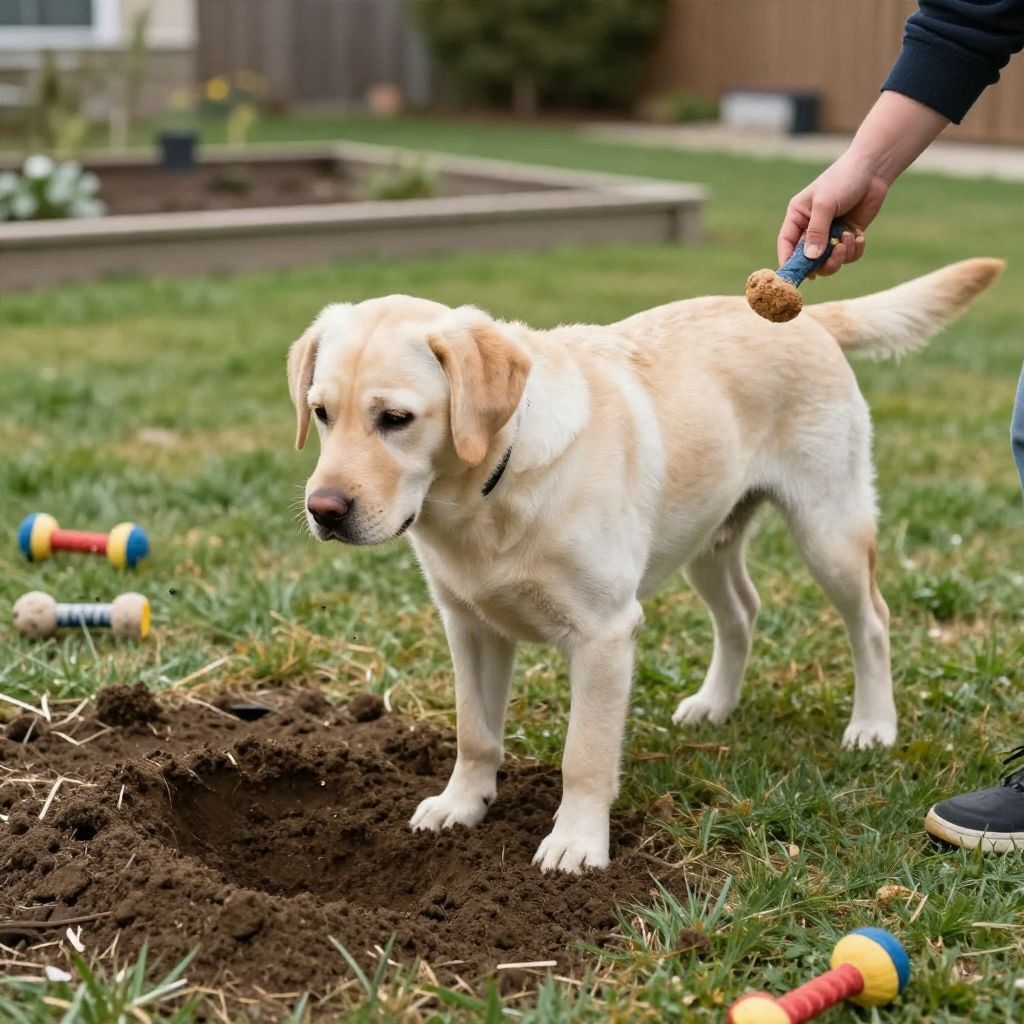
How to stop dogs from digging starts with figuring out why your dog is digging in the first place. Dogs dig for many normal reasons, including boredom, hunting instincts, comfort, stress, or trying to reach something interesting.
The best fix is usually a mix of management, more appropriate exercise and enrichment, and training that rewards the behavior you do want. Punishment often makes digging worse or shifts it to another place.
How To Stop Dogs From Digging?
To stop dogs from digging, block access to the problem area, give your dog a better outlet for digging, increase exercise and mental enrichment, and reward calm, appropriate behavior. If the digging is sudden, intense, or linked to anxiety or pain, talk to your veterinarian.
Why Dogs Dig in the First Place
Digging is often a normal dog behavior, but the reason matters because the solution depends on it. Some dogs dig to entertain themselves, some dig to cool off or make a bed, and others dig because they are chasing scents, prey, or attention.
- Boredom: A dog with too little to do may create its own job.
- Instinct: Some dogs are naturally more interested in scenting, chasing, or burrowing behaviors.
- Comfort: Dogs may dig to make a resting spot, especially in hot weather.
- Escape: Some dogs dig near fences to get out and explore.
- Anxiety or frustration: Stress can show up as repetitive digging.
- Attention-seeking: If digging reliably gets a reaction, the behavior may continue.
Breed can influence tendencies, but it does not determine behavior on its own. Individual personality, age, past training, daily routine, and health all matter too.
Step-by-Step: How To Stop Dogs From Digging
1. Identify where and when the digging happens
Start by observing the pattern. Note whether your dog digs in the yard, near fences, in garden beds, on walks, or indoors, and whether it happens when you leave, after meals, in hot weather, or when wildlife is present.
This helps you match the fix to the cause instead of guessing.
2. Make the problem area less rewarding
If your dog keeps digging in one spot, reduce access while you train. Temporary barriers, supervision, and route changes can help prevent rehearsing the habit.
- Block off garden beds or favorite holes.
- Supervise outdoor time closely.
- Use a leash or long line in the yard if needed.
- Repair holes promptly so the spot does not keep attracting attention.
For fence-line digging, check for escape risk. If your dog can get under or through a fence, stop unsupervised yard time until the area is secured.
3. Give your dog a legal digging outlet
Many dogs do better when digging is allowed in one designated place. A sandbox or loose-soil area can redirect the behavior without trying to eliminate the instinct entirely.
- Choose one spot in the yard.
- Make it easy to access and clearly different from off-limits areas.
- Encourage your dog to dig there using toys or buried treats in a controlled way.
- Reward your dog for using that spot.
If your dog is highly motivated by digging, this approach is often more realistic than trying to stop every digging impulse.
4. Increase exercise and mental enrichment
Physical exercise helps, but mental work is often just as important. A tired dog is not always a satisfied dog; many dogs need problem-solving, sniffing, and training to feel content.
- Use sniffy walks instead of only fast walks.
- Feed part of meals in puzzle toys or scatter feeding games.
- Practice short training sessions with rewards.
- Rotate toys so they stay interesting.
- Offer safe chewing options if your dog enjoys chewing.
Dogs that dig because they are under-stimulated often improve when their daily routine becomes more enriching and predictable.
5. Reward the behavior you want
When your dog chooses a better behavior, reinforce it immediately. Reward calm lying down, staying near you, sniffing allowed areas, or using the designated digging zone.
Use praise, treats, play, or access to a preferred activity. Timing matters: reward the good choice right away so your dog can connect the action with the outcome.
6. Interrupt and redirect early
If you catch your dog starting to dig, calmly interrupt and redirect before the habit escalates. Avoid yelling or chasing, which can make the behavior more exciting.
Instead, call your dog to you, ask for an easy cue they know, and then reward them for switching activities. The goal is to teach an alternate habit, not to create fear around the yard.
7. Supervise and manage until the habit improves
Digging usually improves faster when your dog cannot practice it repeatedly. Management is not a failure; it is part of training.
- Keep your dog indoors or on leash when you cannot supervise.
- Use baby gates or barriers to protect indoor areas.
- Limit access to the yard during the times digging usually happens.
Once the behavior is under better control, you can gradually give more freedom again.
Common Mistakes That Make Digging Worse
Some well-meaning responses accidentally reinforce digging or increase stress. If you are not seeing progress, check whether one of these mistakes is happening.
- Punishing after the fact: Dogs do not connect delayed punishment with past digging.
- Inconsistent rules: Allowing digging sometimes and not others can confuse your dog.
- Not enough enrichment: A dog with no outlet may keep returning to digging.
- Ignoring the trigger: If fear, boredom, or fence-line wildlife is driving the behavior, training alone may not be enough.
- Accidentally rewarding it: Big reactions can become attention for some dogs.
Age, Breed, and Individual Differences
Puppies often dig because they are curious, energetic, and still learning household rules. Older dogs may dig because of habit, frustration, or a medical or sensory change that alters their routine.
Some dogs with strong scenting, hunting, or terrier-like instincts may be especially motivated to dig, but any dog can develop the habit. Size does not determine whether digging will happen, although larger or more active dogs may create bigger holes if the behavior is not managed.
Your dog’s temperament matters too. A confident, high-energy dog may dig from excitement, while a nervous dog may dig from stress or escape attempts.
When Digging May Be a Health or Behavior Problem
Digging is sometimes linked to medical discomfort, anxiety, or compulsive behavior. If the digging starts suddenly or changes noticeably, do not assume it is “just a bad habit.”
Contact your veterinarian if you notice any of the following:
- Sudden increase in digging without an obvious reason
- Restlessness, pacing, panting, or inability to settle
- Scratching at doors, floors, or bedding along with digging
- Loss of appetite, vomiting, diarrhea, or other illness signs
- Limping, stiffness, or signs of pain
- Digging that seems frantic, repetitive, or hard to interrupt
Seek urgent veterinary help if your dog seems in distress, cannot settle, is injured while digging, has a swollen or painful abdomen, or may have escaped the yard and is missing.
How To Stop Dogs From Digging in the Yard
Yard digging is often the most frustrating version because it can damage landscaping and create escape routes. The most effective plan usually combines prevention, redirection, and better outdoor structure.
- Supervise yard time until the habit improves.
- Protect favorite spots with barriers or temporary fencing.
- Provide shade, water, and a cool resting area in hot weather.
- Use a designated digging area if your dog enjoys the behavior.
- Remove obvious triggers, such as easy access to wildlife under the fence.
If your dog digs mainly near the fence, the issue may be escape motivation rather than random play. In that case, improving fence security and reducing boredom are both important.
How To Stop Dogs From Digging Indoors
Indoor digging usually looks like pawing at bedding, carpets, couches, or laundry. This can be normal nesting behavior, but it can also signal stress, discomfort, or a need for more activity.
- Provide a comfortable bed that suits your dog’s size and sleeping style.
- Offer more exercise and sniffing opportunities earlier in the day.
- Check whether your dog is trying to reach warmth, coolness, or a hidden item.
- Redirect to an appropriate mat, bed, or chew.
If indoor digging is new and persistent, especially in an older dog, ask your veterinarian whether pain, cognitive change, or another medical issue could be contributing.
What Not to Do
Humane, reward-based training is the safest and most effective approach. Avoid strategies that rely on fear or intimidation.
- Do not use shock, prong, or harsh physical corrections.
- Do not rub your dog’s nose in holes or damage.
- Do not assume your dog is being “dominant.”
- Do not leave your dog unsupervised in the problem area and hope it stops on its own.
These methods can damage trust and often fail to address the real reason your dog is digging.
When to Get Professional Help
If you have tried management and enrichment but the digging continues, a certified professional trainer or veterinary behaviorist can help you build a tailored plan. This is especially useful if your dog is anxious, reactive, or difficult to redirect.
A veterinarian should be your first stop if the behavior is sudden, severe, or paired with other symptoms. A trainer can then help with practical behavior change once medical concerns are ruled out.
Conclusion
To stop dogs from digging, focus on the cause, prevent practice, and give your dog a better outlet. Most dogs improve when they get more enrichment, clearer boundaries, and consistent reward-based training. If the digging is sudden, intense, or linked to other symptoms, involve your veterinarian.
If you want to understand the behavior more deeply, you may also find why dogs dig holes and why your dog digs helpful as next reading.