
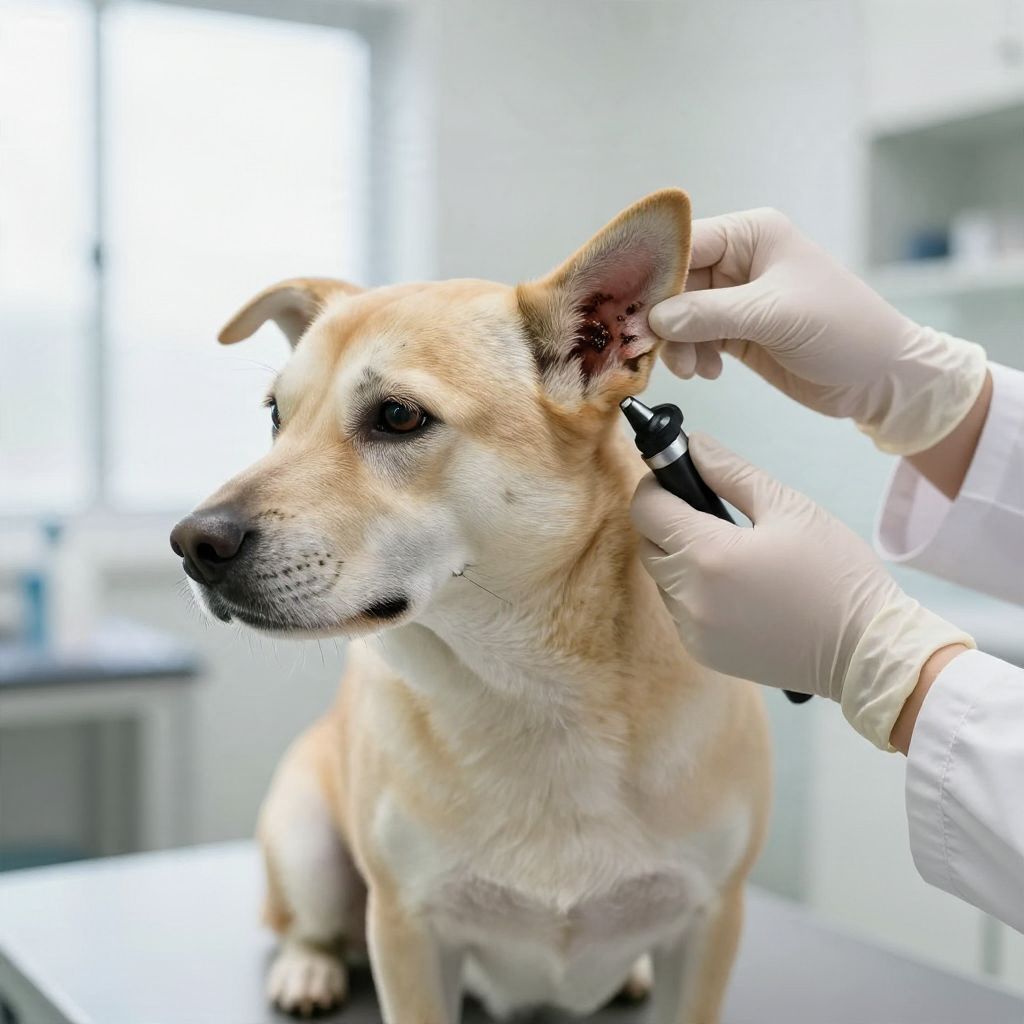
If you’re wondering what do dog ear mites look like, the short answer is that they are tiny, white to off-white parasites that usually look like moving specks, not something you can easily see with the naked eye. More often, you notice the signs they leave behind: dark debris, itching, head shaking, and irritated ears.
Because ear problems can look similar, it’s important to know what ear mites typically cause and when your dog needs a vet exam. Some ear issues are mild, but others can become painful or serious if they are not treated promptly.
What do dog ear mites look like?
Dog ear mites are microscopic, but if you look closely you may see tiny white, cream, or grayish specks moving in the ear canal or on dark debris. They often resemble moving dust. Most owners notice the symptoms first: intense itching, head shaking, and a crumbly, coffee-ground-like discharge.
How to tell ear mites from other ear problems
Ear mites are only one possible cause of ear irritation. Allergies, yeast infections, bacterial infections, foreign material, and ear injuries can cause similar signs, so appearance alone is not enough for a diagnosis.
Common signs that fit ear mites
- Frequent scratching at one or both ears
- Repeated head shaking or ear rubbing
- Dark brown or black crumbly debris
- Redness or inflammation inside the ear
- Strong discomfort when the ears are touched
- Sometimes a dry, crusty buildup around the ear edges
Signs that may point to something else
- Thick yellow, green, or smelly discharge
- Swelling of the ear flap
- One ear suddenly painful after outdoor activity
- All-over itching, paw licking, or skin redness
- Balance problems or a tilted head
Those signs can happen with infections, allergies, or more serious ear disease. A veterinarian can look inside the ear and identify the cause instead of guessing.
What ear mites look like under close inspection
If your vet examines the ear debris under a microscope, ear mites may appear as tiny oval-bodied parasites with short legs. They move quickly, which is why they are often easier to confirm in a clinic than at home.
At home, you may not see the mites themselves at all. Instead, you might see:
- Fine, dark debris that looks like ground pepper or coffee grounds
- White specks that seem to move when the ear is disturbed
- Crusty residue near the ear opening
- Inflamed skin from scratching
If you are trying to inspect your dog’s ears, use gentle light and avoid putting anything deep into the canal. Do not use cotton swabs inside the ear, because they can push debris deeper or injure the ear.
Why ear mites are hard to identify by sight alone
Many ear problems look alike from the outside. A dog with mites, yeast, bacteria, or allergies may all scratch and shake their head. Even the classic dark debris is not exclusive to mites.
That’s why a vet may use an otoscope, ear swab, or microscope slide. This helps confirm whether mites are present and whether there is also an infection or inflammation that needs treatment.
Which dogs are more likely to get ear mites?
Any dog can get ear mites, but risk can vary with exposure and household circumstances. Dogs that spend time around other pets, recently adopted dogs, and puppies may be more likely to encounter them because mites spread through close contact.
Individual factors matter too. Dogs with floppy ears, narrow ear canals, or a history of ear problems may be more prone to repeated irritation, though those traits do not guarantee mites. Age, immune health, grooming habits, and whether the dog lives with other pets can all affect risk.
Common situations that increase exposure
- Newly adopted dogs with an unknown health history
- Multi-pet homes where one pet has ear irritation
- Dogs that visit boarding, daycare, or grooming settings
- Puppies living with infected littermates or a mother dog
What to do if you think your dog has ear mites
If you suspect ear mites, the safest next step is a veterinary exam. The sooner the cause is identified, the sooner your dog can get relief and the less likely the problem is to worsen.
- Watch for scratching, head shaking, and discharge.
- Check both ears gently for redness, odor, and debris.
- Keep your dog from scratching the ears raw if possible.
- Arrange a vet visit for confirmation and treatment.
- Ask whether other pets in the home should be checked too.
If your dog is very uncomfortable, a vet visit is especially important. Ear mites can lead to secondary infection and inflammation if the ear is left untreated.
When ear mites become urgent
Some ear symptoms need prompt veterinary care because they may signal a more serious infection, injury, or neurologic problem. Do not wait if you notice any of the following:
- Severe pain when the ear is touched
- Blood, pus, or heavy foul-smelling discharge
- Head tilt, stumbling, or loss of balance
- Sudden swelling of the ear flap
- Marked lethargy, fever, or not eating
- Constant scratching that causes open wounds
These signs can mean the problem is more than ear mites, or that a secondary infection has developed. A veterinary exam is the safest choice.
How vets usually confirm ear mites
Veterinarians typically confirm ear mites by examining ear debris under a microscope. They may also look at the ear canal for inflammation, wax buildup, or signs of infection.
In some cases, your vet may recommend testing for bacteria or yeast too, because ear mites and infections can happen together. That matters because the treatment plan may need to address more than one issue.
Can you treat ear mites at home?
It is best not to try to diagnose or treat ear mites on your own without veterinary guidance. Some over-the-counter products are not appropriate for dogs, and using the wrong ear cleaner or medication can make the problem worse.
Home care can still help in safe, limited ways while you wait for the appointment:
- Prevent scratching with an e-collar if your vet recommends it
- Keep the ears dry
- Avoid ear flushing unless your vet has instructed you to do so
- Keep other pets from sharing close contact until the cause is known
Do not put oils, peroxide, alcohol, or human ear drops into your dog’s ears unless your veterinarian specifically tells you to. Those can irritate the ear or interfere with proper treatment.
How ear mites spread
Ear mites spread easily between animals through close contact. A dog can pick them up from another infected dog, cat, or sometimes from shared bedding and grooming environments.
Because they are contagious, a vet may recommend checking or treating other pets in the home, even if they do not seem itchy yet. That helps prevent the mites from cycling back and forth between animals.
After treatment: what improvement should look like
Once treatment starts, many dogs begin to itch less as the irritation settles down. The ear debris should gradually decrease, and your dog should shake their head less often.
Even if your dog seems better quickly, follow your vet’s instructions fully. Stopping treatment too soon can leave mites or inflammation behind and allow the problem to return.
Call your vet again if you notice
- Itching that does not improve
- Worsening redness or swelling
- New odor or discharge
- Signs of pain after treatment begins
- Symptoms in another pet at home
Helpful prevention tips
You cannot always prevent ear mites, but you can lower the chance of repeat exposure and catch problems early.
- Check your dog’s ears regularly during grooming
- Schedule vet care early if scratching starts
- Keep bedding and shared pet items clean
- Have new pets examined before mixing them closely with others
- Follow your vet’s advice if one pet in the home has mites
Regular ear checks are especially useful for dogs with recurring ear issues, but every dog benefits from early attention when the ears look red, dirty, or uncomfortable.
The bottom line
What do dog ear mites look like? They are tiny, usually white to off-white parasites that often look like moving specks, but most owners notice the dark, crumbly debris and intense itching they cause. Because many ear problems look similar, a vet exam is the best way to confirm the cause and treat it safely.
If you want to compare ear mites with other parasite signs, you may also find this guide helpful: what dog mites look like.