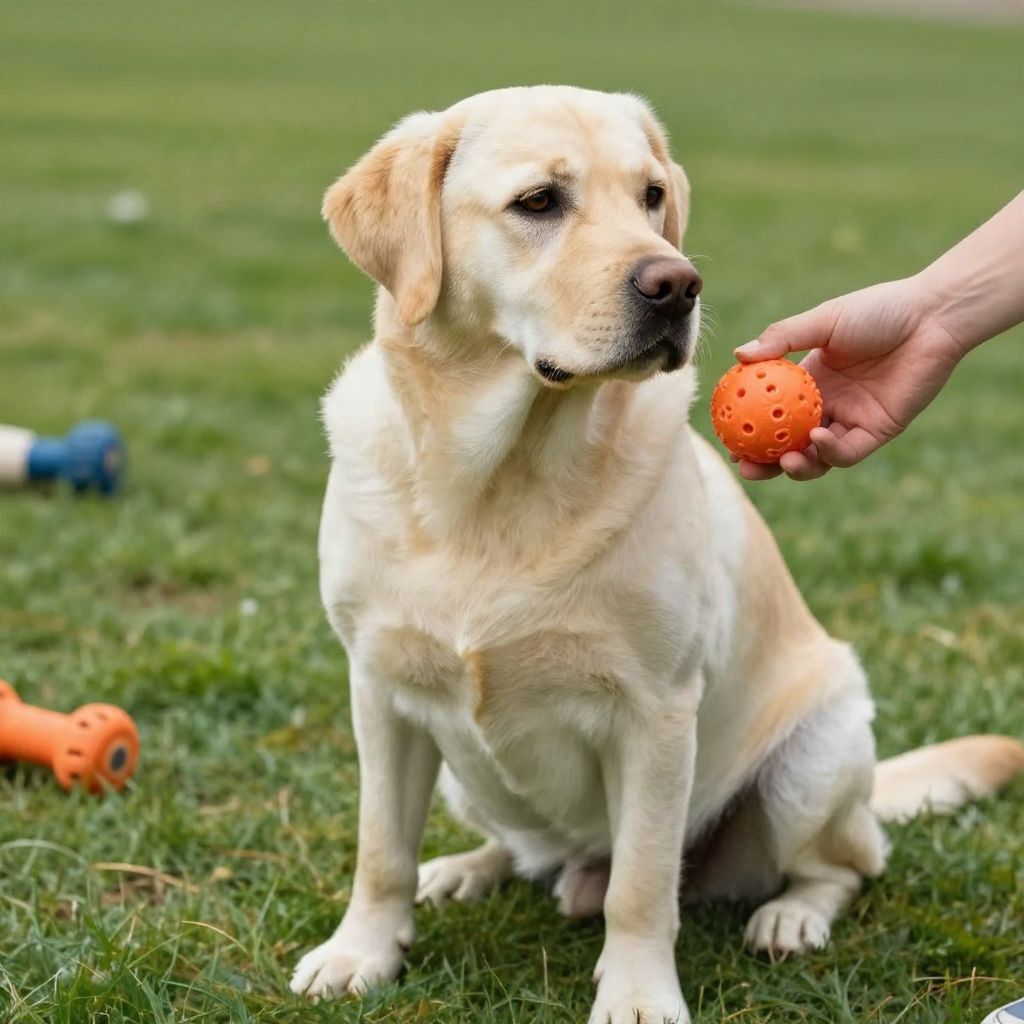
Can dogs see orange? Yes, but not the way humans do. Dogs have limited color vision, so orange usually appears closer to yellow or brownish tones rather than a bright, distinct orange.
That matters most when you choose toys, training gear, or safety items. Color alone is not enough for dogs to identify objects well, so contrast, size, scent, and movement often matter more than the exact shade.
Can Dogs See Orange?
Dogs can see orange, but they do not perceive it as a vivid human orange. Their color vision is limited, so orange often looks more like yellow, tan, or a muted brown. Dogs rely much more on brightness, contrast, motion, and smell than on color alone.
How Dog Vision Works
Dogs have fewer color-detecting cells in their eyes than people do. That means their world is less color-rich, but not colorless.
Most dogs see best in shades that resemble blue and yellow. Reds, greens, and many orange tones are harder for them to distinguish clearly.
What orange may look like to a dog
- A dull yellowish color
- A light brown or beige tone
- Something that blends into grass, dirt, or wood depending on lighting
This is why an orange toy may be easy for you to spot but still hard for your dog to pick out in a yard or park.
Why Orange Still Matters for Dog Toys and Gear
If you want your dog to find an object more easily, orange is not always the best choice. In many outdoor settings, it may not stand out enough against natural backgrounds.
For better visibility, choose items with strong contrast. A bright blue toy on green grass is often easier for dogs to notice than orange on dirt or leaves.
Better choices for visibility
- Blue toys for grass or outdoor play
- Yellow items when you need contrast
- Patterns or high-contrast designs instead of solid muted colors
- Large, easy-to-grab shapes for fetch and training
Does Breed Affect Whether Dogs See Orange?
Breed does not usually change the basic way dogs see color. Individual vision can vary, but the general pattern is similar across dogs.
What can differ is how a dog uses vision overall. Some dogs may be more visually focused, while others depend more on smell, hearing, or learned cues. Age, eye health, and temperament can also affect how well a dog notices objects.
Factors that can change visual performance
- Age, especially in senior dogs
- Cataracts or other eye disease
- Low light or glare
- Stress or distraction during training
- Previous training and object recognition
Practical Ways to Use This Information
Knowing that dogs do not see orange the same way you do can help you choose safer, more effective items for daily life.
- Pick high-contrast toys for fetch, tug, and retrieval games.
- Use scent and sound to help your dog locate toys or training markers.
- Test visibility in the real environment where your dog will use the item.
- Do not assume bright orange is automatically easy to see in grass, sand, or fall leaves.
- Watch your dog’s behavior to see which colors and objects they notice best.
Training tip
If your dog struggles to find a toy, make the game easier first. Use a larger toy, a quieter area, and simple movement. Reward success so your dog learns the task without frustration.
Safety Considerations for Orange Dog Items
Orange is often used for visibility in collars, leashes, vests, and gear for people. That can be helpful, but it does not guarantee your dog will notice the item well.
If you are using orange equipment for safety, think about human visibility and dog visibility separately. A bright orange leash may help other people see your dog, while a blue or high-contrast toy may help your dog find it faster.
When orange can still be useful
- For people to spot your dog in low light
- For marking gear that should be easy for you to find
- For seasonal or hunting-style visibility in human environments
Common Mistakes Dog Owners Make
One common mistake is assuming that a bright orange object will automatically be easy for a dog to see. In reality, the background and lighting often matter more than the color itself.
Another mistake is thinking color is the main way dogs identify objects. Most dogs use a mix of vision, smell, memory, and movement cues.
- Choosing toys based on human preference instead of dog visibility
- Expecting all dogs to respond the same way to color
- Ignoring eye problems when a dog seems to miss familiar objects
- Using only visual cues for training when scent or sound would help
When Poor Color Response May Signal an Eye Problem
Not noticing orange specifically is normal for dogs. But if your dog seems to miss objects they used to find easily, the issue may be more than color vision.
Changes in vision can happen with age or eye disease. A veterinary exam is important if you notice new behavior changes.
Warning signs to watch for
- Bumping into furniture or walls
- Reluctance to go into dim areas
- Cloudy, red, or irritated eyes
- Squinting or pawing at the eyes
- Sudden clumsiness or hesitation on stairs
- Difficulty finding food, toys, or doorways
Seek urgent veterinary care if vision changes happen suddenly, if the eye looks painful, or if your dog has an injured eye, marked redness, discharge, swelling, or sudden blindness. Eye emergencies should not wait.
How to Help a Dog With Limited Vision
If your dog has reduced vision, simple changes can make daily life easier and safer. The goal is to reduce confusion and help your dog use other senses confidently.
- Keep furniture and walking paths consistent
- Use verbal cues before touching or moving your dog
- Choose toys with scent, texture, or sound
- Use mats, gates, or barriers to block hazards
- Keep training sessions short and calm
If your dog is older, a veterinarian can help check for treatable causes of vision change and suggest ways to support comfort and safety at home.
What This Means for Training and Play
For fetch, scent games, and outdoor play, orange is not the best color to rely on if you want your dog to spot an object quickly. Use contrast, movement, and positive reinforcement instead.
Dogs usually do better when the task is easy to understand. Clear cues and predictable routines matter more than the exact color of the toy.
Good training choices
- Blue or yellow toys for better contrast
- Short, repeated practice sessions
- Reward-based learning
- Simple environments before adding distractions
Bottom Line
Can dogs see orange? Yes, but usually not as a bright, separate color the way people do. Orange often looks muted, so it is not always the best choice for toys or training items. If your dog has trouble seeing familiar objects, or if vision changes suddenly, ask your veterinarian promptly.
If you want to learn more, you may also find these related guides helpful: colors dogs can see and what colors dogs cannot see.