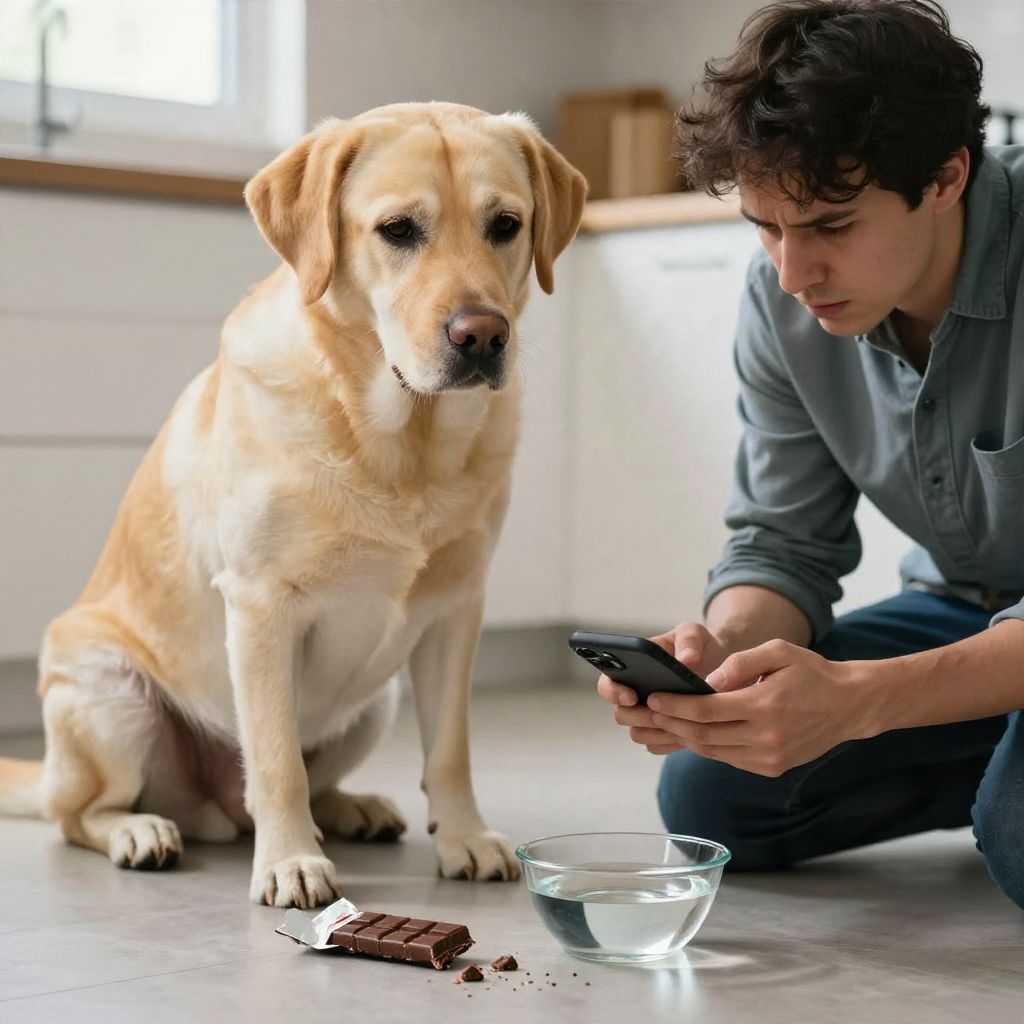
If your dog eats chocolate, act quickly and don’t rely on home remedies alone. Chocolate can be toxic to dogs, and the right response depends on the type of chocolate, how much was eaten, your dog’s size, and whether symptoms are already starting.
The safest first step is to contact your veterinarian or an animal poison helpline right away. Keep the packaging, note the amount and time eaten, and watch closely for warning signs such as vomiting, restlessness, rapid breathing, or tremors.
What To Do If Your Dog Eats Chocolate Home Remedies?
There is no safe home remedy that reliably treats chocolate poisoning in dogs. The best immediate action is to remove access, gather details about the chocolate, and call a veterinarian or pet poison expert for guidance. If your dog is showing symptoms, seek urgent veterinary care instead of trying to treat it at home.
Why Chocolate Is Dangerous for Dogs
Chocolate contains theobromine and caffeine, which dogs process much more slowly than people do. These compounds can affect the nervous system, heart, and digestive tract.
Different chocolates carry different risks. Dark chocolate, baking chocolate, and cocoa powder are generally more concerning than milk chocolate because they contain more theobromine.
What affects the level of risk
- Type of chocolate: darker products are usually more concentrated.
- Amount eaten: a small taste may be less serious than a large amount, but any ingestion matters.
- Your dog’s size: smaller dogs can be affected by less chocolate.
- Age and health: puppies, seniors, and dogs with heart disease or other conditions may be more vulnerable.
- Time since ingestion: early action can improve the outcome.
Immediate Steps to Take
Stay calm and move quickly. The goal is to get accurate information and professional advice as soon as possible.
- Remove any remaining chocolate so your dog cannot eat more.
- Check the wrapper or package for the type of chocolate and approximate amount.
- Estimate your dog’s weight and note the time the chocolate was eaten.
- Call your veterinarian, an emergency clinic, or a pet poison helpline right away.
- Follow the professional’s instructions exactly.
Do not try these unsafe “home remedies”
- Do not induce vomiting unless a veterinarian specifically tells you to do so.
- Do not give milk, oil, salt, alcohol, or other kitchen remedies.
- Do not assume your dog will “just be fine” because they seem normal at first.
- Do not wait for symptoms if you know your dog ate a meaningful amount of chocolate.
Signs Your Dog May Need Urgent Veterinary Care
Symptoms can begin within a few hours, but timing varies. If you notice any of the following, treat it as urgent.
- Vomiting or diarrhea
- Restlessness, pacing, or unusual agitation
- Rapid breathing or panting
- Fast heartbeat
- Tremors or muscle twitching
- Stiffness, weakness, or trouble walking
- Seizures
- Collapse
Emergency: If your dog has seizures, collapses, has trouble breathing, or seems unable to stand normally, go to an emergency veterinarian immediately.
What a Veterinarian May Recommend
A veterinarian may advise monitoring, treatment to reduce further absorption, or supportive care depending on the situation. The exact plan depends on the chocolate type, the amount, your dog’s weight, and whether symptoms are present.
In some cases, a vet may want you to come in quickly so they can assess your dog and decide whether treatment is needed. If your dog is already showing signs, do not delay care while trying to manage it at home.
Why Home Remedies Are Not a Good Substitute for Veterinary Advice
Chocolate poisoning is not something you can safely “flush out” with random home care. The risk is not just an upset stomach; it can involve the heart and nervous system.
Because the right response depends on several factors, a remedy that seems helpful for one dog could be useless or harmful for another. That is especially true for toy breeds, puppies, senior dogs, and dogs with existing medical problems.
Common Mistakes Dog Owners Make
- Waiting to see if symptoms appear before calling for help
- Guessing the amount eaten without checking the package
- Using internet advice meant for people, not dogs
- Assuming milk chocolate is harmless
- Forgetting that chocolate-flavored baked goods may also contain other risky ingredients, such as raisins or xylitol
Special Considerations for Puppies, Small Dogs, and Senior Dogs
Smaller dogs may be affected by a smaller amount of chocolate because the dose is relative to body weight. Puppies may also be more likely to get into food left within reach because of curiosity and a fast, opportunistic eating style.
Senior dogs or dogs with heart disease, seizures, pancreatitis, or other medical concerns may need more cautious evaluation. Even if the chocolate exposure seems minor, your veterinarian may want to assess them sooner.
How to Prevent Chocolate Accidents at Home
Prevention is the best long-term solution, especially around holidays, parties, and baking days when chocolate is more likely to be left out.
- Store chocolate in closed cabinets or high containers your dog cannot reach.
- Keep purses, backpacks, and gift bags off the floor.
- Teach family members and guests not to feed chocolate to dogs.
- Use secure trash cans, especially after baking or unwrapping candy.
- Supervise counters and tables when food is out.
When It May Be an Emergency Even If Your Dog Looks Fine
Some dogs can seem normal at first and still develop problems later. If you know your dog ate a large amount of chocolate, a concentrated chocolate product, or chocolate plus another risky ingredient, call a veterinarian right away even if there are no symptoms yet.
Early guidance matters because prompt treatment may be more effective than waiting until your dog becomes sick.
What to Tell the Vet or Poison Expert
Having the right details ready can save time and help the professional give better advice.
- Your dog’s weight
- The type of chocolate eaten
- The estimated amount eaten
- The time of ingestion
- Any symptoms you have noticed
- Any other foods or medications the dog may have eaten
Safe Next Steps After the Incident
After your dog is evaluated, follow the veterinarian’s instructions closely. If your dog is sent home for monitoring, keep them calm, observe for new symptoms, and call back if anything changes.
Once the emergency has passed, review how the access happened so you can prevent a repeat. A simple storage change or better supervision can make a big difference.
Conclusion
If your dog eats chocolate, skip the guesswork and call a veterinarian or pet poison expert right away. There is no reliable home remedy that replaces professional guidance, and urgent care is especially important if your dog is small, the chocolate was dark or concentrated, or symptoms are already starting.
For more related guidance, you may also find what to do if a dog eats chocolate and what happens when a dog eats chocolate helpful.