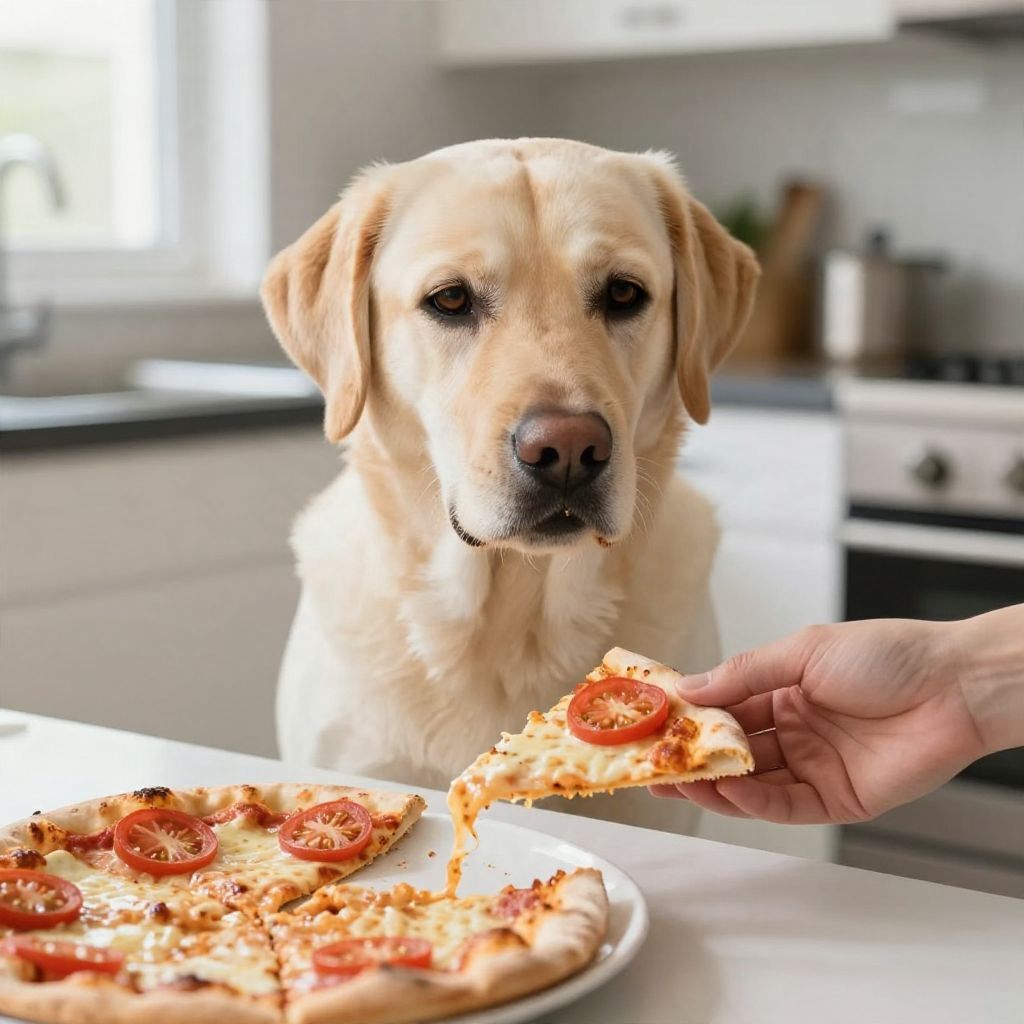
Can dogs have pizza? A tiny plain bite is usually not toxic, but pizza is not a good dog food. The crust, cheese, sauce, and toppings can upset your dog’s stomach, add too much fat and salt, or contain ingredients that are dangerous.
If your dog ate pizza, the right response depends on what was on it and how much was eaten. Plain crust is less concerning than pizza with onion, garlic, spicy meats, or lots of cheese, and some dogs are more sensitive than others.
Can Dogs Have Pizza?
Dogs should not regularly eat pizza. A small plain piece of crust is usually less risky than pizza with sauce, cheese, or toppings, but pizza is still high in fat, salt, and calories. If the slice contains onion, garlic, or certain meats, it may be unsafe and can require veterinary advice.
Why Pizza Is Not a Good Food for Dogs
Pizza is designed for people, not dogs. Even when it does not contain a toxic topping, it is often too rich for a dog’s digestive system.
Common pizza ingredients that can cause problems
- Cheese: Many dogs are lactose sensitive, and the fat content can trigger stomach upset or pancreatitis in susceptible dogs.
- Tomato sauce: Often seasoned with onion, garlic, salt, sugar, and spices that do not belong in a dog’s diet.
- Greasy meats: Pepperoni, sausage, bacon, and similar toppings can be very fatty and salty.
- Crust: Usually not toxic by itself, but it adds refined carbs and can still be hard on some dogs’ stomachs.
- Seasonings and extras: Chili flakes, stuffed crust fillings, and flavored oils can irritate the stomach.
Why some dogs react more strongly
Individual dogs vary. A small, healthy adult may tolerate a tiny plain bite without issue, while a puppy, senior dog, overweight dog, or dog with a history of pancreatitis, food sensitivity, or digestive disease may react badly to even a little pizza.
Which Pizza Ingredients Are Most Dangerous?
Some pizza toppings are more than “unhealthy” for dogs; they can be harmful. If your dog ate pizza with any of the ingredients below, contact your veterinarian for guidance.
- Onion or garlic: These are common in sauces, seasonings, and toppings and can damage red blood cells.
- Raisins or grapes: Sometimes found on specialty pizzas and can be dangerous for dogs.
- Large amounts of fatty meat: Can trigger vomiting, diarrhea, or pancreatitis.
- Very salty toppings: Can worsen thirst, stomach upset, and dehydration.
- Spicy ingredients: May cause drooling, vomiting, or intestinal irritation.
- Stuffed crust with cheese or processed fillings: Adds more fat and salt, increasing the risk of digestive upset.
What Happens If a Dog Eats Pizza?
Many dogs that eat a small amount of plain pizza only develop mild stomach upset, if anything. But some dogs become sick from the richness alone, and others may have a more serious reaction depending on the ingredients.
Possible short-term signs
- Vomiting
- Diarrhea
- Gas or bloating
- Drooling
- Restlessness
- Refusing food for a meal or two
Warning signs that need veterinary attention
- Repeated vomiting
- Severe or ongoing diarrhea
- Abdominal pain, hunched posture, or a tense belly
- Weakness, collapse, or marked lethargy
- Swollen abdomen or trouble breathing
- Blood in vomit or stool
- Any pizza containing onion, garlic, or another toxic ingredient
If your dog has trouble breathing, collapses, seems severely painful, or has a swollen belly, seek urgent veterinary care right away.
What to Do If Your Dog Ate Pizza
Stay calm and identify exactly what was eaten. The ingredients matter more than the fact that it was pizza.
- Check the crust, sauce, cheese, and toppings.
- Estimate how much your dog ate and how long ago it happened.
- Look for onion, garlic, spicy seasoning, fatty meats, mushrooms, or other risky toppings.
- Monitor your dog for vomiting, diarrhea, pain, or unusual behavior.
- Call your veterinarian if the pizza contained a toxic ingredient, if your dog ate a large amount, or if your dog has health problems.
Do not try to make your dog vomit unless a veterinarian specifically tells you to do so. That can be unsafe in some situations.
Is Plain Pizza Crust Safe for Dogs?
Plain crust is generally the least concerning part of pizza, but “less concerning” does not mean ideal. A tiny piece of plain crust is usually not harmful for a healthy dog, yet it still offers little nutritional value and can add unnecessary calories.
Be extra cautious if your dog:
- Has a sensitive stomach
- Is overweight
- Has diabetes or another metabolic condition
- Has a history of pancreatitis
- Is a puppy with a developing digestive system
Can Dogs Have Cheese Pizza?
Cheese pizza is more likely to cause stomach upset than plain crust because it is richer and often saltier. Some dogs tolerate a small amount, but others are sensitive to dairy or fat and may vomit or have diarrhea afterward.
If your dog is prone to digestive issues, cheese pizza is best avoided. Even if your dog seems fine after one bite, that does not mean pizza is a good treat to offer again.
Can Dogs Have Pizza Toppings?
Most common pizza toppings are not appropriate for dogs. Some are merely unhealthy, while others can be dangerous.
Generally best avoided
- Pepperoni
- Sausage
- Bacon
- Extra cheese
- Onions
- Garlic
- Hot peppers
- Spicy oils
What about vegetables?
Plain dog-safe vegetables are not the issue by themselves, but pizza vegetables are often mixed with oil, salt, garlic, or seasoning. If you want to share vegetables with your dog, offer them in plain, dog-safe form instead of on pizza.
How Much Pizza Is Too Much?
There is no universal safe amount because dogs differ in size, health, and sensitivity. A large dog may handle a small crust better than a toy breed, but even a bigger dog can get sick from a fatty or heavily seasoned slice.
As a general rule, the more toppings, cheese, and grease, the less appropriate the pizza is for your dog. A full slice is much more likely to cause trouble than a tiny bite.
What If Your Dog Keeps Begging for Pizza?
Begging does not mean your dog needs pizza. Dogs often want human food because it smells strong and is rewarding, not because it is healthy or necessary.
- Keep pizza out of reach on counters and tables.
- Do not reward begging with bites from your plate.
- Offer a dog-safe chew or toy during mealtimes.
- Use reward-based training to teach a “place” or “settle” cue.
- Feed your dog a complete, balanced diet on a regular schedule.
If your dog is intensely food-seeking or scavenges often, ask your veterinarian or a qualified trainer about management strategies that fit your dog’s age, breed tendencies, and home routine.
Healthier Alternatives to Pizza for Dogs
If you want to share a treat, choose something made for dogs or a plain whole-food option that fits your dog’s diet.
- Small pieces of plain cooked chicken
- Plain cooked turkey
- Carrot slices
- Green beans
- Dog treats with a simple ingredient list
- Frozen dog-safe enrichment treats approved for your dog’s needs
Keep treats to a modest part of your dog’s daily intake so you do not unbalance their diet or contribute to weight gain.
When to Call the Veterinarian
Contact your veterinarian if your dog ate pizza with risky ingredients, ate a large amount, or has any concerning symptoms. This is especially important for puppies, seniors, small dogs, and dogs with existing medical conditions.
Seek prompt advice if your dog has:
- Vomiting more than once
- Diarrhea lasting longer than a day
- Signs of abdominal pain
- Lethargy or weakness
- A known history of pancreatitis or food intolerance
- Possible exposure to onion, garlic, or other toxic toppings
Bottom Line
Can dogs have pizza? A tiny plain bite is usually not an emergency, but pizza is not a safe or healthy regular treat. The biggest concerns are onion, garlic, fatty meats, cheese, salt, and spices. If your dog ate pizza and you are unsure about the ingredients, call your veterinarian.
If you want more guidance on human foods and dogs, you may also find these articles helpful: can dogs eat pizza and can dogs eat Cheez-Its.