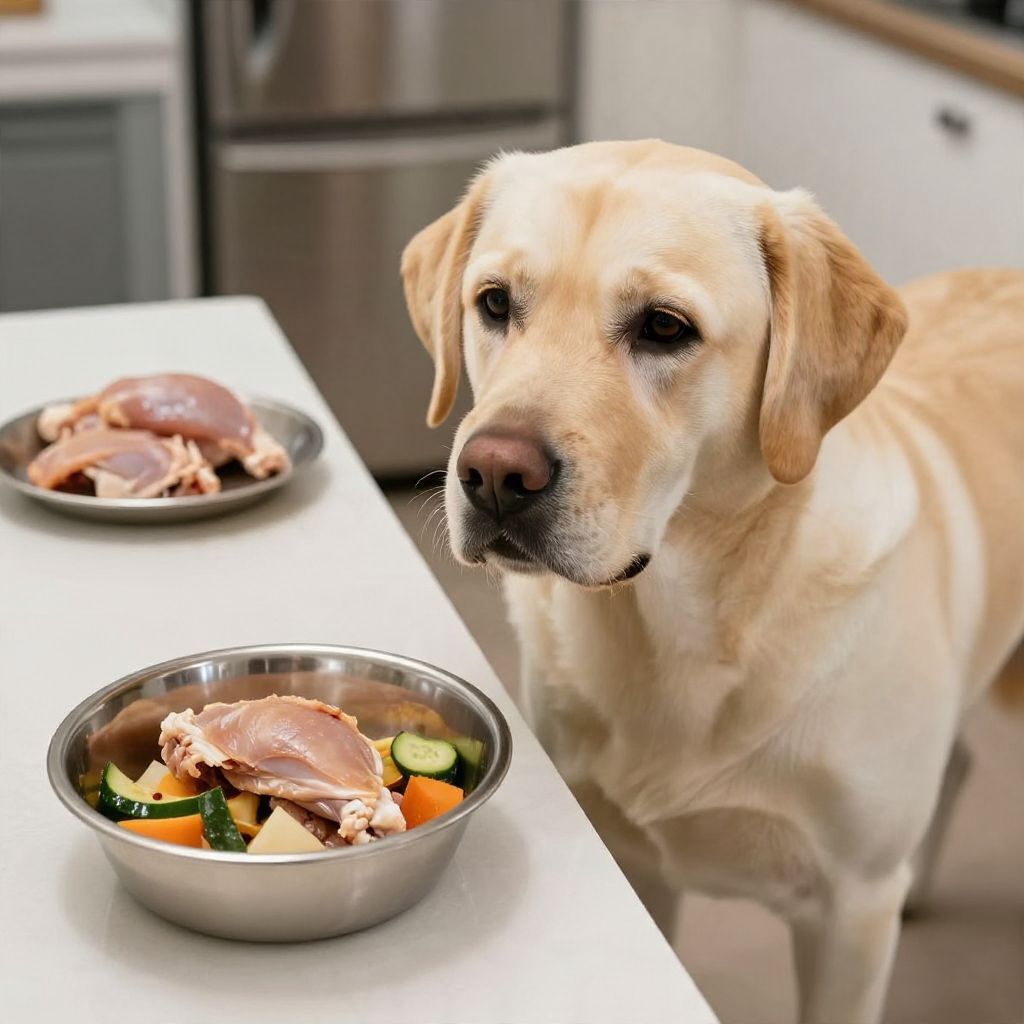
Is raw chicken good for dogs? It can be a protein source, but raw chicken also carries real risks from bacteria and parasites. Whether it is appropriate depends on your dog’s age, health, diet, and how the food is handled.
For most dogs, cooked chicken is the safer choice. If you are considering raw chicken, it is important to understand the food-safety risks, the signs of illness to watch for, and when to call your veterinarian.
Is raw chicken good for dogs?
Raw chicken is not automatically “good” for dogs just because dogs can digest meat. It may fit some raw-feeding plans, but it also can expose your dog and your household to harmful bacteria. For most dogs, especially puppies, seniors, and dogs with health problems, cooked chicken is the safer option.
Why raw chicken can be risky
Chicken can carry bacteria such as Salmonella and Campylobacter, even when it looks and smells normal. Dogs may sometimes handle contaminated food without obvious illness, but they can still shed germs and spread them to people or other pets.
Common risks to know
- Foodborne illness: vomiting, diarrhea, fever, lethargy, and dehydration can occur.
- Household contamination: raw meat juices can spread germs to bowls, counters, floors, and hands.
- Bone hazards: raw chicken bones can still cause choking, mouth injuries, or digestive obstruction.
- Diet imbalance: chicken alone is not a complete diet for long-term feeding.
When raw chicken is especially not a good idea
Some dogs are more vulnerable to infection or complications, so raw chicken is a poor choice for them. If your dog falls into one of these groups, talk with your veterinarian before making any diet changes.
- Puppies, whose immune systems are still developing
- Senior dogs, especially those with weaker immunity or chronic disease
- Dogs with cancer, kidney disease, liver disease, or diabetes
- Dogs taking immune-suppressing medications
- Pregnant or nursing dogs
- Dogs with a history of pancreatitis, GI sensitivity, or food allergies
If you still want to feed raw chicken
Some owners choose raw feeding, but it should be done carefully and with veterinary guidance. The biggest mistake is assuming “raw” is automatically natural, safe, or nutritionally complete.
Safer handling basics
- Buy chicken from a reputable source and keep it refrigerated or frozen until use.
- Wash hands, bowls, utensils, and surfaces after contact with raw meat.
- Keep raw chicken away from children, other pets, and human food.
- Feed only the portion your veterinarian or a board-certified veterinary nutritionist recommends.
- Discard leftovers promptly so food does not sit out and spoil.
Even with careful handling, raw meat can still contain pathogens. Good kitchen hygiene lowers risk, but it does not remove it completely.
Can dogs get sick from raw chicken?
Yes. Some dogs show no symptoms, while others develop gastrointestinal illness or more serious infection. The risk is not the same for every dog, and the amount eaten, the dog’s health, and the contamination level all matter.
Warning signs to watch for
- Vomiting
- Loose stool or diarrhea
- Loss of appetite
- Unusual tiredness
- Fever or shivering
- Abdominal pain or a hunched posture
- Signs of dehydration, such as dry gums or weakness
Call your veterinarian if symptoms are mild but persistent. Seek urgent care if your dog cannot keep water down, seems weak, has bloody diarrhea, or appears painful.
What to do if your dog already ate raw chicken
If your dog ate raw chicken once, do not panic. Many dogs will be fine, but you should monitor closely for illness and contact your veterinarian if your dog is high risk or if the chicken may have been spoiled, heavily seasoned, or included bones.
Take these steps
- Remove access to the remaining food.
- Check whether bones, packaging, or seasoning were involved.
- Watch for vomiting, diarrhea, coughing, gagging, or discomfort.
- Contact your vet promptly if your dog is a puppy, senior, or medically fragile.
Get emergency veterinary help right away if your dog is choking, has trouble breathing, collapses, has repeated vomiting, shows a swollen abdomen, or cannot pass stool after eating bones.
Raw chicken versus cooked chicken for dogs
Cooked plain chicken is usually safer because heat reduces the bacterial risk. It is often used as a temporary bland food or as a topper in small amounts, but it should still be plain and unseasoned.
What to avoid with cooked chicken
- Onion or garlic seasoning
- Butter, heavy oils, or salty marinades
- Cooked bones, which can splinter
- Large portions that unbalance the diet
If your dog has digestive upset, your veterinarian may recommend a specific short-term feeding plan rather than home improvisation. Do not assume chicken alone is the right fix for every stomach problem.
Is raw chicken skin, necks, or bones okay?
These parts are not automatically safe. Raw skin is fatty and may upset some dogs’ stomachs, while raw necks and bones can still pose choking or blockage risks. Small dogs, fast eaters, and dogs that gulp food are often at higher risk of swallowing pieces whole.
If you are considering edible bones, ask your veterinarian first. The right answer depends on your dog’s chewing style, dental health, body size, and any history of gastrointestinal problems.
How to decide what is best for your dog
The best diet choice is the one that is nutritionally complete, safe, and realistic for your household. Raw chicken may seem simple, but safe raw feeding requires more than just opening a package.
Ask yourself these questions
- Is my dog healthy enough for any raw diet?
- Can I safely store, prepare, and clean up raw meat every time?
- Is the overall diet complete and balanced, not just “meat-based”?
- Have I discussed this with my veterinarian?
If the answer to any of these is no, cooked chicken or a complete commercial diet is usually the better option.
When to call the veterinarian
Contact your veterinarian if you are unsure whether raw chicken was appropriate for your dog, especially if your dog has a medical condition or is showing digestive signs. A vet can help you judge risk based on your dog’s age, health, and what was eaten.
Call urgently if your dog has severe vomiting, bloody diarrhea, marked lethargy, breathing trouble, choking, abdominal swelling, or suspected bone obstruction. Those signs should not be monitored at home.
Bottom line
Raw chicken is not the safest choice for most dogs. While some dogs may eat it without obvious problems, the risk of bacterial contamination, illness, and bone-related injury is real. For most families, plain cooked chicken is the safer option, and any raw-feeding plan should be discussed with a veterinarian.
If you are comparing other raw-food questions, you may also find it helpful to read about can dogs eat raw steak and can dogs eat raw fish for more food-safety guidance.