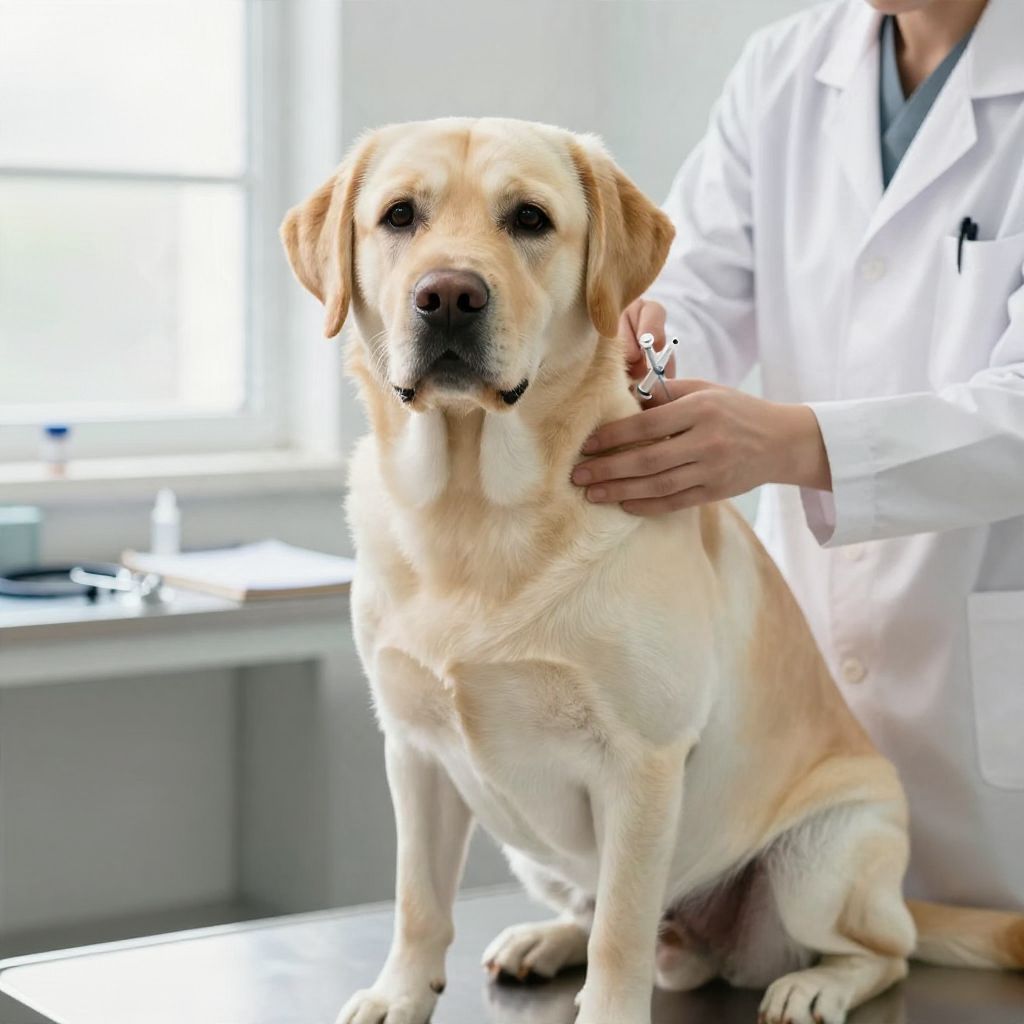
If you’re wondering how often dogs get rabies shots, the answer depends on local law and the vaccine used. Many dogs get their first rabies vaccine as puppies, then a booster one year later, followed by boosters every one or three years.
Your veterinarian can tell you the exact schedule for your dog. Rabies vaccination is important for your dog’s health, your family’s safety, and legal compliance, so it should never be delayed without veterinary guidance.
How often do dogs get rabies shots?
Most dogs receive a rabies shot as a puppy, a booster 1 year later, and then repeat vaccination every 1 or 3 years depending on the product used and local regulations. Your dog’s age, vaccine history, and local laws determine the exact timing, so always confirm the schedule with your veterinarian.
Why rabies vaccination matters
Rabies is a serious, fatal disease that can affect dogs and people. Vaccination is the main way to prevent it, and it also helps protect your dog if they are exposed to wildlife or an unknown animal.
In many places, rabies vaccination is also required by law. Proof of vaccination may be needed for licensing, boarding, grooming, daycare, travel, or emergency care.
Typical rabies shot schedule for dogs
The exact schedule can vary, but this is the common pattern veterinarians follow:
- Puppy: first rabies vaccine at the age required by local law, often around 12 to 16 weeks.
- Booster: one year after the first rabies shot.
- Ongoing boosters: every 1 year or every 3 years, depending on the vaccine label and local rules.
If your dog missed a booster, do not guess about the next step. Call your veterinarian, because some areas treat overdue rabies vaccines differently for legal and medical reasons.
One-year vs. three-year rabies vaccines
Some rabies vaccines are approved for annual use, while others are approved for three-year use after the initial booster. The label on the vaccine and your local regulations both matter.
Even if a vaccine is approved for three years, your area may still require earlier documentation or a specific schedule for licensing. Your vet clinic can help you stay compliant.
What affects how often your dog needs rabies shots?
Several factors can change the timing, including where you live and your dog’s vaccination history. Breed alone does not determine the schedule, although individual dogs may have different health needs that affect how vaccines are planned.
- Local law: some regions require annual rabies vaccination, while others allow three-year intervals.
- Age: puppies need their first shot at the legally appropriate age.
- Previous vaccination status: overdue or unknown history may require a different plan.
- Health status: illness, immune problems, or certain medical treatments may affect timing.
- Travel or boarding needs: facilities may require proof of current rabies vaccination.
If your dog has a chronic condition or is taking medication, ask your veterinarian whether any timing adjustments are needed. Do not skip rabies protection unless a veterinarian specifically advises otherwise.
What to expect at the appointment
Rabies vaccination is usually a quick part of a routine veterinary visit. Your vet may review your dog’s history, perform an exam, and give the vaccine in a standard injection site.
After the shot, most dogs go home the same day. Mild soreness or brief tiredness can happen, but severe reactions are not normal.
Common mild side effects
- Temporary sleepiness
- Mild soreness at the injection site
- Reduced appetite for a short time
- Small swelling where the shot was given
These mild effects usually resolve on their own. If they last more than a day or seem to worsen, contact your veterinarian.
When to call a vet right away
Although serious vaccine reactions are uncommon, you should treat certain signs as urgent. Seek immediate veterinary help if your dog has trouble breathing, facial swelling, repeated vomiting, collapse, severe weakness, or hives after a vaccine.
Also call promptly if your dog seems very unwell after vaccination, has a high fever, cannot stand, or develops a rapidly enlarging lump at the injection site. If you are unsure, it is safer to ask your vet right away.
What if your dog is overdue for a rabies shot?
If your dog is late for a booster, contact your veterinarian as soon as possible. In some places, being overdue can affect whether your dog is considered currently vaccinated, which may matter for licensing or after an animal bite.
- Check your dog’s rabies certificate or records.
- Call your veterinarian to confirm what is needed next.
- Schedule the vaccine promptly.
- Ask whether your local rules require any special documentation.
Do not assume your dog can simply “pick up where they left off.” The correct plan depends on how long they are overdue and what the local regulations require.
Puppies, adult dogs, and senior dogs
Age affects timing, but every life stage still needs rabies protection. Puppies need their first vaccine at the legally allowed age, while adult dogs need boosters on schedule. Senior dogs usually still need rabies vaccination unless a veterinarian has a medical reason to change the plan.
Puppies
Puppies are especially likely to miss appointments if their care schedule is not organized. Keep track of the first rabies vaccine and the one-year booster, since those are key milestones.
Adult dogs
Adult dogs often do well with routine annual wellness visits, which makes it easier to keep rabies boosters on time. If your dog is nervous at the clinic, ask about low-stress handling strategies.
Senior dogs
Older dogs may have arthritis, heart disease, kidney disease, or other issues that make vet visits more complicated. That does not automatically mean they should skip rabies vaccination, but it does mean your veterinarian should review the plan carefully.
How to keep rabies vaccination on track
Simple organization helps you avoid missed boosters and last-minute stress. A little planning can also make it easier to keep your dog’s records current for travel, boarding, or licensing.
- Save the rabies certificate in a safe place.
- Set calendar reminders before the booster is due.
- Ask your clinic to note the next due date in your dog’s record.
- Keep your contact information updated with the veterinary office.
- Bring records to boarding, daycare, or grooming appointments if requested.
Common mistakes to avoid
Many rabies vaccination problems are preventable. Avoid these common errors so your dog stays protected and your paperwork stays valid.
- Waiting until the last minute to book the booster
- Assuming all rabies vaccines last the same amount of time
- Ignoring local legal requirements
- Misplacing the rabies certificate
- Skipping the vaccine because your dog rarely leaves home
Even indoor dogs can be exposed if a bat or other wildlife enters the home, so indoor living does not eliminate rabies risk.
When to ask your veterinarian for personalized advice
Talk to your veterinarian if your dog has a history of vaccine reactions, immune disease, cancer treatment, or another medical condition that may affect vaccination timing. You should also ask for guidance if your dog’s records are incomplete or if you recently moved to a new state or country.
If your dog was bitten by another animal or had possible exposure to wildlife, contact a veterinarian immediately. Rabies exposure is an urgent matter, and waiting is not safe.
Bottom line
How often dogs get rabies shots usually comes down to an initial puppy vaccine, a booster one year later, and then boosters every 1 or 3 years depending on the vaccine and local law. Keep your dog’s records current, and ask your veterinarian if you are unsure about timing.
If you want more background on puppy vaccine timing, you may also find when puppies get shots and what shots puppies need helpful for planning your dog’s early care.