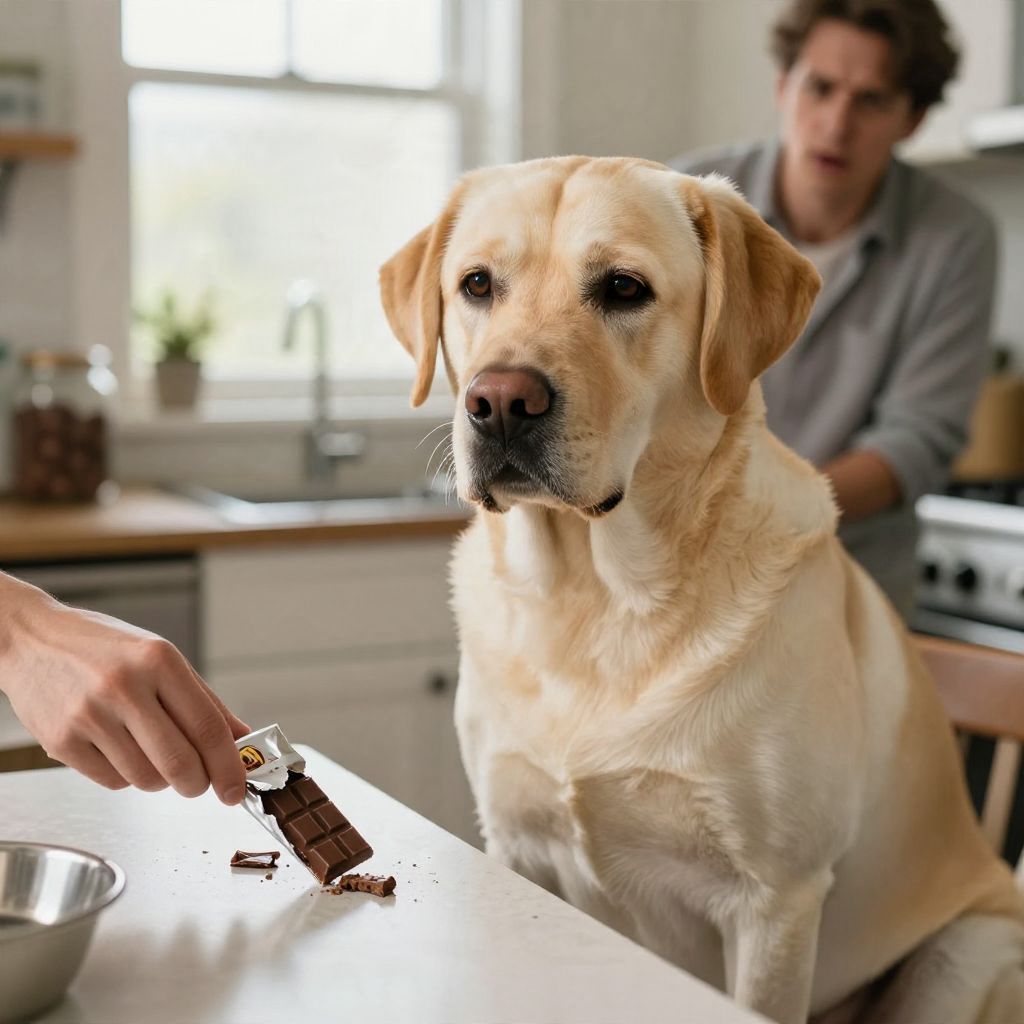
If your dog eats chocolate, treat it as a potential poisoning and act quickly. Chocolate contains theobromine and caffeine, which dogs process slowly, so even a small amount can cause illness in some dogs.
What happens next depends on the type of chocolate, how much was eaten, and your dog’s size, age, and health. Some dogs only develop mild stomach upset, while others can have serious signs that need urgent veterinary care.
What happens when a dog eats chocolate?
Chocolate can cause vomiting, diarrhea, restlessness, rapid heart rate, tremors, and, in severe cases, seizures or collapse. Darker chocolate and baking chocolate are more dangerous than milk chocolate, and smaller dogs are at higher risk from the same amount. If you are unsure, call your veterinarian or a pet poison helpline right away.
Why chocolate is dangerous for dogs
Chocolate contains methylxanthines, mainly theobromine and caffeine. Dogs are more sensitive to these compounds than people, and their bodies clear them more slowly.
The risk is not the same for every dog. A large dog may tolerate a small accidental bite better than a toy breed, but no dog should be assumed safe after eating chocolate.
Chocolate types that are more concerning
- Baking chocolate and cocoa powder
- Dark chocolate
- Semisweet chocolate
- Milk chocolate, which is still risky in enough quantity
- White chocolate, which has far less theobromine but can still upset the stomach and is not a safe treat
Signs your dog may show after eating chocolate
Symptoms can begin within a few hours, but timing varies. Some dogs only get mild digestive upset, while others develop more serious nervous system or heart-related signs.
- Vomiting
- Diarrhea
- Increased thirst
- Restlessness or hyperactivity
- Panting
- Fast heart rate
- Muscle tremors
- Wobbliness
- Seizures
Emergency warning signs
Get urgent veterinary help immediately if your dog has seizures, collapse, severe tremors, trouble breathing, a racing heartbeat, or seems unable to stand normally. These are not symptoms to watch at home.
What you should do right away
Do not wait for symptoms to appear if you know your dog ate chocolate. Quick action can make a big difference, especially if the chocolate was dark or your dog is small.
- Remove any remaining chocolate so your dog cannot eat more.
- Check the package for the type of chocolate and the amount missing.
- Estimate your dog’s weight and note the time of ingestion.
- Call your veterinarian, an emergency clinic, or a pet poison expert for guidance.
- Follow their instructions exactly.
Do not try to make your dog vomit unless a veterinarian specifically tells you to do so. Some cases are not appropriate for at-home vomiting, and incorrect attempts can cause harm.
What the vet may do
Your veterinarian will consider the chocolate type, amount eaten, your dog’s size, and any symptoms already present. Treatment is often most effective when started early.
Depending on the situation, the vet may recommend monitoring, inducing vomiting in a controlled setting, giving activated charcoal, or providing supportive care if symptoms are already developing.
Why timing matters
Chocolate is easier to manage before it is fully absorbed. Once signs like tremors or seizures begin, treatment becomes more urgent and may require hospitalization.
How much chocolate is too much?
There is no single safe amount for every dog. Risk varies with the chocolate’s concentration, your dog’s body weight, and individual sensitivity.
Because of that variation, it is safer to ask a professional rather than guess. A small candy bar may be a minor issue for one dog and a serious concern for another.
Common mistakes to avoid
- Waiting to see if symptoms develop
- Assuming white chocolate is harmless
- Forgetting that wrappers, raisins, nuts, or xylitol-containing candy may also be dangerous
- Giving home remedies without veterinary advice
- Assuming a big dog is always safe after eating a lot of chocolate
Special considerations for puppies, seniors, and dogs with health issues
Puppies may be more vulnerable because of their smaller size and curiosity. Senior dogs and dogs with heart disease, seizures, or other medical problems may also be at greater risk from chocolate exposure.
If your dog has an existing health condition, contact your veterinarian promptly even if the amount eaten seems small.
How to prevent chocolate accidents
Prevention is the best protection, especially around holidays, parties, and baking projects.
- Store chocolate in closed cabinets or high containers
- Keep purses, gift bags, and backpacks out of reach
- Teach children not to share candy with dogs
- Use trash cans with secure lids
- Supervise your dog around dessert tables and counters
If your dog already seems fine
Even if your dog looks normal, that does not always mean the chocolate was harmless. Some signs take time to appear, and early veterinary advice is still the safest choice.
Keep your dog calm, avoid extra exercise, and monitor for vomiting, restlessness, rapid breathing, or unusual behavior while you wait for professional guidance.
When to call a veterinarian immediately
Call right away if your dog ate dark chocolate, baking chocolate, cocoa powder, a large amount of any chocolate, or if you are unsure how much was eaten. Also call immediately if your dog is a puppy, very small, elderly, or medically fragile.
If your dog has any emergency signs, go to the nearest veterinary clinic without delay. Chocolate poisoning can worsen quickly, and fast treatment gives your dog the best chance of recovery.
For more help with related concerns, you may also find it useful to read what to do if your dog eats chocolate and whether white chocolate is bad for dogs.
If your dog eats chocolate, contact a veterinarian or pet poison expert now, especially if the chocolate was dark or your dog is small. Acting quickly is the safest step and can help prevent a mild accident from becoming a medical emergency.