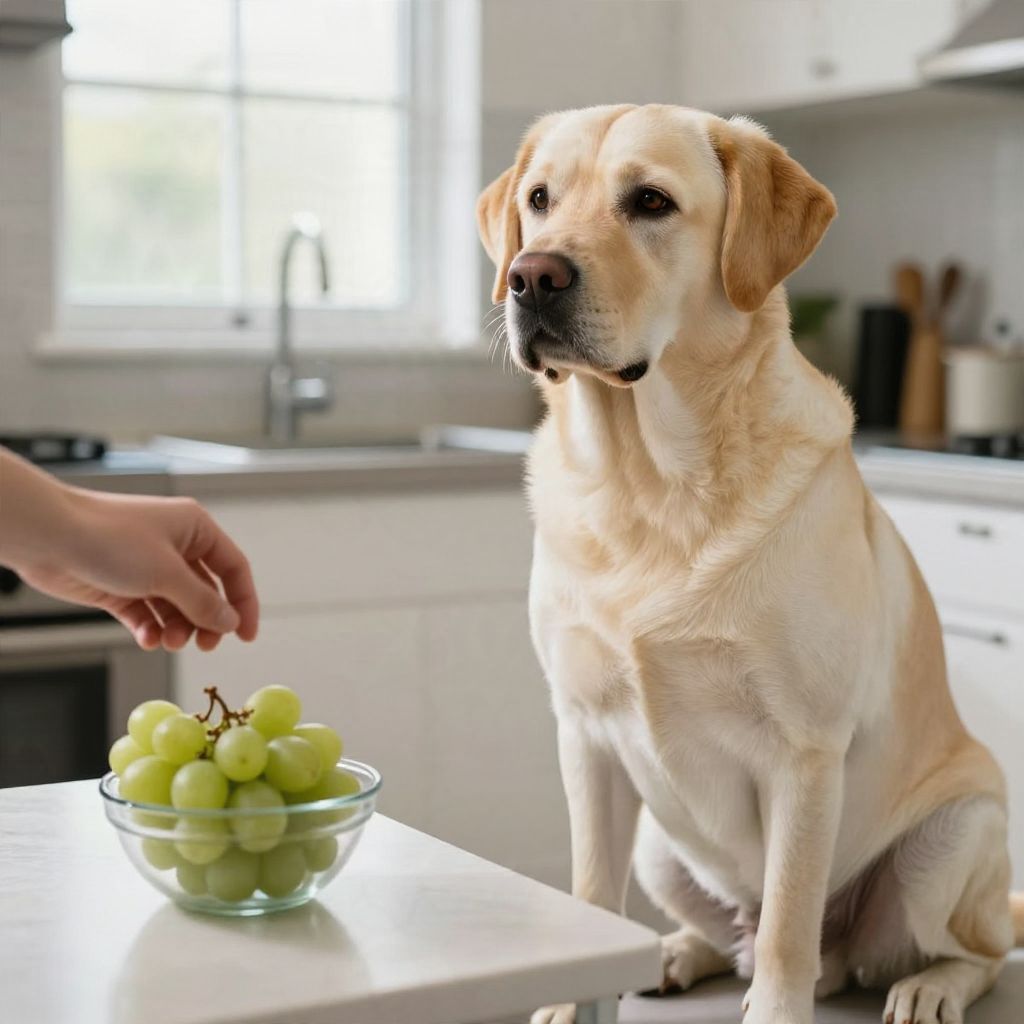
If your dog ate grapes, the safest answer is: none. Grapes are considered toxic to dogs, and even a small amount can cause serious illness in some dogs. The exact amount that will make a dog sick is not predictable, so it is best to treat every grape ingestion as a potential emergency.
What happens next depends on how many grapes were eaten, your dog’s size, and how long ago it happened. When in doubt, call your veterinarian or an emergency clinic right away.
How Many Grapes Can A Dog Eat?
None is the safe amount. There is no known “safe” number of grapes for dogs because grape toxicity is unpredictable. Some dogs may become very ill after eating only a few grapes, while others may show no immediate signs. If your dog ate any grapes or raisins, contact a veterinarian promptly for guidance.
Why Grapes Are Dangerous for Dogs
Grapes and raisins are widely recognized as unsafe for dogs, but the exact toxic substance has not been fully identified. Because of that uncertainty, veterinarians do not rely on a “safe dose” threshold.
The risk can vary from dog to dog. Factors like body size, overall health, and whether the fruit was fresh, dried, or mixed into baked goods may affect how serious the situation becomes, but none of these factors make grapes safe.
Fresh grapes, raisins, and grape-containing foods
- Fresh grapes: unsafe even in small amounts.
- Raisins: also unsafe, and often more concentrated because they are dried.
- Foods with grapes or raisins: trail mix, baked goods, cereals, granola bars, and some salads can all be risky.
What To Do If Your Dog Ate Grapes
Act quickly. If the ingestion was recent, your veterinarian may recommend bringing your dog in for treatment right away. Do not wait for symptoms to appear, because early care can matter a lot with toxic exposures.
- Remove any remaining grapes or grape-containing food.
- Call your veterinarian or an emergency vet clinic immediately.
- Tell them how many grapes may have been eaten, when it happened, and your dog’s approximate weight.
- Follow their instructions exactly.
Do not try to make your dog vomit unless a veterinarian specifically tells you to do so. Some home methods can be harmful, and the right response depends on timing and your dog’s condition.
Signs Of Grape Poisoning In Dogs
Symptoms may start within hours, but they can also be delayed. A dog may seem normal at first and still develop serious illness later, so the absence of symptoms does not mean the risk is gone.
Common warning signs
- Vomiting
- Diarrhea
- Lethargy or unusual tiredness
- Loss of appetite
- Abdominal discomfort
- Increased thirst or changes in urination
Emergency red flags
- Repeated vomiting
- No urine or very little urine
- Weakness, collapse, or severe lethargy
- Trembling or signs of severe distress
- Any worsening symptoms after grape ingestion
If you notice any of these signs, seek urgent veterinary care immediately.
Does The Number Of Grapes Matter?
The number eaten matters for risk assessment, but it does not create a safe cutoff. A small dog may be at greater risk from a few grapes than a larger dog, yet large dogs can also become seriously ill. Because individual sensitivity varies, veterinarians treat grape ingestion as a concern regardless of size.
If you know the approximate number eaten, share that information with the clinic. It helps them decide whether your dog needs decontamination, monitoring, or additional treatment.
What About Puppies, Senior Dogs, And Dogs With Health Issues?
Age and health status can affect how well a dog tolerates illness, but they do not make grapes safe for any dog. Puppies may be more vulnerable because they are smaller and can dehydrate quickly. Senior dogs and dogs with kidney disease, diabetes, or other medical issues may also have a harder time recovering.
If your dog is very young, elderly, already sick, or takes regular medication, call a veterinarian even more quickly after grape exposure.
Why You Should Not “Wait And Watch”
Some toxic exposures can be monitored at home, but grapes are not one of them. Delaying care can allow dehydration or kidney injury to progress before treatment begins. Early veterinary intervention is the safest approach.
Even if your dog seems normal, you should still call. A vet can help you decide whether your dog needs immediate treatment or close observation, and that decision should be based on your dog’s specific situation.
How Veterinarians May Respond
The exact treatment plan depends on timing, amount eaten, and your dog’s condition. A veterinarian may recommend bringing your dog in for evaluation, and they may use tests or monitoring to check for complications.
- They may assess whether the stomach should be emptied if the ingestion was recent.
- They may recommend fluids or observation.
- They may monitor kidney function if needed.
Do not attempt to duplicate veterinary treatment at home. Professional care is the safest option when grapes are involved.
Common Mistakes To Avoid
- Assuming “just one or two” is harmless. There is no proven safe amount.
- Waiting for symptoms. Treatment is more effective when started early.
- Using home remedies. Some can make the situation worse.
- Forgetting hidden sources. Raisins in baked goods and trail mix can be easy to miss.
- Ignoring a small dog’s exposure. Smaller dogs can be at risk from fewer grapes.
How To Prevent Grape Accidents
Prevention is the best strategy because grape toxicity is unpredictable and can become an emergency quickly. A few simple habits can reduce the chance of accidental ingestion.
- Keep grapes and raisins out of reach on counters, tables, and bags.
- Store trail mix, baked goods, and snack foods securely.
- Remind children and guests not to share grapes with your dog.
- Clean up dropped fruit right away.
- Use dog-safe treats instead of human snacks.
Dog-Safe Treat Alternatives
If you want to give your dog a healthy snack, choose foods that are known to be safe for dogs in appropriate amounts. Treats should still be limited so they do not replace a balanced diet.
- Small pieces of plain cooked carrot
- Plain green beans
- Small apple pieces without seeds or core
- Dog treats made for canine nutrition
Always introduce new foods slowly and avoid anything seasoned, sugary, or heavily processed.
When To Call A Vet Right Away
Call a veterinarian immediately if your dog ate any grapes or raisins, especially if the amount is unknown. Seek urgent care without delay if your dog is vomiting, acting weak, refusing food, or urinating less than usual.
If you are unsure whether the food contained grapes or raisins, treat it as a possible exposure and ask for veterinary advice right away.
In short, how many grapes can a dog eat? None is the safe answer. If your dog has eaten grapes or raisins, contact your veterinarian promptly and follow their instructions. For more background, you may also find can dogs eat grapes and can dogs have green grapes helpful.