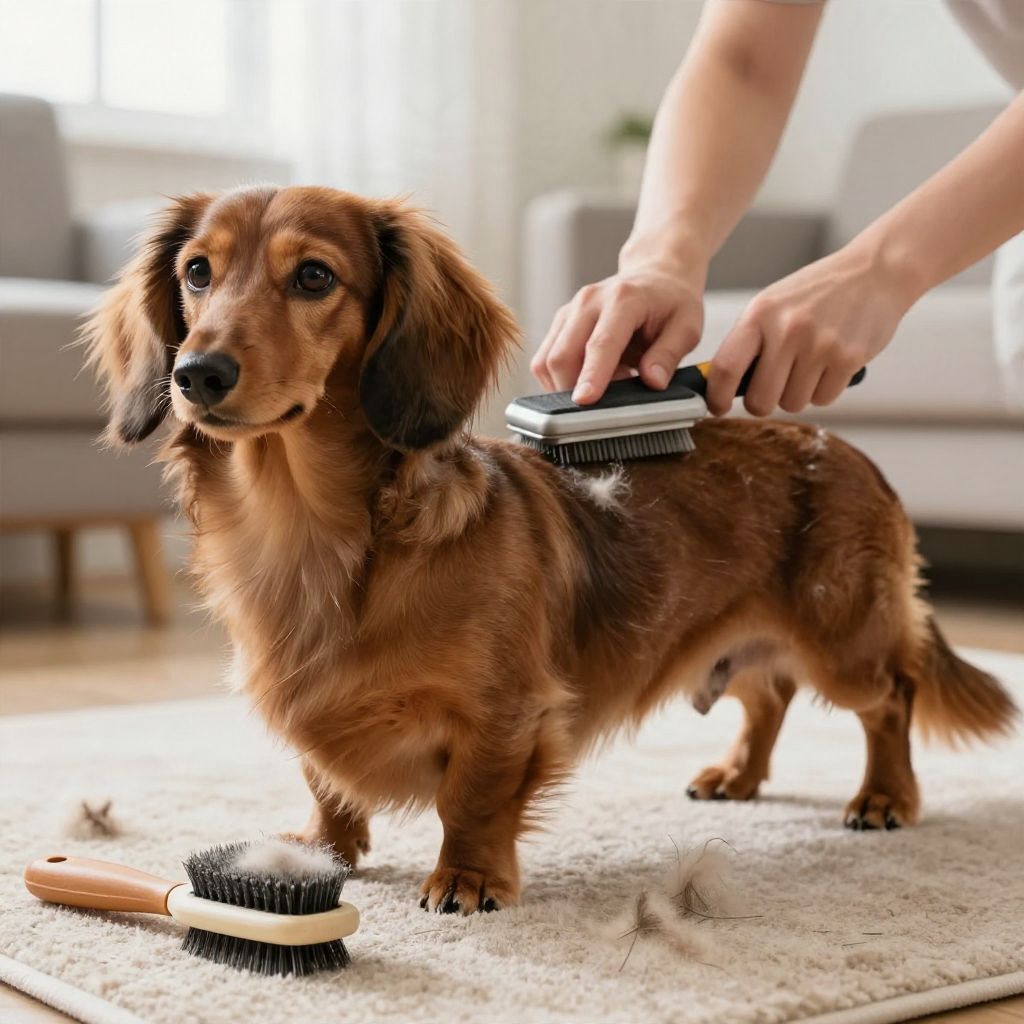
Do Long Haired Dachshunds shed? Yes, they do shed, but usually not as heavily as some double-coated breeds. Their longer coat can trap loose hairs, so shedding may be more noticeable on furniture and clothing even when the total amount is moderate.
How much your dog sheds depends on coat type, season, grooming routine, health, and individual variation. With regular brushing and good coat care, most long-haired Dachshunds are manageable for many households.
Do Long Haired Dachshunds Shed?
Yes. Long-haired Dachshunds shed year-round, and some will shed a bit more during seasonal coat changes. Their silky coat can release loose hair gradually, so you may notice stray hairs on blankets, floors, and clothes even if your dog is not a heavy shedder.
Why Long Haired Dachshunds Shed
Shedding is a normal part of the hair growth cycle. Old hairs fall out as new ones grow in, and that process happens in every dog to some degree.
What affects shedding most
- Individual coat density: Some dogs naturally have more undercoat or fuller feathering than others.
- Seasonal changes: Many dogs shed more when daylight and temperatures change.
- Age: Puppies, adolescents, adults, and seniors may all have slightly different coat patterns.
- Health: Skin problems, parasites, allergies, stress, or hormonal issues can increase shedding.
- Grooming frequency: Loose hair builds up faster if brushing is inconsistent.
If your dog’s shedding seems sudden, patchy, or much heavier than usual, it is worth checking with a veterinarian rather than assuming it is “just the breed.”
How Much Do They Shed Compared With Other Dogs?
Long-haired Dachshunds are often considered moderate shedders. They are not usually a true “low-shed” breed, but many owners find the shedding easier to manage than in heavier-shedding double-coated dogs.
The long coat can make shedding look more dramatic because loose hairs cling to fabric and tangle in the coat instead of dropping cleanly to the floor. That means grooming matters as much as the actual amount of hair lost.
What Their Coat Needs to Stay Manageable
A long-haired Dachshund’s coat is best kept clean, brushed, and free of tangles. Regular care reduces matting, helps you spot skin issues early, and keeps loose hair from spreading through the home.
Brushing routine
- Brush several times a week, and more often during seasonal shedding.
- Pay attention to the ears, chest, belly, legs, and tail, where tangles can form.
- Use a gentle brush or comb that reaches the undercoat without pulling the skin.
- Work slowly through any small knots instead of yanking them out.
Bathing and drying
Bathing can help remove loose hair, but overbathing may dry the skin and worsen flaking or itchiness. Use a dog-safe shampoo and dry the coat thoroughly, especially in feathered areas where moisture can linger.
Trimming and professional grooming
Some owners choose light trimming around the paws, ears, and sanitary areas. A professional groomer can help if your dog is prone to mats or dislikes brushing, but grooming should still be gentle and positive at home.
When Shedding Is Normal and When It Is Not
Normal shedding is usually even, gradual, and not accompanied by major skin changes. The coat may thin a little during seasonal changes, but the skin should still look healthy.
Call your veterinarian if you notice
- Bald spots or thinning in one area
- Red, flaky, greasy, or irritated skin
- Constant scratching, licking, or chewing
- Strong odor from the skin or ears
- Scabs, sores, or visible parasites
- Sudden increase in shedding after illness, stress, or diet change
Urgent care is needed if your dog has swelling, open wounds, severe itching, lethargy, fever, or signs of pain. Those signs suggest more than routine shedding and should be evaluated promptly.
How to Reduce Loose Hair Around the House
You cannot stop shedding completely, but you can make it much easier to manage. A consistent routine works better than occasional deep cleaning.
- Brush on a schedule. Frequent brushing removes loose hair before it falls on furniture.
- Use washable bedding. Blankets and dog beds that can be laundered make cleanup easier.
- Vacuum regularly. Upholstery tools and pet-specific attachments help with fine hair.
- Keep up with grooming. Mats trap shed hair and make the coat look messier.
- Monitor skin health. Healthy skin often means more predictable shedding.
Can Diet Affect Shedding?
Yes, diet can influence coat quality, though food is not a cure for normal shedding. A complete, balanced diet supports skin and coat health, which may help reduce excess shedding caused by poor nutrition.
If your dog’s coat looks dull or the shedding suddenly worsens, talk with your veterinarian before changing foods repeatedly. They can help you rule out medical causes and decide whether a diet adjustment makes sense.
Helpful nutrition habits
- Feed a complete diet appropriate for your dog’s life stage.
- Avoid frequent food switching unless your vet recommends it.
- Keep treats moderate so the main diet stays balanced.
- Make sure your dog has constant access to fresh water.
Do Long Haired Dachshund Puppies Shed Too?
Yes, puppies shed as well, though their coat changes can be less obvious at first. As they mature, their adult coat may become fuller, longer, or slightly different in texture.
During puppyhood, gentle brushing is important because it teaches your dog to accept grooming early. Keep sessions short, calm, and rewarding so brushing becomes a normal part of life rather than a struggle.
Common Mistakes Owners Make
Many shedding problems are made worse by avoidable grooming habits. Small changes can make a big difference in coat comfort and home cleanup.
- Brushing only when the coat looks messy: By then, tangles may already be forming.
- Using the wrong tools: Harsh tools can irritate skin or break the coat.
- Ignoring mats: Mats can pull painfully on the skin and trap dirt and moisture.
- Bathing too often: This can dry the skin and increase irritation.
- Assuming heavy shedding is always normal: Health issues can look like “just shedding.”
How to Tell If the Shedding Is a Health Problem
Excess shedding can be linked to fleas, mites, allergies, skin infections, stress, endocrine disease, or other medical issues. You should not try to guess the cause at home if the pattern changes suddenly.
Bring notes to your vet about when the shedding started, whether it is seasonal, and whether you have noticed itching, ear problems, changes in appetite, or changes in behavior. Those details can help guide the exam.
What your vet may look for
- Skin parasites such as fleas or mites
- Signs of allergy or infection
- Areas of self-trauma from scratching or licking
- Overall coat condition and body condition
- Possible underlying medical causes
Is a Long Haired Dachshund a Good Choice If You Want Less Shedding?
They may be a reasonable choice if you want a dog with manageable shedding and are willing to brush regularly. However, they are not a no-shed breed, so you should expect some hair in the home.
If low shedding is your top priority, compare coat types carefully and remember that no dog is completely maintenance-free. Grooming time, tolerance for hair, and your household routine all matter.
Simple Shedding Care Plan
A steady routine is the easiest way to keep shedding under control and keep your dog comfortable.
- Brush several times each week.
- Check for tangles after outdoor play.
- Watch for skin redness, dandruff, or itchiness.
- Keep your dog on a balanced diet.
- Schedule a vet visit if shedding changes suddenly or looks abnormal.
Conclusion
So, do Long Haired Dachshunds shed? Yes, but usually in a manageable way with regular grooming and good skin care. If you stay consistent with brushing and watch for changes in the coat or skin, you can keep shedding under control and catch problems early.
If you want more general help understanding coat care, you may also find Do Dogs Shed? and Why Is My Dog Shedding So Much? useful for comparison and troubleshooting.