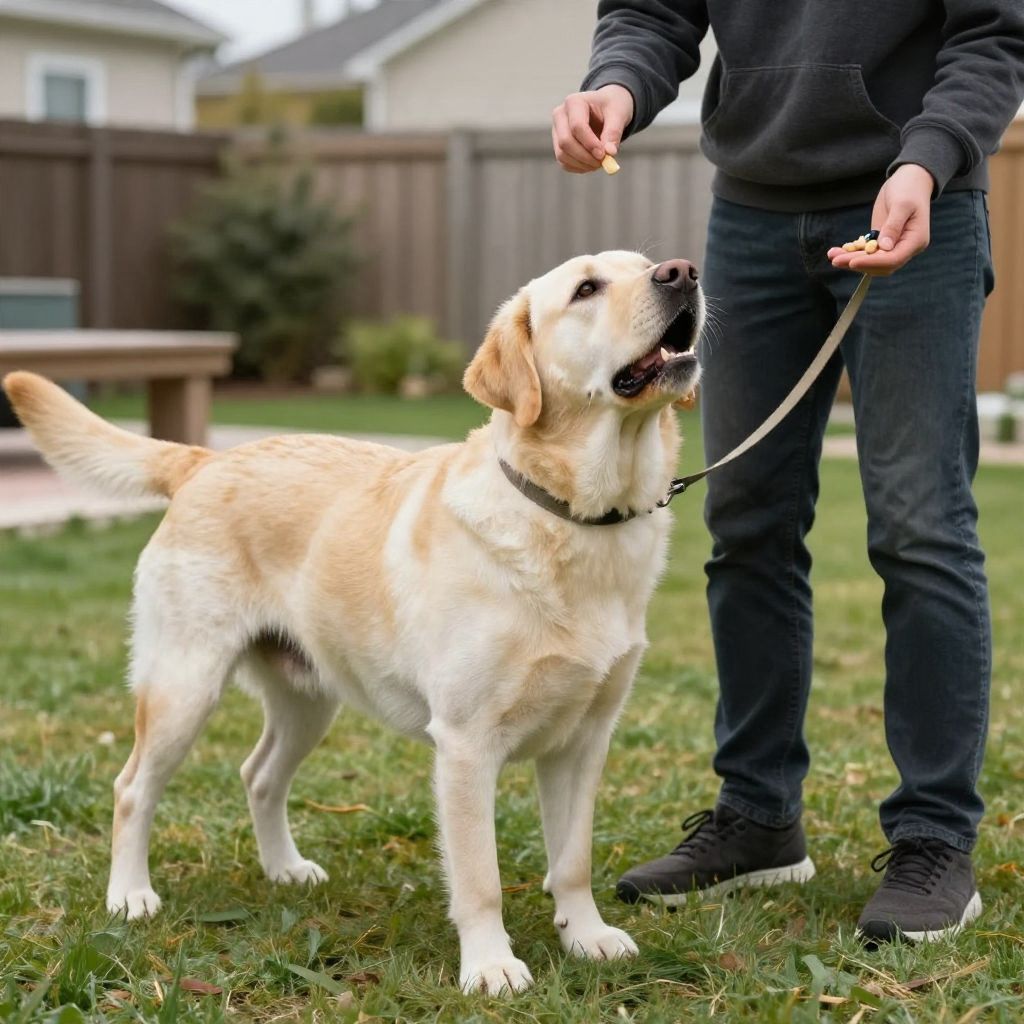
If you’re asking how to train a dog to stop barking, the first step is to figure out why your dog is barking. Barking is normal communication, but it can become a problem when it is frequent, intense, or triggered by excitement, fear, boredom, or attention-seeking.
The good news is that most barking problems improve with consistent management, reward-based training, and enough mental and physical exercise. The best approach depends on your dog’s age, temperament, training history, and the reason behind the barking.
How To Train A Dog To Stop Barking?
To train a dog to stop barking, first identify the trigger, then prevent rehearsing the barking, and reward quiet behavior. Use calm, consistent cues, teach an alternative behavior such as “sit” or “go to mat,” and increase exercise and enrichment. If barking is sudden or extreme, rule out pain, anxiety, or other medical causes.
Start by figuring out what kind of barking you’re seeing
Not all barking means the same thing. A dog may bark to alert you, ask for attention, express frustration, react to people or dogs, or respond to fear and stress.
When you understand the pattern, you can choose the right training plan instead of trying random fixes.
Common barking triggers
- Alert barking: someone passes the window, doorbell rings, or noises outside catch your dog’s attention.
- Attention barking: your dog barks to get food, play, petting, or a reaction from you.
- Frustration barking: your dog wants to greet, chase, or reach something but cannot.
- Fear or anxiety barking: your dog barks at strangers, other dogs, new sounds, or being left alone.
- Boredom barking: your dog has too little exercise, enrichment, or supervision.
Step-by-step training plan
Use a simple, repeatable plan. Progress is usually faster when you prevent barking opportunities while teaching your dog what to do instead.
- Manage the environment first. Close curtains, block window access, use white noise, or move your dog away from common triggers while you train.
- Stop rewarding the barking. If your dog barks for attention, avoid talking, touching, or giving treats during the barking.
- Reward quiet behavior. Mark and reward moments of calm, even if they are brief at first.
- Teach a replacement behavior. Ask for “sit,” “down,” or “go to mat” before the barking starts.
- Practice with low-level triggers. Start with easy versions of the trigger and gradually make them harder as your dog improves.
- Be consistent. Everyone in the household should respond the same way.
Teach a “quiet” cue carefully
Many dogs learn best when “quiet” is paired with a moment of silence, not shouted over the barking. Wait for a brief pause, say “quiet,” then reward the pause.
Over time, your dog learns that silence, not barking, makes good things happen.
What to do if your dog barks for attention
Attention barking is common because it often works. If your dog barks and you respond, even with irritation, the barking may be reinforced.
Instead, keep your response boring and consistent.
- Do not scold, yell, or repeat the cue over and over.
- Turn away or step out of reach if safe to do so.
- Wait for a quiet moment, then reward calm behavior.
- Teach your dog to ask politely with a sit, lie down, or nose target.
How to reduce alert barking at windows and doors
Some dogs are highly sensitive to movement and sound. If your dog barks at every passerby, training works best when you reduce the chance of repeated practice.
- Use frosted window film, curtains, or baby gates to limit visual triggers.
- Provide a bed, mat, or crate in a quieter part of the home.
- Practice desensitization by exposing your dog to the trigger at a low intensity.
- Reward calm watching, then redirect to another behavior before barking starts.
If the barking is tied to fear or reactivity, go slowly. Pushing your dog too close to the trigger can make the problem worse.
How exercise and enrichment help barking
Many dogs bark more when they are under-stimulated. Physical exercise helps, but mental work is often just as important.
Useful enrichment ideas
- Food puzzles and slow feeders
- Sniff walks and decompression time
- Short training sessions with rewards
- Chewing on safe, appropriate chew items
- Hide-and-seek games with treats or toys
The right amount of activity varies by age, size, breed tendencies, and health. A young working-type dog may need much more enrichment than a senior dog or a small companion breed, but every dog benefits from predictable activity and rest.
Training tips that make a big difference
Small details matter. Dogs learn best when the training is clear, rewarding, and repeated often enough to become a habit.
- Train when your dog is calm. Don’t start practice in the middle of a barking episode if you can avoid it.
- Use high-value rewards. Soft treats, play, or access to a favorite activity can help, especially with distractions.
- Keep sessions short. A few minutes at a time is often enough.
- Reward early. Mark quiet moments before your dog escalates again.
- Practice in different places. Dogs often need help generalizing calm behavior from one room to another.
Common mistakes to avoid
- Yelling at the dog, which can sound like barking back.
- Using punishment, shock, or intimidation.
- Expecting the dog to “just stop” without teaching an alternative.
- Only training during problem moments instead of practicing calm behavior daily.
- Ignoring pain, fear, or anxiety as possible causes.
What if your puppy barks a lot?
Puppies bark as they explore the world, but they also need structure. A puppy that is overtired, under-socialized, or overstimulated may bark more often.
Focus on routine, nap time, gentle exposure to new experiences, and rewarding calm behavior. Avoid overwhelming your puppy with too much excitement or too many visitors at once.
For puppies, barking can also happen during crate training, separation practice, or frustration. Keep those sessions short and positive, and make sure your puppy’s needs for bathroom breaks, food, sleep, and play are being met.
When barking may be a medical or behavioral red flag
Sometimes barking is not just a training issue. Sudden changes in vocalization can happen with pain, illness, hearing loss, cognitive decline in older dogs, or anxiety-related disorders.
Contact a veterinarian if your dog’s barking changes suddenly, seems linked to discomfort, or comes with other symptoms such as limping, restlessness, appetite loss, hiding, confusion, or trouble sleeping.
Get urgent veterinary help if you notice
- Difficulty breathing or collapse
- Severe agitation or panic that does not settle
- Possible injury, swelling, or obvious pain
- Neurologic signs such as disorientation, weakness, or seizures
- Any sudden behavior change in an older dog that seems dramatic or unexplained
When to work with a professional trainer or behaviorist
If your dog’s barking is intense, persistent, or tied to fear or aggression, professional help can save time and reduce stress. A certified trainer who uses reward-based methods can help with everyday barking problems, while a veterinary behaviorist may be best for severe anxiety or reactivity.
This is especially important if your dog barks and lunges at people, dogs, or noises, or if the barking is affecting your household’s safety and quality of life.
How long does it take to stop barking?
There is no single timeline. Some dogs improve in days once triggers are managed and rewards are consistent, while others need weeks or months of practice.
Progress is usually faster when you are consistent, patient, and realistic about your dog’s individual temperament and history. A dog that has rehearsed barking for years will usually need more time than a young dog with a new habit.
Simple daily routine to support quieter behavior
A predictable routine can reduce barking by lowering stress and preventing boredom.
- Morning walk or sniff time
- Short training session
- Meal in a puzzle feeder or slow feeder
- Quiet rest period
- Afternoon enrichment or play
- Evening wind-down with low stimulation
Consistency helps your dog know what to expect, which often reduces barking caused by frustration or uncertainty.
Conclusion
To train a dog to stop barking, focus on the reason behind the barking, prevent repeated practice, and reward the behavior you want instead. Use calm, humane training, build in exercise and enrichment, and get professional or veterinary help if the barking is sudden, severe, or linked to fear or illness.
If you’re also dealing with other behavior issues, you may find it helpful to read about how to stop a dog from licking paws or how to stop dogs from digging.