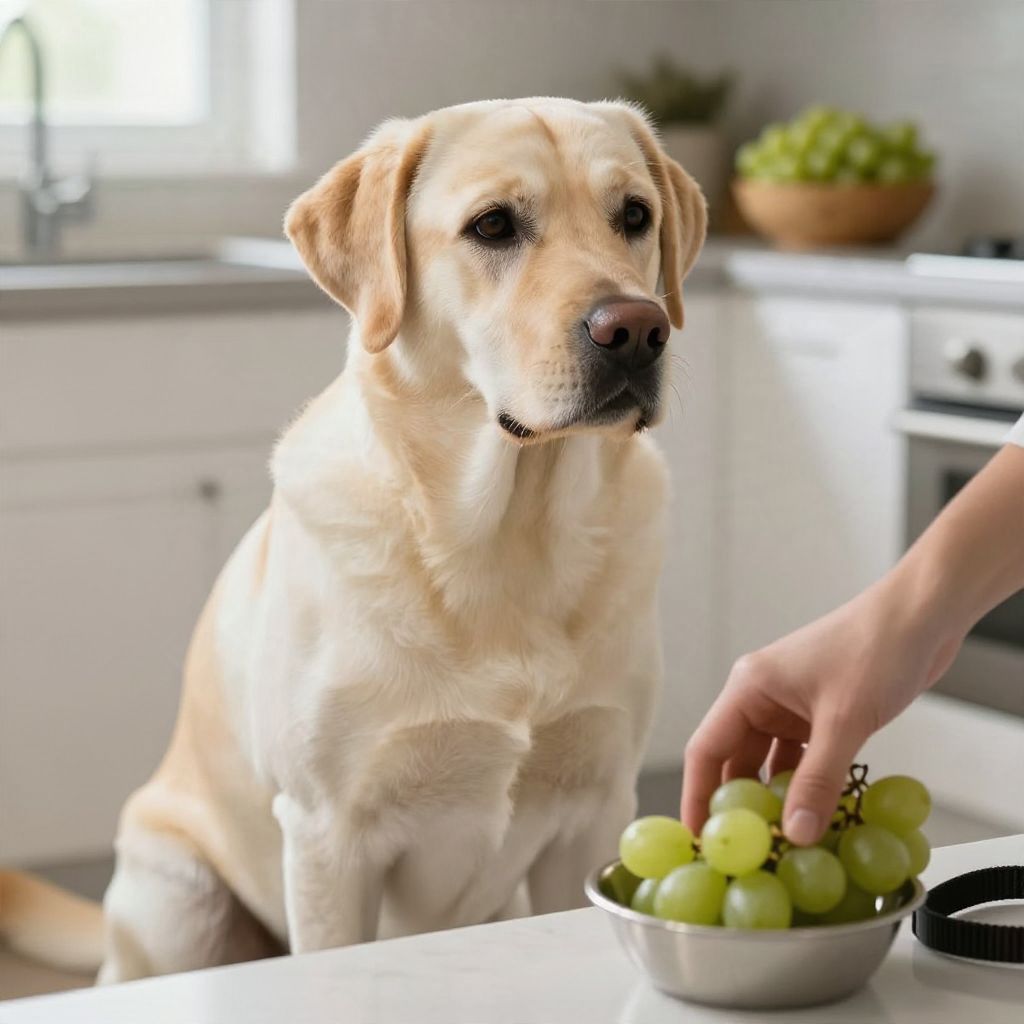
Can dogs have green grapes? No—green grapes are not safe for dogs. Grapes, including green grapes, can cause serious kidney injury in some dogs, and it is not possible to know which dog will react badly.
If your dog ate even a small amount, contact your veterinarian or an emergency clinic right away for advice. Quick action matters, because treatment is most effective when started early.
Can dogs have green grapes?
No. Green grapes are considered unsafe for dogs because grapes can trigger sudden kidney failure in some cases. The risk is unpredictable, so even one grape may be a concern, especially for small dogs, puppies, and dogs with existing health problems.
Why green grapes are dangerous for dogs
Veterinarians do not yet know the exact toxic substance in grapes, and the reaction varies from dog to dog. That uncertainty is why grapes are treated as a do-not-feed food rather than a “safe in small amounts” snack.
It is not just the grape color
Green grapes are not safer than red, black, seedless, or organic grapes. Raisins and currants are also dangerous, and grape products such as trail mix, baked goods, and some sauces may create hidden exposure.
Why the amount is hard to judge
Some dogs may show no signs after eating a grape, while others can become very ill. Because there is no reliable safe amount, you should not test tolerance at home or assume a larger dog is protected.
What to do if your dog ate green grapes
If your dog just ate green grapes, call a veterinarian or pet poison helpline immediately. Do not wait for symptoms, because early treatment can reduce the chance of kidney damage.
- Remove any remaining grapes or grape-containing food.
- Note how many were eaten, when it happened, and your dog’s approximate weight.
- Call your veterinarian, an emergency clinic, or a poison resource right away.
- Follow professional instructions exactly.
Do not induce vomiting unless a veterinarian specifically tells you to. Home remedies and “wait and see” approaches can delay needed care.
When it is an emergency
Seek urgent veterinary help if your dog has eaten grapes and develops any of these signs:
- Vomiting
- Diarrhea
- Lethargy or weakness
- Loss of appetite
- Abdominal pain
- Increased thirst or changes in urination
- Not urinating at all
If your dog is collapsing, having trouble breathing, or cannot stand, treat it as an emergency and go to the nearest clinic immediately.
What symptoms may appear after grape exposure?
Some dogs show stomach upset first, while others may seem normal before kidney injury develops. That delayed pattern is one reason grape exposure should always be taken seriously.
Early signs to watch for
- Vomiting within hours
- Drooling
- Reduced interest in food
- Restlessness or discomfort
Later signs that need prompt veterinary attention
- Marked tiredness
- Dehydration
- Less urine than usual
- No urine production
- Worsening weakness
These signs do not prove grape poisoning, but they do mean your dog needs veterinary assessment quickly.
Are any grape forms safe for dogs?
No grape form should be treated as safe. Fresh grapes, frozen grapes, grape juice, raisins, currants, and foods containing them can all be risky. Even seedless grapes still count as grapes and should be kept away from dogs.
Common hidden sources
- Fruit salads
- Trail mix
- Muffins, cookies, and bread
- Granola bars
- Jams, jellies, and sauces
Always check ingredient labels if your dog has access to human food, especially at picnics, holiday meals, or around children’s snacks.
What about puppies, senior dogs, and small breeds?
All dogs should avoid green grapes, but individual risk can vary. Puppies, toy breeds, seniors, and dogs with kidney disease, diabetes, or other medical issues may be less able to cope with a toxic exposure or dehydration.
Because body size, health status, and age can influence how quickly a dog becomes ill, do not assume a “little bit” is harmless for your dog.
Safe treat alternatives to green grapes
If you want a fresh snack, choose dog-safe options in sensible amounts and keep treats to a small part of the diet. A balanced commercial dog food should still provide most of your dog’s nutrition.
- Small pieces of apple without seeds
- Blueberries
- Plain cucumber slices
- Carrot sticks
- Plain green beans
Introduce any new food slowly, especially if your dog has a sensitive stomach or a history of food intolerance. If your dog has a medical diet, ask your veterinarian before adding treats.
How to prevent grape accidents at home
Prevention is the safest strategy because accidental exposure often happens fast. Many dogs will eat dropped food before you can stop them, especially if they are food-motivated or still learning household rules.
- Keep grapes and raisins out of reach on counters and tables.
- Use covered bins for food waste.
- Teach a reliable “leave it” cue with positive reinforcement.
- Supervise children when they snack around dogs.
- Warn guests not to feed your dog table food.
If your dog tends to counter-surf or snatch dropped food, management matters as much as training. A leash, baby gate, crate, or closed door can prevent emergencies while training is still in progress.
Common mistakes to avoid
People often underestimate grape risk because the dog seems fine at first. Unfortunately, a normal appearance right after eating grapes does not guarantee safety.
- Assuming green grapes are less dangerous than other grapes
- Waiting for symptoms before calling for help
- Giving home remedies without veterinary direction
- Forgetting about raisins in baked goods or snack mixes
- Using grapes as a regular treat
When to call your veterinarian even if your dog seems okay
Call right away if your dog ate green grapes, even if there are no symptoms yet. Your veterinarian can help you decide whether your dog needs immediate treatment, monitoring, or emergency care based on the amount eaten, the time since exposure, and your dog’s health history.
If you are unsure whether your dog ate grapes or another grape product, err on the side of caution and call. It is better to ask early than to miss the window for effective treatment.
Bottom line
Can dogs have green grapes? No. Green grapes are unsafe for dogs and should be avoided completely. If your dog eats any amount, contact a veterinarian immediately, because prompt care gives your dog the best chance of avoiding serious kidney damage.
If you are reviewing other human foods for your dog, you may also want to read about can dogs eat avocado and can dogs have lemon juice.