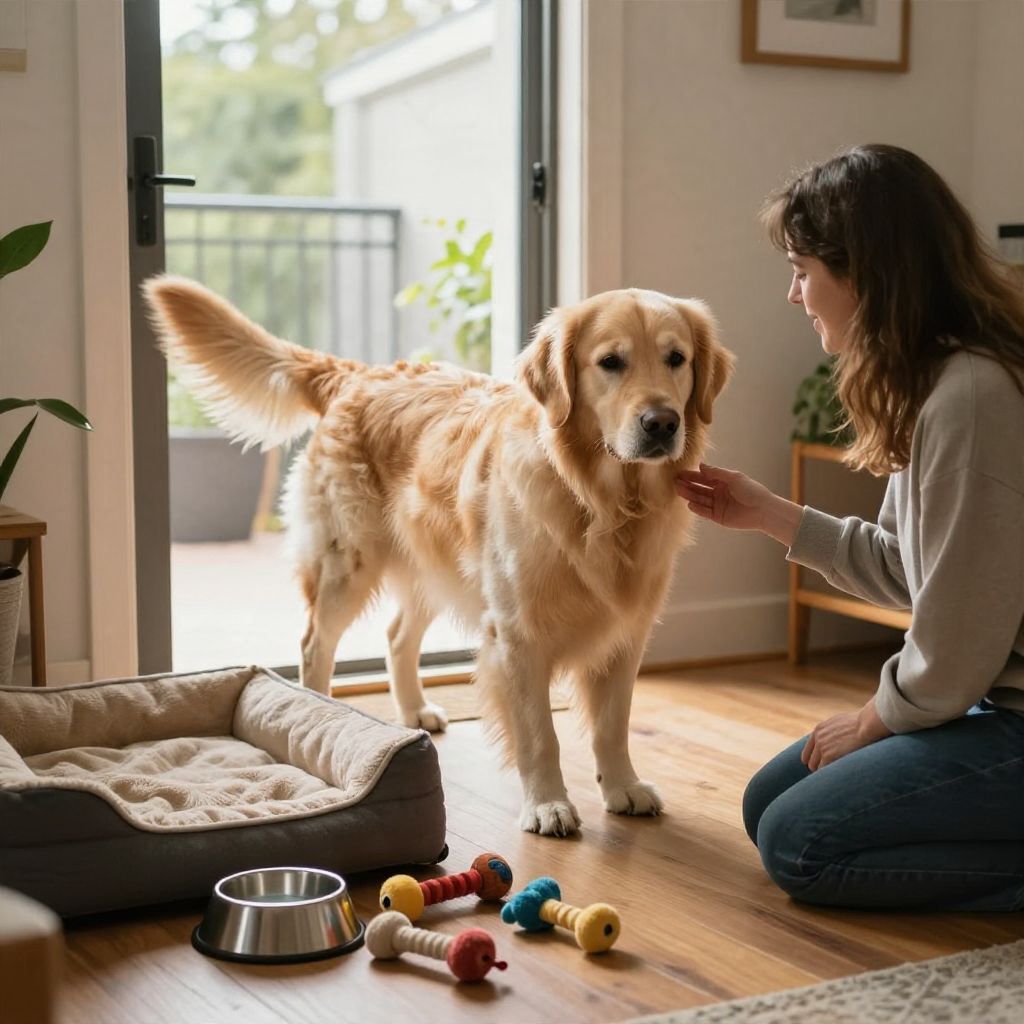
How to make a pet feel at home starts with calm, predictable care. Most dogs settle faster when they have a safe space, a steady routine, and gentle introductions to people, sounds, and rules.
Whether you’ve brought home a puppy, adopted an adult dog, or are helping a nervous rescue adjust, the goal is the same: reduce stress and build trust. Small, consistent steps usually work better than trying to do everything at once.
How do you make a pet feel at home?
You make a pet feel at home by giving them safety, routine, and choice from day one. Set up a quiet resting area, keep feeding and potty times consistent, introduce the house gradually, and use reward-based training. Let your dog approach new people, spaces, and routines at their own pace.
Start with a calm, prepared space
Before your dog arrives, choose one low-traffic area where they can rest without being overwhelmed. This is especially helpful for puppies, shy dogs, and pets coming from shelters or foster homes.
- Provide a bed or crate in a quiet area away from heavy foot traffic.
- Use water and food bowls that are easy to reach.
- Remove hazards such as loose cords, toxic plants, trash, and small objects.
- Keep the first area simple rather than giving access to the whole house immediately.
Some dogs relax in a crate, while others prefer a bed or pen. The best setup depends on the dog’s age, training history, and temperament.
Keep the first day low-key
The first day is about decompression, not excitement. Too many visitors, loud noises, or constant handling can make a new dog feel more stressed instead of welcome.
- Bring your dog home calmly and go straight to the potty area first.
- Show them their resting spot and water.
- Keep greetings quiet and brief.
- Limit access to one or two rooms at first.
- Allow naps and quiet time without forcing interaction.
Some dogs are ready to explore quickly; others need several days or longer. Let their behavior guide the pace.
Build a predictable routine
Dogs feel safer when they can anticipate what happens next. Regular routines help with housetraining, sleep, appetite, and overall confidence.
Focus on these daily anchors
- Consistent feeding times
- Regular potty breaks
- Short walks or play sessions
- Quiet rest periods
- Bedtime that stays roughly the same
Puppies usually need more frequent potty breaks and shorter activity periods. Adult dogs often settle into routine more quickly, while senior dogs may need extra comfort, easier movement, and more frequent bathroom opportunities.
Use positive reinforcement from the start
Reward-based training helps your dog learn that the new home is safe and understandable. This supports trust and reduces confusion.
- Reward calm behavior with treats, praise, or access to something pleasant.
- Teach simple cues like name recognition, “sit,” and “come.”
- Reward your dog for choosing their bed, settling quietly, or going potty outside.
- Avoid punishment, yelling, or physical corrections, which can increase fear.
If your dog is very anxious, fearful, or reactive, a certified trainer or veterinary behaviorist can help you create a safe plan.
Introduce the home gradually
New spaces can be overwhelming. A step-by-step introduction helps your dog learn the layout, rules, and household sounds without becoming flooded.
Helpful ways to do this
- Open access to one new room at a time.
- Walk your dog through the house on leash if needed.
- Show them where food, water, and potty areas are located.
- Let them sniff and investigate without rushing them.
For some dogs, stairs, slippery floors, mirrors, or open doorways can be startling. If needed, use baby gates, rugs, or barriers to make movement easier and safer.
Make feeding and potty habits easy to learn
Food and bathroom routines are a big part of feeling settled. Predictable mealtimes and potty breaks help your dog understand the daily rhythm of the house.
- Feed in a quiet area with minimal distractions.
- Use the same potty spot when possible.
- Take your dog out after waking, after eating, after play, and before bed.
- Reward outdoor pottying promptly so your dog connects the behavior with the reward.
If your dog stops eating, has repeated accidents, or seems uncomfortable urinating or defecating, contact a veterinarian. Medical issues, stress, or diet changes can all play a role.
Meet exercise and enrichment needs
A dog that feels at home usually has outlets for energy and curiosity. The right amount of activity depends on age, health, breed tendencies, and individual stamina.
Good enrichment options include
- Short walks at a comfortable pace
- Sniffing time in the yard or on leash
- Food puzzles or scatter feeding
- Gentle fetch or tug, if your dog enjoys it
- Chew toys that are size-appropriate and safe
Some dogs need more physical exercise, while others benefit more from mental work. Senior dogs and dogs with orthopedic problems may need shorter, gentler sessions rather than intense play.
Help your dog feel safe around people and pets
Social introductions should be controlled and positive. A dog feels more at home when they are not forced into greetings or crowded interactions.
For people
- Ask visitors to ignore the dog at first.
- Let your dog approach when ready.
- Use treats to reward calm, voluntary contact.
- Give your dog a retreat space if they need a break.
For other pets
- Introduce dogs on neutral ground when possible.
- Use leashes or barriers for safety during early meetings.
- Keep interactions short and supervised.
- Separate pets for meals, chews, and rest if needed.
If your dog shows stiff posture, growling, hiding, snapping, or repeated avoidance, slow down and seek professional guidance. Those signs mean the dog needs more space, not more pressure.
Support puppies, adults, and senior dogs differently
Age matters when you’re trying to help a pet feel settled. The same approach does not fit every dog.
Puppies
Puppies need frequent potty breaks, sleep, and gentle socialization. Keep sessions short, focus on house training, and avoid overwhelming them with too many new experiences in one day.
Adult dogs
Adult dogs may adapt faster if they already have training and a stable history. Still, they may need time to learn your routines, house rules, and preferred handling style.
Senior dogs
Older dogs may need softer bedding, easier access to food and water, and more patience around mobility changes. If your senior dog seems confused, restless, or suddenly anxious, a veterinary checkup is important because pain or illness can affect behavior.
Common mistakes that make adjustment harder
Even loving owners can accidentally overwhelm a new dog. Avoiding these mistakes can help your dog settle faster.
- Introducing too many people, places, or activities at once
- Leaving a nervous dog alone too soon for too long
- Using punishment for accidents or fear
- Assuming the dog will “just know” the house rules
- Ignoring signs of stress such as panting, pacing, hiding, or loss of appetite
Progress is usually gradual. A dog that is quiet, eating, exploring, and resting comfortably is often adjusting well, even if they are not yet fully confident.
When to call a veterinarian or trainer
Some adjustment issues are normal, but certain signs need professional help. A veterinarian can rule out pain or illness, and a qualified trainer or veterinary behaviorist can help with fear, reactivity, or separation-related problems.
Get urgent veterinary care if your dog has trouble breathing, collapses, has repeated vomiting, severe diarrhea, a bloated abdomen, seizures, a suspected toxin exposure, or a serious injury.
Make a non-urgent appointment if your dog is not eating for more than a day, is having repeated accidents after an initial improvement, seems painful, or shows ongoing anxiety that does not improve with a calm routine.
Simple daily checklist for helping a pet feel at home
- Keep the environment quiet and predictable.
- Provide a safe resting place.
- Use consistent feeding and potty times.
- Reward calm behavior and desired choices.
- Introduce new experiences slowly.
- Watch for stress signals and adjust the pace.
Helping a pet feel at home is mostly about patience, structure, and kindness. Start small, keep routines steady, and let your dog build confidence one successful day at a time.
If you’re also adjusting to a new dog’s needs, you may find related reading useful, such as guidance on choosing the best pets for elderly owners or understanding why dogs lick their paws when stress or irritation is part of the picture.