
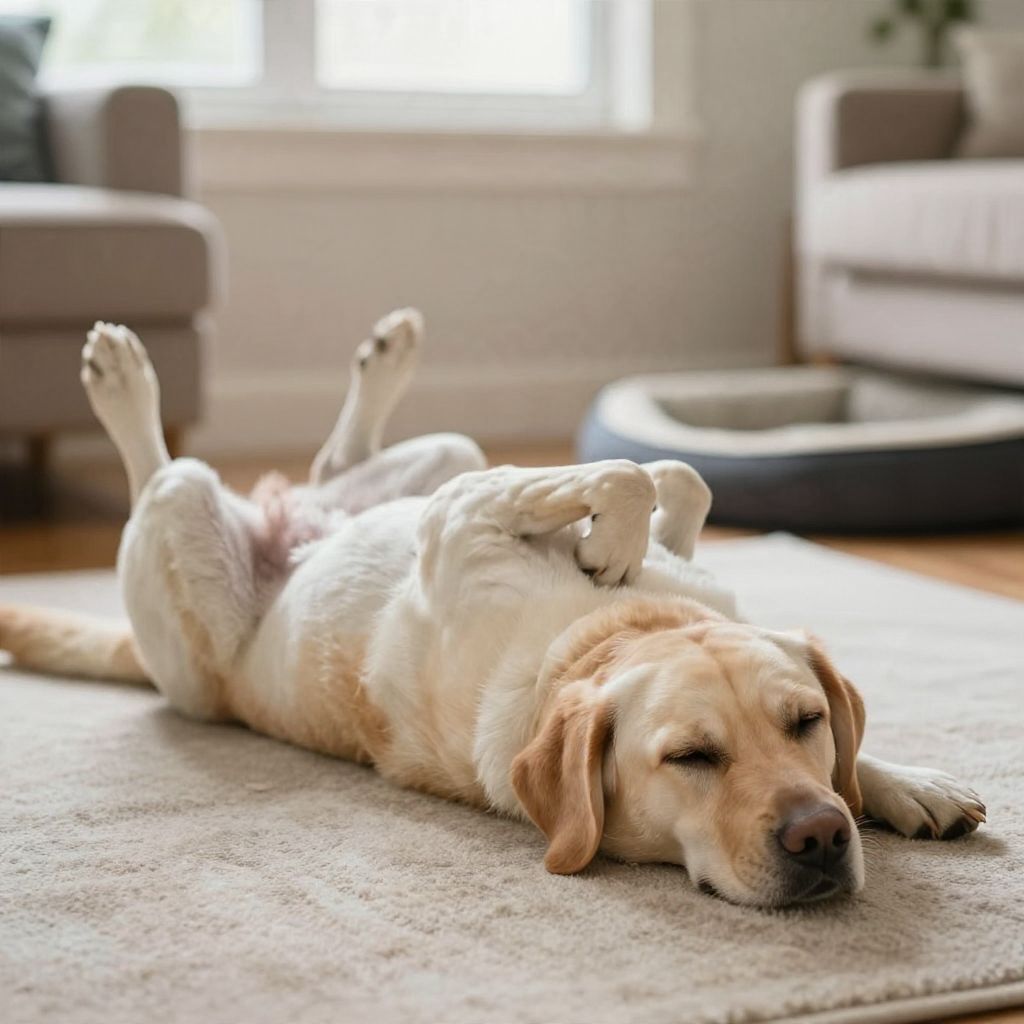
Why do dogs sleep on their backs? In most cases, it means your dog feels safe, relaxed, and comfortable enough to expose their belly. It can also help them cool down, especially in warm weather or after activity.
Most of the time, this sleeping position is normal. But if your dog suddenly starts doing it more often, seems restless, or shows signs of pain, it’s worth paying closer attention.
Why do dogs sleep on their backs?
Dogs often sleep on their backs because they feel secure, want to release body heat, or simply find it comfortable. This position can be normal for healthy dogs of many ages and sizes. If it comes with discomfort, breathing changes, or unusual behavior, a vet check is a good idea.
Common reasons dogs sleep on their backs
They feel safe and relaxed
A dog usually exposes their belly only when they trust their environment. Sleeping belly-up can be a sign that your dog feels calm around you, other pets, and the home routine.
They are trying to cool off
The belly has less fur than many other areas, so lying on the back may help a dog lose heat more easily. You may notice this more in warm weather, after exercise, or in dogs that naturally run warm.
It is simply comfortable
Some dogs prefer this position because it lets their muscles loosen fully. Individual body shape, joint flexibility, and personal habit all play a role.
They are seeking relief from pressure
For some dogs, lying on the back may reduce pressure on the chest, hips, or shoulders. This can vary with age, body condition, and whether the dog has orthopedic issues.
What this sleeping position can tell you about your dog
Back sleeping is often a normal sign of comfort, but context matters. A young puppy, a lean adult, and a senior dog may all sleep this way for different reasons, and not every dog enjoys the same positions.
- Confident dogs may sleep belly-up more openly in busy homes.
- Hot dogs may choose it more often in summer or in warmer rooms.
- Older dogs may change positions more often if stiffness or pain makes other positions uncomfortable.
- Shy or anxious dogs may rarely sleep this way unless they feel very secure.
When back sleeping is normal
Back sleeping is usually nothing to worry about if your dog is otherwise acting like themselves. A relaxed dog that eats normally, moves comfortably, and wakes up easily is often just resting in a preferred position.
It is especially likely to be normal if your dog:
- Changes positions easily
- Has normal appetite and energy
- Breathes quietly while sleeping
- Does not seem painful when touched or moved
- Appears relaxed when awake
When to worry about a dog sleeping on their back
Sleeping on the back alone is not usually a problem, but a sudden change in sleep habits can point to discomfort or illness. Pay attention if your dog seems unable to settle, pants a lot at night, or avoids other positions they used to like.
Call your veterinarian if you notice:
- New stiffness, limping, or trouble getting up
- Restlessness or frequent position changes during sleep
- Whining, panting, or signs of discomfort at night
- Snoring that is new, loud, or paired with breathing difficulty
- Sudden changes in appetite, thirst, or bathroom habits
- Unusual lethargy or reduced interest in normal activities
Seek urgent veterinary care if your dog has:
- Labored breathing or blue-tinged gums
- A swollen, hard, or painful abdomen
- Collapse, weakness, or inability to stand
- Repeated vomiting, especially with distress
- Signs of heat stress such as heavy panting, drooling, or confusion
- Severe pain or a sudden inability to move normally
Could breed, age, or body type matter?
Yes, but in broad terms rather than hard rules. Some dogs with shorter muzzles, heavier bodies, or joint issues may be less likely to choose the back position if breathing or mobility feels awkward. Others may love it regardless of breed.
Puppies
Puppies often sleep in odd positions because they are flexible, tire quickly, and have not yet settled into one favorite posture. Back sleeping in a puppy is usually normal if they wake up easily and seem healthy.
Adult dogs
Healthy adult dogs may adopt this position as a comfort habit. If an adult dog suddenly starts sleeping on their back more often, consider whether the room is warmer, the bedding changed, or the dog may be uncomfortable in another position.
Senior dogs
Older dogs may sleep on their backs if it eases pressure, but senior dogs are also more likely to have arthritis, stiffness, or breathing changes. If your older dog seems restless or sore, your veterinarian can help assess pain and mobility.
How to tell comfort from a possible problem
Look at the whole picture instead of the sleeping pose alone. A relaxed dog usually has loose muscles, easy breathing, and no sign of distress when awake. A dog sleeping on their back because of discomfort often shows other changes too.
- Comfort: loose body, normal breathing, easy waking, normal daytime behavior
- Possible issue: panting, shifting often, whining, stiffness, or reluctance to move
What you can do if your dog sleeps on their back a lot
If your dog seems healthy, you usually do not need to change anything. Instead, make sure the sleeping area supports comfort, temperature control, and easy movement.
- Keep the room at a comfortable temperature.
- Provide a bed large enough for your dog to stretch out.
- Offer both soft and firmer resting spots if your dog likes options.
- Make sure your dog can get up and reposition easily.
- Watch for changes in sleep, breathing, or mobility over time.
Common mistakes dog owners make
Most back sleeping is harmless, but a few assumptions can lead you astray. The goal is to notice patterns without overreacting or ignoring warning signs.
- Assuming every belly-up sleeper is perfectly comfortable
- Ignoring new snoring, panting, or restlessness
- Forcing a dog to sleep in a different position
- Using punishment if a dog is restless at night
- Assuming the same explanation fits every dog
How to support better sleep overall
Good sleep habits can make any resting position more comfortable. Regular exercise, mental enrichment, and a predictable routine often help dogs settle more easily at night.
- Give your dog enough daily activity for their age and energy level.
- Use calm evening routines to help them wind down.
- Keep bedding clean and comfortable.
- Make sure your dog has easy access to water.
- Address pain, itching, or anxiety with veterinary guidance.
When to ask a professional for help
If you are unsure whether your dog’s sleep position is normal, your veterinarian is the best first step. They can check for pain, breathing problems, skin irritation, or other issues that may affect sleep. For anxiety-related sleep problems, a certified trainer or veterinary behaviorist may also help.
If you want to learn more about sleep habits, you may also find why dogs sleep so much and whether dogs sleep with their eyes open helpful.
In short, why do dogs sleep on their backs? Usually because they feel safe, comfortable, or cool. If your dog is otherwise healthy, it is typically a normal sleeping choice. If the position comes with pain, breathing changes, or sudden behavior changes, contact your veterinarian promptly.