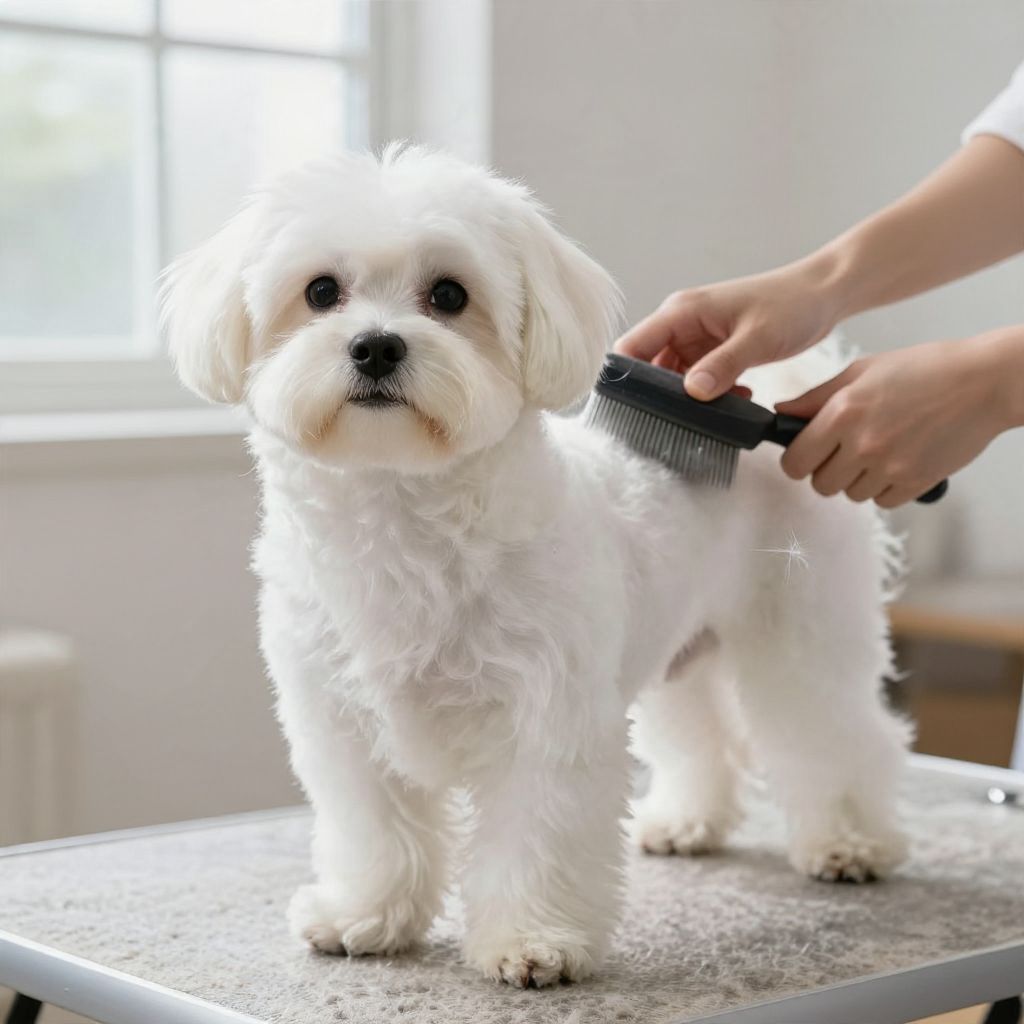
If you’re wondering, “Do Maltese shed?” the short answer is yes, but usually very little. Maltese are often described as low-shedding dogs because their coat grows more like hair than fur, so loose hairs tend to stay trapped until brushing removes them.
That said, no dog is truly non-shedding. Grooming habits, coat condition, age, health, and individual variation all affect how much hair ends up on your clothes, furniture, and floors.
Do Maltese Shed?
Maltese do shed, but typically in a light, less noticeable way than many double-coated breeds. Their silky coat often holds onto loose hairs instead of dropping them everywhere, which is why regular brushing and grooming make such a big difference.
Why Maltese Are Often Called Low-Shedding Dogs
The Maltese coat is usually fine, long, and continuously growing. Because of that, shedding may be less obvious than in dogs that blow their coat seasonally or shed heavily year-round.
Instead of seeing lots of hair on the floor, you may notice:
- Loose hair caught in the coat
- Small amounts of hair on bedding or clothing
- More shedding during brushing than on furniture
This does not mean the breed is maintenance-free. In many Maltese, the coat can mat quickly if brushing is skipped, and mats can trap shed hair, dirt, and moisture.
What Affects How Much a Maltese Sheds?
Shedding varies from dog to dog. A Maltese’s age, coat length, grooming routine, health, and even whether the dog is clipped or kept in a long coat can change how much loose hair you notice.
Coat length and grooming style
A short pet trim can make shedding seem easier to manage because loose hairs are removed more often during brushing and bathing. A longer show-style coat usually needs more frequent grooming to prevent tangles and trapped hair.
Age and life stage
Puppies may have softer coats that change as they mature, and senior dogs may groom less effectively on their own. Both can lead to more visible loose hair if brushing is inconsistent.
Health and skin condition
Skin irritation, allergies, parasites, hormonal disease, or poor coat quality can increase shedding. If your Maltese suddenly sheds more than usual, it is worth checking with a veterinarian.
How Much Shedding Is Normal for a Maltese?
Normal Maltese shedding is usually mild and gradual. You may see a little hair during brushing, occasional stray hairs around the home, and some seasonal or coat-change variation, but not heavy piles of fur.
If you notice a sudden increase in shedding, patchy hair loss, redness, itching, dandruff, or a dull coat, that is not something to ignore. Those signs can point to a medical or grooming problem.
How to Reduce Maltese Shedding at Home
You cannot stop a Maltese from shedding completely, but you can keep loose hair under control and help the coat stay healthy.
Brush regularly
Frequent brushing is one of the best ways to manage shedding in a Maltese. It removes loose hair before it ends up on your furniture and helps prevent mats.
- Use a slicker brush or a comb suited to fine coats
- Brush gently to avoid breakage and skin irritation
- Pay attention to the ears, chest, legs, and behind the elbows, where tangles form easily
Bathe on an appropriate schedule
Bathing can help loosen dead hair and keep the coat clean, but overbathing may dry the skin. Use a dog-safe shampoo and follow a grooming schedule that fits your dog’s coat and skin type.
Keep the coat trimmed if needed
Many pet Maltese do well with regular trims. A shorter coat is often easier to maintain and may make shedding feel less noticeable, especially if you do not have time for daily brushing.
Support skin and coat health
Good nutrition matters for coat quality. Feed a complete, balanced dog food appropriate for your Maltese’s age and health needs, and ask your veterinarian before adding supplements.
When Shedding May Mean a Health Problem
Some shedding is normal, but hair loss that is sudden, uneven, or paired with skin changes deserves attention. A veterinarian can help determine whether the cause is medical, environmental, or grooming-related.
Watch for these warning signs
- Patchy bald spots
- Itching, chewing, or constant licking
- Red, flaky, scabby, or greasy skin
- Foul odor from the skin or ears
- Thinning coat that is getting worse
- Changes in appetite, energy, or weight along with coat changes
These signs can be linked to fleas, mites, allergies, infections, or other health conditions. Do not try to guess the cause if the problem is ongoing or getting worse.
Do Maltese Puppies Shed More?
Maltese puppies may shed a little as their coat changes, but heavy shedding is not usually expected. A puppy coat can look different from an adult coat, and the transition period may make loose hair more noticeable for a while.
Focus on gentle handling, short brushing sessions, and positive grooming experiences. Early grooming practice helps your Maltese accept brushing, bathing, nail trims, and face cleaning later on.
How to Tell Normal Shedding from Excessive Hair Loss
Normal shedding is usually mild, even, and manageable with grooming. Excessive hair loss tends to look different and may come with discomfort or skin changes.
- Check whether the shedding is sudden or gradual.
- Look for bald patches or thinning areas.
- Inspect the skin for redness, flakes, sores, or parasites.
- Notice whether your dog is itchy, restless, or grooming excessively.
- Schedule a vet visit if the pattern seems unusual or persistent.
Common Mistakes That Make Maltese Shedding Worse
Sometimes the coat looks like it is shedding more because it is not being cared for consistently. A few common mistakes can make loose hair and tangles harder to manage.
- Skipping brushing for several days at a time
- Using the wrong brush or comb
- Bathing too often or with harsh products
- Ignoring mats, especially behind the ears and under the legs
- Assuming all coat problems are “just shedding”
If your Maltese is matted, do not pull hard on the coat. Severe mats can hurt and may need professional grooming help.
How to Keep Your Home Cleaner with a Maltese
Even low-shedding dogs can leave hair around the house. A simple routine can help you stay ahead of it without overcomplicating care.
- Brush your dog before hair has a chance to spread
- Use washable bedding and blankets
- Vacuum high-traffic areas regularly
- Keep a lint roller handy for clothing and upholstery
- Schedule grooming before the coat becomes difficult to manage
Keeping the coat healthy usually does more to reduce visible hair than trying to clean up after the fact.
When to See a Veterinarian or Groomer
See a veterinarian if shedding becomes sudden, severe, patchy, or painful, or if your Maltese has itching, skin irritation, odor, or behavior changes. These signs can indicate a problem that needs treatment.
A professional groomer can also help if the coat is tangled, hard to maintain, or difficult to brush safely at home. For dogs with skin issues, ask your veterinarian what grooming approach is safest.
Bottom Line
So, do Maltese shed? Yes, but usually lightly. With regular brushing, sensible grooming, and attention to skin health, most owners can keep shedding manageable and the coat looking good.
If you want more general background on shedding in dogs, you may also find do dogs shed? helpful for comparison.