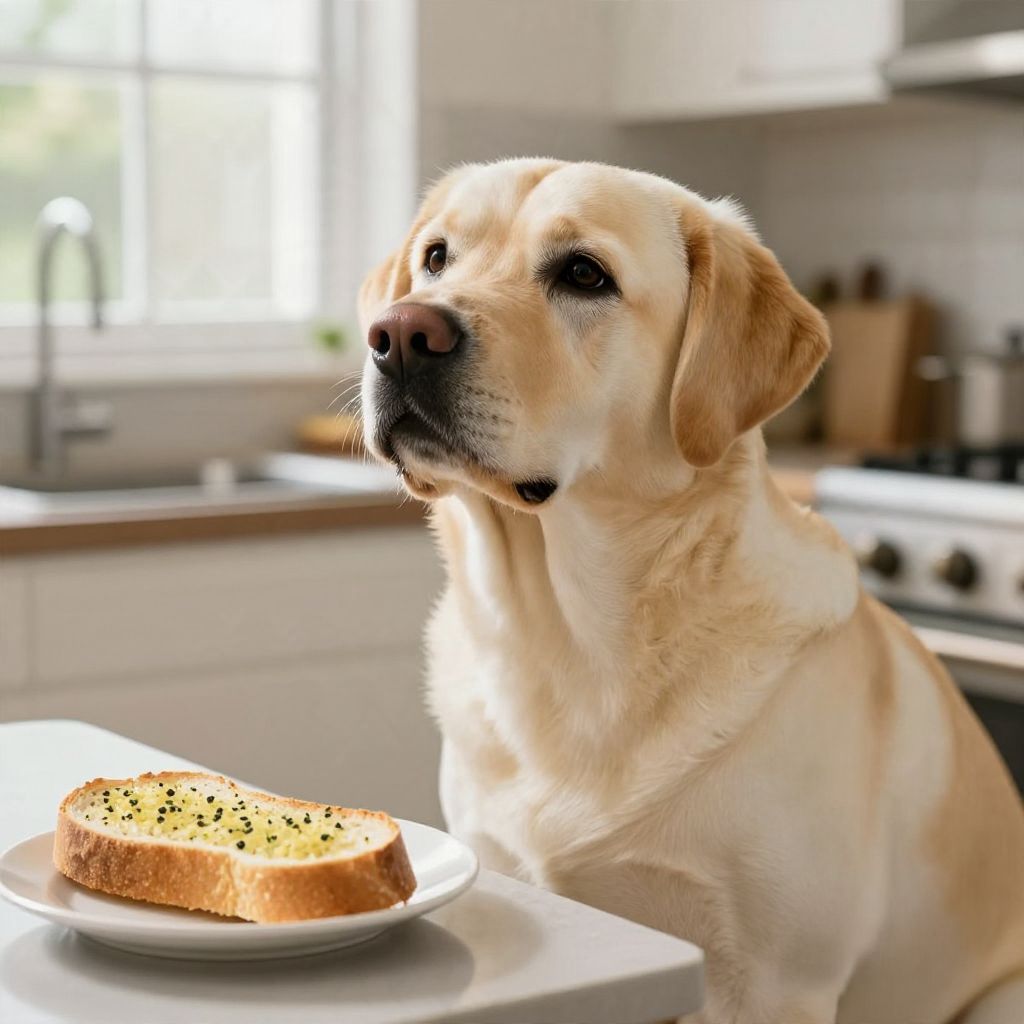
Can dogs eat garlic bread? In most cases, no—garlic bread is not a safe treat for dogs. The garlic, butter, salt, and seasonings can upset your dog’s stomach, and garlic itself can damage red blood cells in some cases.
If your dog stole a small bite, they may be fine, but repeated exposure or a larger amount is more concerning. What matters most is how much garlic was eaten, your dog’s size, and whether they show any symptoms.
Can dogs eat garlic bread?
No, dogs should not eat garlic bread. Even a small amount can cause stomach upset, and larger amounts may be dangerous because garlic is toxic to dogs. The bread itself is usually less of a problem than the garlic, butter, oil, salt, and herbs mixed into it.
Why garlic bread is risky for dogs
Garlic bread combines several ingredients that are not ideal for dogs. The biggest concern is garlic, which belongs to the allium family and can harm a dog’s red blood cells.
1. Garlic can be toxic
Garlic can cause oxidative damage to red blood cells, which may lead to anemia. This risk depends on the amount eaten, the dog’s body size, and whether the garlic was raw, cooked, powdered, or concentrated in a seasoning blend.
2. Butter and oil can trigger digestive upset
Garlic bread is often rich in fat. Too much fat can cause vomiting, diarrhea, abdominal discomfort, and in some dogs, a more serious pancreatitis flare-up.
3. Salt and seasonings add extra risk
Many garlic breads are heavily salted or seasoned with onion powder, garlic powder, cheese, or spices. Onion is also unsafe for dogs, and high salt can make stomach upset worse.
What happens if a dog eats garlic bread?
Some dogs only get mild digestive upset after eating a small piece. Others may develop more serious signs, especially if they ate a lot, are small, or have a health condition that makes them more vulnerable.
Possible symptoms to watch for
- Vomiting
- Diarrhea
- Drooling
- Abdominal pain or bloating
- Loss of appetite
- Lethargy or weakness
- Pale gums
- Fast breathing or rapid heart rate
- Dark urine
Some signs of garlic-related anemia may not appear right away. A dog may seem normal at first and then become tired, weak, or pale later, so monitoring matters even if the first few hours seem uneventful.
When to call a veterinarian
If your dog ate garlic bread, call your veterinarian for advice, especially if the amount was more than a tiny bite, the bread was heavily seasoned, or your dog is small, elderly, pregnant, or has a medical condition. Your vet can help you judge the risk based on what was eaten.
Get urgent veterinary care now if your dog has:
- Repeated vomiting
- Severe diarrhea
- Weakness or collapse
- Pale or white gums
- Trouble breathing
- A swollen or painful abdomen
- Dark or reddish urine
- Signs of severe pain or distress
Do not wait if your dog is acting very unwell. These signs can indicate a serious reaction or another emergency that needs prompt veterinary attention.
What to do right after your dog eats garlic bread
Stay calm and act quickly. The best next step depends on how much was eaten and how your dog is behaving.
- Remove any remaining garlic bread so your dog cannot eat more.
- Check the ingredients if you can. Garlic powder, onion powder, cheese, and very salty toppings matter.
- Estimate how much your dog ate and when it happened.
- Watch for vomiting, diarrhea, weakness, or unusual behavior.
- Call your veterinarian or a pet poison helpline for individualized guidance.
Do not try home remedies or induce vomiting unless a veterinarian specifically tells you to do so. Some situations make vomiting unsafe, and the wrong response can make things worse.
Does the amount eaten matter?
Yes. A tiny crumb is less concerning than a full slice, but there is no safe “garlic bread serving” for dogs. The risk depends on the recipe, the amount of garlic used, and your dog’s size and health.
Factors that change the risk
- Dog size: smaller dogs may be affected by less food overall.
- Age: puppies and senior dogs may have less reserve if they get sick.
- Health status: dogs with anemia, pancreatitis, kidney disease, or sensitive stomachs may be more vulnerable.
- Recipe: garlic powder and concentrated seasonings can be more concerning than plain bread.
- How much was eaten: more garlic and more fat usually mean more risk.
What about plain bread without garlic?
Plain bread is not toxic in small amounts for many dogs, but it still should not be a regular treat. It adds calories without much nutrition, and some dogs may still get an upset stomach from too much bread.
If the bread has garlic butter, garlic salt, garlic powder, onion powder, cheese, or other rich toppings, treat it as unsafe rather than “just bread.”
Why some dogs seem fine after eating garlic bread
Not every dog reacts the same way. A dog may appear normal after a small bite, especially if the garlic amount was low. That does not mean garlic bread is safe, only that the dose may not have been enough to cause obvious symptoms.
Some effects, especially anemia, can take time to show up. That is why it is important to keep watching your dog for the next day or two and to contact your vet if you are unsure.
Safer alternatives to garlic bread
If you want to share a treat with your dog, choose something dog-safe instead of human bread with garlic. Keep treats simple and portion-controlled.
- Small pieces of plain cooked chicken
- Plain cooked pumpkin
- Small bits of carrot or cucumber
- Commercial dog treats made for your dog’s size and diet
- Plain, unseasoned cooked sweet potato in small amounts
Even safe foods should stay under 10% of your dog’s daily calories, and dogs with medical issues may need a more specific diet plan from a veterinarian.
Common mistakes to avoid
When a dog eats garlic bread, people often try to “wait and see” without checking the ingredients or amount. That can delay care if the exposure was significant.
- Do not assume cooked garlic is harmless.
- Do not ignore garlic powder, which can be concentrated.
- Do not give more food to “dilute” the garlic bread.
- Do not use human medications unless your vet directs you to.
- Do not skip veterinary advice if symptoms appear later.
Special caution for puppies and small dogs
Puppies and small dogs can be more sensitive simply because they weigh less and have less room for dietary mistakes. A bite that seems minor to you may represent a larger exposure for them.
Young dogs are also more likely to eat quickly and grab dropped food before you notice. If your puppy ate garlic bread, it is smart to call your vet even if they seem okay.
What if your dog has eaten garlic bread before?
Repeated exposure matters. A dog that has stolen garlic bread more than once may have had multiple small exposures that add up, or they may simply be lucky so far. Either way, it is worth preventing future access and discussing the habit with your vet if you are worried.
If your dog tends to counter-surf, beg near the table, or snatch food from guests, management helps: keep food out of reach, use trash cans with secure lids, and teach a reliable “leave it” cue with positive reinforcement.
How to prevent this problem at home
Prevention is easier than dealing with a toxic exposure. Simple household habits can make a big difference.
- Keep garlic bread and other seasoned foods off counters and tables.
- Store leftovers in sealed containers.
- Ask guests not to feed your dog from the table.
- Use training to reward calm behavior around food.
- Supervise your dog during meals and gatherings.
Bottom line
Can dogs eat garlic bread? No—garlic bread is not a safe dog food. A small accidental bite may only cause mild stomach upset, but garlic can be harmful and the rich, salty ingredients can make things worse. If your dog ate garlic bread, monitor closely and call your veterinarian if you have any concerns.
If you want to learn more about related food risks, see how much garlic is toxic to dogs and whether dogs can have pizza.