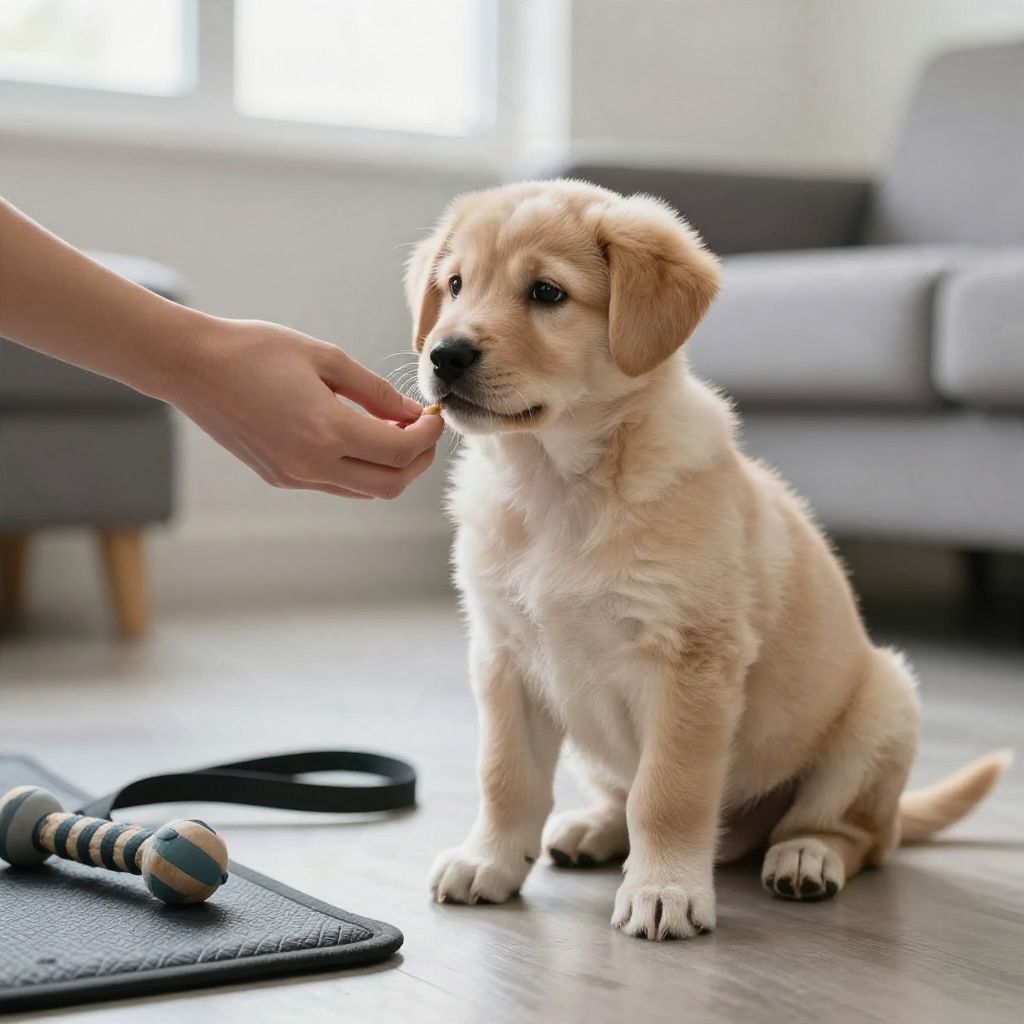
How do you discipline a puppy without scaring or confusing them? The safest answer is to teach, redirect, and manage the environment so the puppy can succeed.
Punishment often makes behavior worse. Instead, use consistent routines, immediate feedback, and reward-based training to show your puppy what to do, not just what not to do.
How To Discipline A Puppy?
The best way to discipline a puppy is to prevent mistakes, interrupt unwanted behavior calmly, and reward the behavior you want. Use a clear “no,” remove attention or access to the problem, and redirect to an appropriate chew, toy, or behavior. Consistency, timing, and patience matter more than punishment.
What “discipline” should mean for puppies
With puppies, discipline should mean guidance and structure, not intimidation. Young dogs are still learning bite control, house training, impulse control, and how to live in your home.
If you punish a puppy after the fact, they usually will not connect the correction to the behavior. They may only learn to fear you, hide, or become more anxious.
What works better than punishment
- Management: prevent the puppy from rehearsing unwanted behavior.
- Redirection: guide them to a legal, safe alternative.
- Reinforcement: reward the behavior you want repeated.
- Consistency: everyone in the home uses the same rules and cues.
Step-by-step: how to discipline a puppy the right way
- Catch the behavior early. Puppies learn best in the moment, not minutes later.
- Interrupt calmly. Use a brief, neutral cue like “uh-oh” or “leave it,” without yelling.
- Redirect immediately. Offer a chew toy, ask for a sit, or move them to a better activity.
- Reward the right choice. Praise, treat, or play when the puppy switches to the desired behavior.
- Prevent repeats. Use gates, crates, leashes, and supervision so the puppy cannot keep practicing the mistake.
Common puppy behaviors and how to handle them
Biting and nipping
Nibbling is common in puppies, especially during teething, play, or excitement. The goal is to teach bite inhibition and redirect mouthy behavior before it escalates.
- Stop play for a few seconds if teeth touch skin.
- Offer a chew toy or tug toy instead.
- Reward calm play and gentle mouth behavior.
- Make sure the puppy gets enough sleep, since overtired puppies often bite more.
If biting is intense, frequent, or causes injury, speak with a qualified trainer or veterinary behaviorist.
Chewing furniture or shoes
Chewing is normal puppy behavior, but it needs direction. Puppies chew to explore, relieve teething discomfort, and burn energy.
- Keep tempting items out of reach.
- Rotate safe chew toys so they stay interesting.
- Supervise closely when the puppy is loose in the house.
- Reward them for choosing their own toy.
Jumping up
Jumping usually gets attention, which can accidentally reinforce it. Instead of pushing the puppy away, remove the reward for jumping.
- Turn away and ignore jumping.
- Reward four paws on the floor.
- Teach an alternative greeting such as “sit.”
- Ask visitors to follow the same rule.
House soiling
Accidents are part of puppyhood, especially in very young puppies or those still learning a schedule. Discipline here means better supervision and more frequent potty breaks, not scolding.
- Take the puppy out after waking, eating, playing, and drinking.
- Use the same potty spot and cue word.
- Reward immediately after they eliminate outside.
- Clean accidents thoroughly with an enzymatic cleaner.
If a puppy suddenly starts having frequent accidents after being reliable, contact a veterinarian to rule out illness.
Excessive barking
Barking can signal boredom, fear, excitement, or a need to go out. First identify the trigger, then address the reason instead of simply trying to silence the puppy.
- Provide more exercise and mental enrichment.
- Reduce exposure to triggers when possible.
- Teach a “quiet” cue after the puppy has briefly stopped barking.
- Reward calm behavior before barking starts.
Age matters: discipline changes as your puppy grows
What works for an 8-week-old puppy may not be enough for a 6-month-old adolescent. Age, breed, size, energy level, and temperament all affect how quickly a puppy learns and how much structure they need.
Very young puppies
Young puppies need frequent bathroom breaks, short training sessions, and lots of sleep. Their attention span is limited, so keep expectations simple.
Older puppies and adolescents
As puppies mature, they may test boundaries or seem to “forget” training. This is normal development, not stubbornness. Keep rules consistent and increase exercise, enrichment, and practice in distracting environments.
Breed and individual differences
Some dogs may be more energetic, sensitive, or independent than others, but breed is only part of the picture. Individual personality, early socialization, health, and training history matter just as much.
What not to do when disciplining a puppy
Some old-school methods can damage trust and make behavior problems worse. Avoid approaches that rely on fear or pain.
- Do not hit, shake, or physically intimidate the puppy.
- Do not rub a puppy’s nose in urine or feces.
- Do not yell repeatedly or use long lectures.
- Do not use shock collars, prong collars, or dominance-based punishment for normal puppy mistakes.
These methods can increase anxiety, fear, and aggression, and they do not teach the puppy what to do instead.
How to stay consistent at home
Inconsistent rules confuse puppies. If one person allows jumping on the couch and another corrects it, the puppy cannot learn the pattern clearly.
- Decide on house rules before problems start.
- Use the same cues for sit, down, leave it, and come.
- Keep rewards immediate and predictable.
- Supervise closely or confine the puppy when you cannot watch them.
Using training tools safely
Training tools can help, but only when used correctly and humanely. The goal is to make good choices easier, not to force compliance.
- Crates can support house training and rest when introduced gradually and positively.
- Baby gates help limit access to problem areas.
- Leashes indoors can help guide a puppy without grabbing them.
- Treats and toys are often the most effective way to reward learning.
If a tool seems to make your puppy more fearful or frantic, stop using it and get professional guidance.
When to get help from a professional
Some behavior problems are beyond basic puppy training. A certified positive-reinforcement trainer or veterinary behaviorist can help if your puppy shows serious fear, aggression, or persistent problem behaviors.
- Biting that is hard to interrupt or is getting worse
- Guarding food, toys, or resting spots
- Extreme fear of people, sounds, or handling
- Destructive behavior that does not improve with management
- Sudden behavior changes, which may signal pain or illness
If your puppy seems painful, lethargic, stops eating, vomits, has diarrhea, or develops a sudden behavior change, contact a veterinarian promptly.
Practical daily routine that helps prevent discipline problems
A predictable routine makes training easier because puppies know when to eat, sleep, potty, play, and train. A tired, hungry, or overstimulated puppy is more likely to misbehave.
- Potty break first thing in the morning and after naps
- Short training sessions several times a day
- Age-appropriate play and walks
- Chews, puzzle toys, and quiet rest time
- Supervision or confinement when you cannot actively watch
Signs your puppy may need more than discipline
Sometimes what looks like disobedience is really stress, fear, boredom, or a medical issue. A puppy who cannot settle, seems constantly frantic, or reacts strongly to normal handling may need more support than standard training alone.
Consider a vet check if your puppy’s behavior changes suddenly, if they are not sleeping well, or if pain could be involved. Consider a trainer if the issue is mainly learning, or a veterinary behaviorist if fear or aggression is significant.
Conclusion
To discipline a puppy, focus on prevention, calm interruption, redirection, and reward-based teaching. Be consistent, keep sessions short, and avoid punishment that can create fear or confusion. If the behavior is intense or changing suddenly, involve your veterinarian or a qualified trainer early.
If you want more help with related puppy behavior issues, you may also find it useful to read about how to stop a dog from licking paws and how to stop a dog from eating poop.